BEIRUT (AP) — At least 15 children died after receiving vaccinations in rebel-held parts of Syria, and activists said Wednesday that the death toll from two days of government airstrikes in the central city of Talbiseh climbed to nearly 50, a heavy toll even by the vicious standards of the country’s civil war.
The children, some just babies, all exhibited signs of “severe allergic shock” about an hour after they were given a second round of measles vaccinations in the northwestern province of Idlib on Tuesday, with many suffocating to death as their bodies swelled, said physician Abdullah Ajaj, who administered the vaccinations in a medical center in the town of Jarjanaz.
It was unclear what killed the children, but Ajaj said in an interview via Skype that they all exhibited the same symptoms to varying degrees. He said it was the first time he had ever seen such symptoms after vaccinations.
“There was shouting and screaming, it was hard for the parents. You get your child vaccinated and then you find your child dying, it’s very hard,” Ajaj said. There weren’t enough respirators in the clinic, making the situation even worse, he added.
Video footage uploaded to social media showed a medic examining a young girl who was squirming. Another child, in an orange tee-shirt and blue pants, appeared lifeless as a medic administered CPR. He then opened the child’s mouth to reveal a swollen, blue-tinged tongue. The footage corresponded with Associated Press reporting of the event.
Syria’s conflict, now in its fourth year, has caused the collapse of its health system in contested areas, scattering medics, destroying clinics and making medicines and equipment difficult to obtain. Nationwide vaccination efforts have been thrown into disarray, and polio re-emerged in parts of Syria last year.
The Western-backed opposition based in Turkey said it had suspended the second round of measles vaccinations, which began on Monday. The campaign was meant to target 60,000 children. In a statement, it said the vaccines used Tuesday met international standards and did not say what may have caused the deaths.
It is extremely unlikely that the vaccinations killed the children, said Beirut-based public health specialist Fouad Fouad, who said spoiled vaccinations were more or less harmless. “It cannot cause death,” he said.
Opposition representatives could not immediately be reached for comment.
The U.N. children’s agency is “waiting to receive more clarification on the facts,” said UNICEF spokeswoman Juliette Touma.
The United Nations says that more than 190,000 people have been killed since the start of Syria’s uprising against President Bashar Assad in March 2011. The revolt began with peaceful protests but escalated into an insurgency and set off a civil war after government forces waged a brutal crackdown on dissent.
In the latest violence, Syrian government airstrikes killed some 50 people in the opposition-held city of Talbiseh this week in an apparent attempt to target a rebel commander, activists said Wednesday. The dead included a mother and her five children, who were crushed under the rubble, and a rebel commander and several fighters, said the Britain-based Syrian Observatory for Human Rights.
The Observatory, which obtains its information from a network of activists on the ground, said it counted 48 killed in two days of strikes on Monday and Tuesday in Talbiseh. Similar information was reported by a local Talbiseh activist collective. Both groups said the death toll was likely to exceed 50 as residents were still pulling bodies from the rubble.
The Syrian government has stepped up its bombardment of opposition-held areas of the country over the past week.
Videos uploaded of the aftermath in Talbiseh showed a man weeping as he clutched his lifeless baby boy, and residents praying over the shroud-wrapped bodies of the mother and her children. The videos appeared genuine and corresponded to The Associated Press’ reporting of the event.
State-run media said Tuesday that the army targeted a meeting of “terrorists” in Talbiseh, the term the government uses to refer to all the rebels. The Observatory said that leading members of a rebel group were killed, without providing further details.
Syria’s government meanwhile accused Turkey of “sabotage” on Wednesday, saying Ankara had trained and armed opposition fighters and allowed them to cross into Syria. A Foreign Ministry official was quoted by state-run news agency SANA as saying that Turkey was also buying Syrian oil from fields under the control of the extremist Islamic State group.
Ankara has called on the United Nations to take action over what it called “systematic and repeated” use of chlorine gas in Syria. The SANA report fired back on Wednesday, accusing Ankara of supplying chemical weapons to the rebels.
The Western-backed Syrian opposition is based in Turkey, which has been a strong supporter of the rebels. The Syrian government and rebels have traded blame over the past few months for alleged chlorine gas attacks.
Several articles are stating that the California almond crop is doing alright despite the drought. Yet a few months ago stories were rife of almond growers dozing their trees because their was no way to keep them alive on 40% of the water that they need to produce. I would truly love it if some almond growers could tell me how it is really going for them in California.
One report states that the total cost of the drought to the state was just over $800 million. Other figures place the cost at $2.2 million. California has a huge share of US produce. If you have been marveling over the increased costs at the grocery store, the drought in CA may be a large part of that cost increase.
Here’s an article on the almond crop in particular:
California grows a mind-boggling amount of the nation’s produce: 99 percent of artichokes, 97 percent of kiwis, 97 percent of plums, 95 percent of celery, and on and on. That’s why the record-breaking drought (yes, it’s finally raining—no, it won’t help much!) can affect your grocery bill, even if you live nowhere near California. But with almonds—the state’s most lucrative agricultural export—the effect could reverberate for years.
Sure, almond milk lattes and almond butter could get more painful on your health-conscious wallet, but California’s thirsty almond trees also reveal a bigger fight over water in an increasingly thirsty state. California now grows 80 percent of the world’s almonds. The almond trade has become so lucrative that we’re growing them in the desert—and that, unsurprisingly, has come back to haunt us.
The fact is that almonds are especially ill-equipped to make it through drought. Farmers are already making the difficult decision to let fields lie fallow this year to conserve water. With crops like tomatoes and cotton, they could start planting again next season, but almond trees take years to mature before they bear nuts. Bulldozing an almond tree would be devastating for a farmer for years. And it’s already happening as the drought chokes up the area’s water supply.
EXPAND
Greener days for almond trees in 2007. AP Photo/Ben Margo
The forces that led to California’s almond trade are much larger than poor planning from any individual farmer, and Joaquin Palomino’s recent piece in theEast Bay Express does an excellent job of chronicling them. In one particular corner of the Central Valley, called the Westlands, irrigation has transformed desert into bountiful farmland. Improved irrigation techniques have also been touted for increasing almond yields—all to go along with the world’s rising almond demand. On the face of it, this seems like a miraculous triumph of technology. But it hasn’t changed the fact it’s in the middle of desert.
“It’s really an area that should have never been farmed,” Richard Walker, a retired UC Berkeley geography professor, told the Express. And especially not farmed with almonds. Even with the more efficient irrigation techniques, almond trees still use about twice as much water as cotton and tomatoes.
EXPAND
An almond storehouse in California. AP Photo/Roger J. Wyan
As devastating as the current drought is in the short-term, it leads us to a crossroad. Farmers tending to mature almond trees have little incentive to switch to another crop—unless they are forced to by tree-killing drought. The future of farming in Westlands also depends on the controversial Bay Delta Conservation Plan, which would upgrade the system bringing water from the Sacramento-San Joaquin Delta for irrigation. The 34,000-page plan is currently up for public comment.
One idea is that to stop irrigating the land and retire the Westlands from agriculture. (The dominance of almond farming in California requires other imports, including, oddly enough,honey bees from South Dakota to pollinate the trees.) Technological inventions have let us farm land that can’t naturally support those crops. We can continue to prop them up, or we can let it go. That’s going to be a hard pill to swallow for farmers—but it’s a decision that might be made for them, if the drought continues. [East Bay Express]
Top image: Dead almond crop in the Westlands from 2009. AP Photo/Russel A. Daniels
Sometimes one simply can’t wrap words around the stupidity being played out upon the global stage. Ok, maybe it isn’t actually stupidity. It is definitely conduct regardless of life. I know, maybe it’s NewSpeak. Quarantine now means fly infection everywhere. Sheesh.
In the research I have done on Ebola, it seems that the best things short of complete isolation to help prevent it are: oregano oil, general massive immune system boosters including probiotics, food grade hydrogen peroxide ingestion regimens, and hazmat suits. Prayer should be added as well. There may be lots of other things, and I strongly suggest that we all really begin to dig into how to best prevent this virus.
It has long been rumored that the Powers that Shouldn’t Be have been striving to weaponize Ebola for years. With the length of incubation and the lower than average kill rate, perhaps that goal has been achieved?
Here is the article admitting more than the four patients stated have been brought to the US via 10 flights. They say not all flights had exposed people. Incubation up to 21 days in length though, so….Can we believe it? Eegads.:
Ebola evacuations to US greater than previously known
An airplane transporting a doctor infected with the deadly Ebola in West Africa lands near Atlanta on Tuesday. …
An undisclosed number of people who’ve been exposed to the Ebola virus — not just the four patients publicly identified with diagnosed cases — have been evacuated to the U.S. by an air ambulance company contracted by the State Department.
“We moved a lot of other people who had an exposure event,” said Dent Thompson, vice president of Phoenix Air Group. “Many times these people are just fine, they just had an exposure. But you have to treat it as though the disease is present.”
How many exposed patients have been flown from West Africa to the U.S.? Thompson said medical privacy laws and his company’s contract with the State Department prevent him from revealing the figure.
“I’m not avoiding it,” Thompson told Yahoo News. “I’m just not allowed to talk about it.”
Five weeks ago, medical missionary Dr. Kent Brantly became the first Ebola patient to be treated in the U.S. He and fellow missionary Nancy Writebol were nursed back to health in a special isolation unit at Emory University Hospital in Atlanta and later released. Dr. Rick Sacra and an unidentified doctor who arrived on Tuesday are currently being treated in the U.S.
View gallery
.
An ambulance carries American missionary Nancy Writebol from the airport to Atlanta’s Emory University Hospital …
The State Department confirmed the four known Ebola patient transports but couldn’t provide details on any exposure evacuations to the United States. Phoenix Air, they said, is under contract because of its expertise.
An unnamed State Department official said “every precaution is taken to move the patient safely and securely, to provide critical care en route, and to maintain strict isolation upon arrival in the United States.”
Thompson said Phoenix Air has flown 10 Ebola-related missions in the past six weeks.
“Not everything we do is [related to] a sick person,” he said, adding that the company has also flown supplies. “We do basically whatever needs to be done.”
The Centers for Disease Control and Prevention, which is operating an around-the-clock Ebola emergency operations center, did not immediately respond to an email seeking information about the exposure patient transports.
On Monday, President Barack Obama, who has called the outbreak a U.S. national security priority, pledged more U.S. assistance to West Africa. The White House recently requested $30 million more from Congress to help the CDC’s efforts with the crisis.
With multiple government and aid organizations trying to tackle the unprecedented epidemic, Thompson predicts his team will be flying more precautionary patients back to the U.S.
“There will be a certain number of people who, through no fault of their own, will have an exposure event, and they are immediately identified and immediately extracted,” he said.
Phoenix Air’s modified Gulfstream III jets are “literally intensive care units with wings,” Thompson said. He said even evacuees without a confirmed Ebola diagnosis are placed in an isolation chamber for the 12- to 14-hour flight from West Africa to the U.S.
“You can never, ever let your safety guards down,” he said.
View gallery
.
The tentlike device installed on Phoenix Air’s planes when biological containment is required. (CDC/Reuters)
The Georgia-based air transport company got involved in the latest Ebola crisis when the Christian humanitarian group Samaritan’s Purse recruited it to evacuate Brantly and Writebol. The State Department was involved in the logistics, but the trips were funded by Samaritan’s Purse.
Since then, Thompson said, Phoenix Air has solely been under contract with the State Department.
“It became evident that we could no longer treat any of these flights as a private or commercial flight,” said Thompson, declining to divulge the specifics of the government contract.
Brantly, Writebol and the latest patient have been treated at Emory University in Atlanta. Last week, Sacra was flown to the Nebraska Medical Center in Omaha. Those hospitals, plus the National Institutes of Health in Bethesda, Maryland, and St. Patrick’s Hospital in Missoula, Montana, have specially-equipped biocontainment units built in collaboration with the CDC. However, the CDC has said any U.S. hospital following infection control recommendations and isolating a patient in a private room is capable of safely managing an infected patient.
Thompson declined to say where patients who have just been exposed to Ebola have been flown to in the U.S.
“They all go to a hospital and they monitor them,” he said. “If they do develop it, then they treat them. And, fingers crossed, they’re going to walk out the way Brantly and Nancy Writebol walked out.”
This seems the acme of foolishness to me. I think the best thing to do is to airdrop supplies and medical equipment in and not put more people into the area. It isn’t at all that I am heartless and have no desire to help those affected, but the long incubation period and the general tenacity of this strain seems to indicate that keeping away and actually quarantine the region while maintaining communication and assistance is the best thing to do. Here’s the article about this, and how bad it is:
Ebola outbreak: call to send in military to west Africa to help curb epidemic
Head of Médecins sans Frontières says the world is ‘losing the battle’ as cases and deaths continue to surge
Medical workers of the John F Kennedy hospital of Monrovia show the aprons they have been wearing during a strike. Photograph: Dominique Faget/AFP/Getty Images
Military teams should be sent to west Africa immediately if there is to be any hope of controlling the Ebola epidemic, doctors on the frontline told the United Nations on Tuesday, painting a stark picture of health workers dying, patients left without care and infectious bodies lying in the streets.
The international president of Médecins sans Frontières (MSF), Dr Joanne Liu, told member states that although alarm bells had been ringing for six months, the response had been too little, too late and no amount of vaccinations and new drugs would be able to prevent the escalating disaster.
“Six months into the worst Ebola epidemic in history, the world is losing the battle to contain it,” Liu said.
“In west Africa, cases and deaths continue to surge,” she said. “Riots are breaking out. Isolation centres are overwhelmed. Health workers on the frontline are becoming infected and are dying in shocking numbers.
“Others have fled in fear, leaving people without care for even the most common illnesses. Entire health systems have crumbled.”
She said Ebola treatment centres had been reduced to places where people went to die alone.
“It is impossible to keep up with the sheer number of infected people pouring into facilities. In Sierra Leone, infectious bodies are rotting in the streets,” she said. “Rather than building new Ebola care centres in Liberia, we are forced to build crematoria.”
The World Health Organisation estimated last week that 20,000 people in Guinea, Liberia and Sierra Leone could be infected even if the outbreak is brought under control within three months. Médecins sans Frontières has doubled its staff of volunteer doctors in the region but is unable to cope.
The epidemic can be stopped, said Liu, but only if governments send in biohazard teams and equipment.
“Many of the member states represented here today have invested heavily in biological threat response,” she said at the UN. “You have a political and humanitarian responsibility to immediately utilise these capabilities in Ebola-affected countries.
“To curb the epidemic, it is imperative that states immediately deploy civilian and military assets with expertise in biohazard containment. I call upon you to dispatch your disaster response teams, backed by the full weight of your logistical capabilities. This should be done in close collaboration with the affected countries. Without this deployment, we will never get the epidemic under control.”
Money is no longer the main issue, according to MSF, and voluntary help is not enough. Skilled and well equipped teams are needed on the ground.
Governments should send in military and civilian experts who can increase the number of isolation centres and deploy mobile laboratories that can be used to diagnose more cases.
Military-style operations are required to establish dedicated air bridges to move personnel and equipment around west Africa and a regional network of field hospitals must be built to treat medical staff who are infected or suspected of being infected. About a tenth of the deaths have been among health workers.
“We must also address the collapse of state infrastructure,” Liu said. “The health system in Liberia has collapsed. Pregnant women experiencing complications have nowhere to turn.
“Malaria and diarrhoea, easily preventable and treatable diseases, are killing people. Hospitals need to be reopened and newly created.”
Lastly, she said, there must be a change of approach by affected countries. “Coercive measures, such as laws criminalising the failure to report suspected cases, and forced quarantines, are driving people underground.
“This is leading to the concealment of cases, and is pushing the sick away from health systems. These measures have only served to breed fear and unrest, rather than contain the virus.”
John Tugbeh, spokesman for the strikers at John F Kennedy hospital in Monrovia, said the nurses would not return to work until they are supplied with “personal protective equipment (PPEs)”, the clothing that guards against infectious diseases.
“From the beginning of the Ebola outbreak we have not had any protective equipment to work with. As a result, so many doctors got infected by the virus. We have to stay home until we get the PPEs,” he said.
The surgical section at John F Kennedy hospital is the only trauma referral centre in Liberia. The hospital closed temporarily in July owing to the infections and deaths of an unspecified number of health workers who had been treating Ebola patients.
“We need proper equipment to work with [and] we need better pay because we are going to risk our lives,” Tugbeh said.
The UN has also warned of serious food shortages as a result of restrictions on movement in the Ebola-hit countries. “Access to food has become a pressing concern for many people in the three affected countries and their neighbours,” said Bukar Tijani, the UN Food and Agricultural Organisation regional representative for Africa.
“With the main harvest now at risk and trade and movements of goods severely restricted, food insecurity is poised to intensify in the weeks and months to come.”
A UK Government spokesman said: “Britain is working with agencies like the World Health Organisation and Médecins Sans Frontières to prevent the spread of this deadly disease. A wide range of further options are under discussion to contain this outbreak.”
Dr Paul Cosford, director of health protection at Public Health England, said: “We will continue to offer every support to the international efforts to contain and manage the Ebola outbreak led by the World Health Organisation, working closely with government colleagues, and partners including MSF and Unicef.”
• This article was amended on 3 September 2014. An earlier version said the World Health Organisation estimated last week that 20,000 people could have been infected with Ebola over three months. In fact it said 20,000 people could be infected even if the outbreak is brought under control within three months.
I don’t often write about truly personal issues. It seems to me that Facebook has taken the lead on sharing everything personal with the world at large. However, over the course of the past year, I have been dealing with a major problem and thought that in the interest of saving someone else from such a nightmare, I would air my mattress troubles out for the world to see.
Our mattress is old and my husband isn’t happy with it. However, if you haven’t noticed, things are expensive! One day he called me up and asked if it would be okay for him to spend around $130 on a “hypoallergenic” memory foam topper for our bed. It so happened that it was actually okay to spend that amount on that day, so I said “Sure!”. And so began the year of lacking sleep, not being able to breathe and drama, for me.
This topper was allowed to air out for two days as recommended and we put it on and it swallowed you whole. It actually didn’t smell as many people complain about with these memory foam things, and it wasn’t too terribly hot so I thought we’d be okay.
Guess what? I was wrong. Really, seriously, dangerously wrong.
After about two weeks, I had sinuses that simply wouldn’t clear up. You know the kind. You lay down and your only option is to be a mouth breather because your head is so full of stuff that there isn’t any chance you can breathe through your nose. Due to colds and seasonal allergies, this didn’t seem like it was going to be an ongoing issue for me. Just one of those blips in time that you take as part of the normal human condition and move on without a lot of thought.
A month into having this mattress pad, after sleeping in the recliner who knows how many times, and getting on the internet looking up symptoms for COPD and why I was getting heart palpitations and bronchial closures accompanied with incredible mental fog from not being able to sleep, I finally hit on problems with memory foam toppers. Oh my goodness. It was me to a “T”. My heart was flitting about, I couldn’t breathe, I had a cough and sinus drainage into my lungs, I felt like I had mild vertigo most of the time. What was the worst news to me was that many people took longer than six months to get over the symptoms from this “hypoallergenic” memory foam nightmare.
The really weird thing is that I am now allergic to another thing. Here’s my list of allergies, MSG, polyester, mold and now memory foam.
So, after removing the thing and putting it in the spare room because it is just difficult to throw $130 dollars away, I thought I would be on the upswing fairly soon. Ha! It didn’t happen. The heart palpitations slowed down after a month without the foam on the bed, but the sinus issue was ongoing. The vertigo feeling was lessened as well. But I still laid down and couldn’t breathe.
About four months after this, with the continuing sinus issues, I noticed black mold on the ceiling in the spare room where we have a plumbing chase. “Oh flipping wonderful!” So we opened the chase and fixed the little leak and let it dry out. Thinking that things would alright since we fixed the leak, we went on about our normal business. But I still couldn’t breathe.
Then we had an amazingly wet spring. Mold counts were out of this world on the allergen charts. I couldn’t breathe, I couldn’t sleep, I had no energy and felt like garbage ALL the time.
After countless more sleepless nights, while my husband slept soundly and unaffected by anything other than our crappy mattress, I actually had to use an inhaler to breathe a few times! Never had to do that before, and I was really upset about it, too.
So I bought a dehumidifier, he removed the entire plumbing chase and sprayed all remaining drywall with bleach solution to kill mold there, I researched air cleaners and got two of them to remove the mold from the air. And that actually helped!
Now, we are STILL looking for a mattress, and it’s next to impossible to find anything that doesn’t have latex or memory foam in it. For about $2,000 you can get a all cotton innerspring mattress, but there’s a delivery charge on top of that. Our current mattress is about 12 years old and it wasn’t top of the line at the time. But it doesn’t have memory foam! There are loads of mattresses out there that say they are “hypoallergenic”, but I flatly disbelieve those claims when they use latex or foam as major components in their construction.
So I found a cotton futon mattress that only had boric acid used in it because of federal regulations. I bought that, but the divets that hold it together are too deep and hit all the wrong spots. For my husband, it makes him feel like he’s been run over by a truck because it’s too hard. So we had to take that off and put the old standby back on the bed. So the quest continued…
In Europe, you can buy natural wool mattresses for around $1500. Then each year a guy needs to come out and refluff the mattress for you. And, thankfully, or unfortunately, we don’t live in Europe. Here, you can find some cotton with wool, but as I said, it’s a couple grand for those and you have exceptionally limited choices.
We looked into possibly making our own mattress, but that is a pretty daunting task as well. Not only do you have to grow most of your own food now to know you aren’t eating disgusting things that aren’t food, but now you have to make your own mattresses as well? Sheesh.
It seems to me that there may be a plot afoot to take good, healthy natural sleep out of the human equation in this country. Like “Too bad for those of you who drive cars that cost less than these mattresses!” Maybe there is room in the market place for someone inclined to make non toxic mattresses available to those who don’t have Swiss bank accounts?
What we are thinking of doing is taking the cotton futon mattress I found and removing buttons that hold the upholstery together and then buying a down topper and a wool topper for the thing. If this works, we should come in around $700 for a mattress that doesn’t kill you with “hypoallergenic” chemicals.
I’ll let you know if it works. Of course we have to get another $400 in line to try it, but that will happen in time. Meanwhile, I hope you sleep well, and whatever you do, do NOT buy a memory foam topper! I might wish that on the federal government, but I wouldn’t wish it on anyone decent at all.
I just found this article below this morning. After reading it all the way through, I think the greatest danger here is the patenting. What is interesting to me is that they are not talking about inserting genes from other species into the cattle DNA, but removing a segment of the natural DNA and inserting a segment from polled cattle directly into it. You can achieve this through breeding the old fashioned way, which I think will prove to be less likely to cause unforeseen problems that may not be apparent immediately. Anyway, I thought it was intriguing and wanted to make sure that more people saw it. Happy to hear your thoughts!
Can genome-editing technology revive the idea of genetically modified livestock?
Four years ago, Scott Fahrenkrug saw an ABC News segment about the dehorning of dairy cows, a painful procedure that makes the animals safer to handle. The shaky undercover video showed a black-and-white Holstein heifer moaning and bucking as a farmhand burned off its horns with a hot iron.
Fahrenkrug, a molecular geneticist then at the University of Minnesota, thought he had a way to solve the problem. He could create cows without horns. He could save farmers money. And by eliminating the dairy industry’s most unpleasant secret, he might even score a public relations success for genetic engineering.
The technology Fahrenkrug believes could do all this is called genome editing (see “Genome Surgery” and “Genome Editing”). A fast, precise new way of altering DNA, it’s been sweeping through biotechnology labs. Researchers have used it to change the genes of mice, zebrafish, and monkeys, and it is being tested as way to treat human diseases like HIV (see “Can Gene Therapy Cure HIV?”).
With livestock, gene editing offers some extraordinary possibilities. At his startup, Recombinetics, located in St. Paul, Minnesota, Fahrenkrug thinks he can create blue-ribbon dairy bulls possessing traits not normally found in those breeds but present in other cattle, such as lack of horns or resistance to particular diseases. Such “molecular breeding,” he says, would achieve the same effects as nature might, only much faster. In short, an animal could be edited to have the very best genes its species can offer.
That could upend the global livestock industry. Companies could patent these animals just as they do genetically modified soybeans or corn. Entrepreneurs are also ready to challenge the U.S. Food and Drug Administration, which has never approved a GMO food animal. They say gene editing shouldn’t be regulated if it’s used to merely swap around traits within a species. “We’re talking about genes that already exist in a species we already eat,” says Fahrenkrug.
The use of the technology remains experimental and far from the food chain. But some large breeding companies are starting to invest. “There may be an opportunity for a different public acceptance dialogue and different regulations,” says Jonathan Lightner, R&D chief of the U.K. company Genus, which is the world’s largest breeder of pigs and cattle and has paid for some of Recombinetics’ laboratory research. “This isn’t a glowing fish. It’s a cow that doesn’t have to have its horns cut off.”
GMO Bust
To date, GMO food animals have been a complete bust. After the first mice genetically engineered with viral DNA appeared in the 1970s, a parade of other modified animals followed, including sheep that grow extra wool thanks to a mouse gene, goats whose udders made spider silk, and salmon that mature twice as quickly as normal. But such transgenics—animals incorporating genes from other species—mostly never made it off experimental farms.
Opponents of genetically modified organisms (GMOs) gathered millions of signatures to stop “frankenfoods,” and the FDA has held off approving such animals as food. AquaBounty Technologies, the company that made the fast-growing transgenic salmon, has spent 18 years and $70 million trying to get the fish cleared. Two years ago, the University of Guelph, in Ontario, euthanized its herd of “enviropigs,” engineered with an E. coli gene so they pooped less phosphorus, after giving up hope of convincing regulators.
Genome editing can also be used to create transgenic animals. But cows edited to be hornless would not have DNA from a different species, just DNA from a different breed of cattle. That is what entrepreneurs hope will create a regulatory loophole. The FDA’s regulations on genetically engineered animals, issued in 2009, didn’t anticipate gene editing and, in Fahrenkrug’s opinion, may not cover it.
In response to questions from MITTechnology Review, the FDA agreed that its rules “addressed the technology at the time.” But the agency says it reserves the right to regulate gene editing, too. “We are carefully considering the appropriate regulatory approach for products made using this technology but have not reached any decisions,” said agency spokeswoman Theresa Eisenman.
To make hornless dairy cows, Fahrenkrug says, he looked up the genetic sequence that naturally causes Angus cattle, a beef variety, to lack horns. Following nature’s no-horns recipe, he used a gene-editing method called TALENs in his lab to introduce it into skin cells from a horned Holstein bull. In total, he deleted 10 DNA letters and, in their place, added 212. Some of those cells were then turned into embryos through cloning and used to impregnate several cows. Fahrenkrug is expecting the first of several hornless calves to be born within a few weeks. He declined to say where they were being kept, citing the risk of sabotage by animal-rights or anti-GMO activists.
Scared to Death
Any genetic tinkering with the food supply could arouse opposition, but Fahrenkrug hopes the vision of a hornless cow could make people see things his way. Animal-rights campaigners hate GMOs. But they hate dehorning more. Farmers do it only because they have to. Douglas Keeth, an investor in Recombinetics, says his great-grandmother was gored to death by a dairy cow. “When I was a young man working on a farm, we’d dehorn cattle with mechanical means. You do 100 steers and, well, it’s a bloody mess,” he says. “You wouldn’t want to show that on TV.”
Although not all cattle have horns, most Holsteins do. According to the Holstein Association USA, all 30 of the top-rated Holstein bulls in the U.S. have horns. Semen from these champion bulls, which are prized for fathering offspring that produce titanic amounts of milk, is frozen and shipped around the globe. After more than a century of selective breeding, the average dairy cow in the U.S. produces 23,000 pounds of milk a year (compared with about 5,000 pounds for an ordinary cow).
With Holsteins smashing milk records, any effort to mix in useful new traits by mating is challenging. That’s because crossing a record milker with a lesser animal will dilute its pedigree, says Lightner, whose company shipped $177 million worth of frozen bull semen last year. It can take several generations of crosses to make a true milk champion again.
Gene editing, by contrast, is fast and precise. Last year, working with the Roslin Institute and Texas A&M University, Fahrenkrug easily created Brazilian Lenore cattle with increased muscle mass. He did that by adding to Lenore embryos a muscle-boosting mutation that occurs naturally in breeds like Belgian Blues, though it had never before been seen in rangy, heat-tolerant Lenores. The edit consists of deleting 11 DNA letters from a single gene, thereby cutting production of a muscle-regulating protein called myostatin. Lightner says such feats are why Genus has started underwriting gene-editing research. “We haven’t realized the opportunity for genetic engineering in animals to any degree,” he says. “But these new approaches that let us move traits around could be transformational.”
Fahrenkrug’s ideas have grabbed the attention of dairy farmers, too. The technology “is very cool,” says Tom Lawlor, head of R&D for the Holstein Association USA. But he says milk producers are afraid of genetic engineering. “The technology definitely looks promising and seems to work, but we would enter into it slowly as opposed to rapidly for fear the consumer would get the wrong idea,” he says. “We get scared to death, because our product is milk, and it’s wholesome.”
Conventional breeding has also become far more precise thanks to DNA tests. By July of this year, an international collaboration calling itself the “1,000 Bull Genomes Project” had decoded the DNA of 234 dairy bulls, including Swiss Fleckviehs, Holsteins, and Jerseys. Breeders can now accurately size up an animal’s genes at birth. One result is that a few hornless bulls are already approaching top-ranked status. That leaves Lawlor unsure if there’s much of a need for gene editing.
Patented Cattle
In January, Fahrenkrug filed a patent application laying claim to any animal whose genes are edited to remove their horns. The threat of cattle patents has alarmed some farmers already distressed by seed patents. “They could take semen from my bull, gene-edit it, patent it, and the farmer will get totally screwed,” says Roy MacGregor, who breeds hornless cattle in Peterborough, Ontario. “They should not be allowed to.”
Anti-GMO campaigners also won’t have to look far for reasons to criticize gene editing. There are easy targets, like a strategy Fahrenkrug conceived to prevent cattle from reaching sexual maturity. That may make it quicker to fatten them for slaughter. It would also allow gene-editing companies to keep selling animals without the risk of “uncontrolled breeding of the animals by the buyers,” asanother of Recombinetics’ patent applications puts it.
It’s possible, even probable, that cautious regulators, activists, and commercial challenges will keep products from gene-edited animals off supermarket shelves for years. Maybe forever. But what’s not slowing down is the advance of gene-editing technology. “People will say to me, ‘You realize this changes everything, don’t you?’ Because it does,” says Fahrenkrug. “The genome is information. And this is information technology. We have gone from being able to read the genome to being able to write it.”
As expected, there will be a recount on this extremely close, and deeply controversial, amendment to the Missouri Constitution. Here’s a press release about this:
August 27th, 2014
JEFFERSON CITY – Missouri’s Food for America, the Missouri Farmers Union, and the Missouri Rural Crisis Center, the central opponents to Amendment 1, the deceptive “Right to Farm Amendment,” are officially calling for a recount of the August 5th primary election results. The Amendment narrowly passed by 2490 votes, out of nearly 1 million cast, a margin of .25%.
Former Senator Wes Shoemyer, of Monroe County, the President of Missouri’s Food For America has been a vocal opponent of Amendment since it’s approval by the legislature. “We are talking about less than a quarter of percent of all votes cast” said Shoemyer. “With such a close margin, we owe it, not just to all the volunteers and organizations who put in countless hours fighting for Missouri’s family farmers, but also to the 497,091 people who voted “no” on August 5th.”
“Right now, we are at a statistical tie. Missouri voters deserve a fully transparent and accountable recount process that guarantees that every vote has been counted and that the integrity of the democratic process has been upheld,” said Rhonda Perry, a farmer from Howard County and Program Director of the Missouri Rural Crisis Center.
“With the future of Missouri’s farmland and rural economy at stake, we ought to be sure every vote was counted correctly,” said Richard Oswald, President of the Missouri Farmers Union. “With such a close outcome, a change in just 1 or 2 votes per precinct could sway the outcome.”
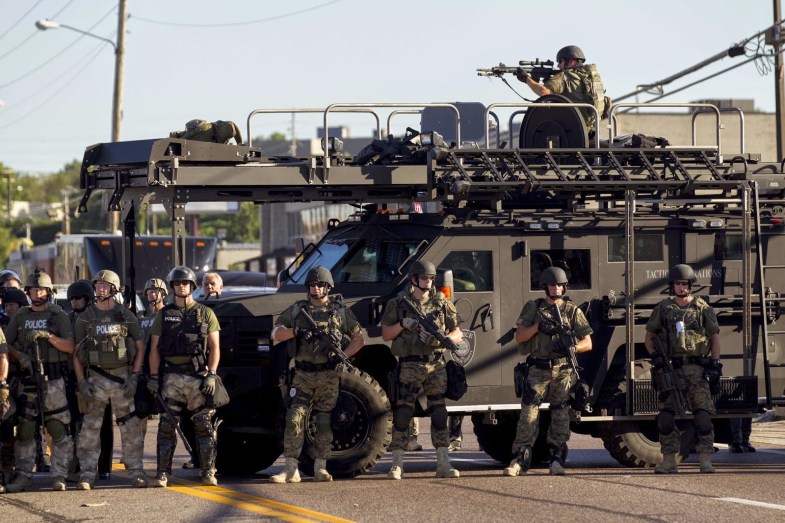
The unrest of the past week is likely a prelude of what’s coming in America. Our police have been increasingly militarized and are not “serving and protecting” as they are sworn to do. Instead, because of seizure laws and revenue scams they are largely extorting and intimidating the general populace, black, white, red, brown or any color of skin.
While there is an overwhelming amount of information and footage out there about this incident, it still looks like we have to wait for all of the evidence to be correlated, and for the forensics to be complete and interpreted and rebutted before we can know the facts behind the clinical evidence of the death of Michael Brown.
A few things deeply bother me, and I’m going to go ahead and put them out there for whatever it’s worth. Not much, I know, but these are truly aggravating things to me, and it simply seems like we could very well be being played because of them.
First of all, according to the original report, Michael Brown was pulled into the car by the cop? That, as Judge Judy would say, doesn’t make any sense at all. If you’re 6′ 4″ and someone reaches out to pull you into a car, they aren’t going to be able to it. Your instinct, unless you want to hug the person, is to pull back. And if you’re a police officer, the last thing you’re going to do is try to pull a big guy into the car on top of you, especially by the neck. If the officer was pulling him, he could possibly have pulled his arm and tried to use the door as a lever to subdue Brown, but that is the only potential I can see for the officer pulling Brown into the car.
Then the delay in releasing information in at least two areas, but more likely three. Not releasing the shooting officer’s name for days only adds to the distrust of the system and to the intimation that the police are covering things up. Not releasing the convenience store strong arm robbery tape for SIX days while the city is blowing up is simply unconscionable. And again, it leads to deeper distrust. While I can’t do it, I know that there are people who are completely capable of creating video that looks like the real thing when it isn’t. Is it possible that this is the case with the strong arm robbery video? Maybe. Then again, maybe not.
One has to wonder, why was this officer in a car alone? In the earliest video immediately following the shooting that I can find, there is another officer on the scene. It reportedly begins about 30 seconds after the shooting occurred. There is a cut in the video and then there is crime scene tape up, but when did the other officer arrive on the scene? And Wilson, who was reportedly hit hard enough to break the orbital socket under his eye during the struggle in the car, doesn’t make any move to indicate that his head is hurting in any way. Does this make any sense? It took ten days to get the orbital socket injury out. Three days to report that the officer was treated at a hospital after the shooting. Just who is the other officer with Wilson in this video? Was he Wilson’s partner? If so, where was he during all this and who is he? Likely, he isn’t Wilson’s partner, but then how did he get there so quickly? Or was that 30 second assertion inaccurate and it’s more like 2 to 5 minutes? It’s messed up.
The thing that I find most distressing is that people refer to a caller on a local radio show that says she is a friend of Darren Wilson as a “witness”. I even heard media refer to “Josie” as a witness. That is deeply disturbing. A friend of someone who was present at a scene can only relate hearsay, and giving an attitude of import to that person’s account is beyond irresponsible. And then a tweet from someone saying 12 witnesses have confirmed the officer’s side of the story becomes proof that the officer was justified in his actions? What kind of critical thinking is being employed by the media here?
Now, a grand jury has been convened to decide whether or not to indict Officer Darren Wilson for the shooting death of Michael Brown. But the Prosecutor is saying there won’t be any decision made until October. How is that timely? More importantly, how is it justified? What exactly are the officials trying to accomplish by releasing information in a very slow fashion and only reacting in quick and decisive ways with shows of force? It looks to me like holding off the decision of the grand jury is only going to increase tensions and create more distrust.
Clearly, the issues brought to light by this shooting are deep seated and far reaching. The police are way over militarized. People are more than angry at the entire system, and largely, they have a perfect right to be angry. How they express it and deal with it is another issue entirely. Destroying other people and their property is actually criminal and not a path that we should follow. Yet that is too often what the police are seen doing as well in their position as revenue collectors and enforcers. Just do a search on youtube for police brutality videos and you will be stunned and unhappy with the results.
It’s clear that many in America simply view police as government sanctioned rival gangs. Now they have MRAPs and tanks and more. You can see what your county has acquired by clicking on this New York Times article and the interactive map included there.
To sum up most of America’s feelings on police, it isn’t that we don’t like cops, we just feel better when they aren’t around.
In case anyone is wondering, we also feel better when there isn’t rioting and looting.
ECONOMIC COLLAPSE: Do you have cash, gold, silver, barter items?
SPEAKERS – 18 Presentations Over 2 Days
Break-Out Sessions
Learn from the experts!
Speakers List to be Added Soon
For Vendor / Sponsor Information:
Contact Mike at: (417) 264-2435 or emailmike@PreppersAndPatriots.net
+++++++++++++++++++++++++
Speaker Schedule Preppers and Patriots Expo Saturday and Sunday
Speaker Schedule Preppers and Patriots Expo Aug 16, 2014
Saturday – Theater 1
9am Mike Knox, White Harvest Seed Company – GMO v. Heirloom Seeds and Why
10am Ike Skelton – Agenda 21
11am Doug Brethower – Wood Gas Energy, Biomass and the Wood Gas Pickup Truck
12pm Dr. Bones and Nurse Amy – Survival Medicine When There Is No Doctor
1pm John Moore The Liberty Man – Climate Change and What the Govt Does Not Want You to Know
2pm Joyce Riley, Radio Host of “The Power Hour” – Veterans Healthcare
3pm Vince Finelli, Radio Host of “USAPrepares” – How Deep Do The Lies Go?
4pm Michael Evans, Radio Host “AmericasVoiceNow.org” – Restoring Freedom/Firearms for Preppers
5pm Beth Ann Schoeneberg, Radio Host of “Common Sense Coalition” – Become a Citizen Activist
Theater 2
9 am SwissAmerica – Precious Metals in a Crisis
10 am Mike Brown – Steam Engines for Home Energy
11 am Joe Dixon – Morningland Dairy
12 noon Allen Busiek – Prepping 101 Intro to Prepping: Why Prepare / What to Prepare For / Different Approaches to Prepping / Getting Started Allen appeared on the TV show Doomsday Preppers.
1 pm Lynette Pate – Organic Guru The Monsanto Project
2 pm Essential Oils – Dr. Norfleet
3 pm Dr. Jim Cesar – How to Suture Wounds
4 pm EFS Energy Company – Solar Power
5 pm EFS Energy Company – Wind Power
Speaker Schedule Preppers and Patriots Expo Aug 17, 2014 Sunday – Theater 1
9 am Dave Lohr – Survival in the Wilderness
10am Doreen Hanes -TruthFarmer.com – Agenda 21
11am Tim Stark CSPOA – Constitutional Sheriffs and Peace Officers Association
Last 15 minutes of talk Oathkeepers Reaffirmation of the Oath Ceremony
12pm Ozarks Refuse – Why the Ozarks Is The Perfect Bugout Location Jerry Diamond
1pm Dr. Bones and Nurse Amy – Survival Medicine When There Is No Doctor
2pm Lens Pense -Gardening Revolution
3pm Forest Gardening Chris Allen
4pm. Common Core Dangers – Dr. Mary Byrne
5pm Police Chief Kevin Jotz, LAPD Retired – Defend Yourself Against Cops
Theater 2
9 am Lynette Pate – The Monsanto Project
10 am Native American Church – Coming Changes and How to React
11 am Dawn McPherson – When There is No Pharmacy PART 1
12 noon Dawn McPherson – When There is No Pharmacy PART 2
1 pm Bob Anderson – Author of The Survivalist novels
2 pm Mike Brown – Defending Yourself Against Health Nazis
3 pm SwissAmerica – Precious Metals in a Crisis
4 pm Allen Busiek Prepper Groups – Part 1 – Why Join (or Form) a Group / Types of Groups / Possible Benefits / Organizational Hurdles / Potential Downsides
5 pm Allen Busiek Prepper Groups – Part 2 – Why Join (or Form) a Group / Types of Groups / Possible Benefits / Organizational Hurdles / Potential Downsides
This is an incredible indictment of the “law enforcement” separation from the reality of community that causes things like the shooting initiating the uproar and the continued rioting to occur. When you have a bunch of people who are outraged, and then you treat people who are outwardly identified as reporters treated in the manner described below, it’s pretty difficult to expect things to get better any time soon. I just hope this doesn’t spill over across the country and end up as some kind of repeat of the 1960’s race riots.
Please read the article below. It clearly illustrates the level of disconnection held by entirely too many police across this country.
Close By DYLAN BYERS and HADAS GOLD | 8/13/14 8:53 PM EDT
Reporters from The Washington Post and the Huffington Post were arrested in Ferguson, Mo., on Wednesday night while covering the protests that have rocked the St. Louis suburb.
Wesley Lowery, a Washington Post political reporter, and Ryan Reilly, a Huffington Post justice reporter, were arrested in a McDonalds shortly before 8 p.m. ET. Police entered the restaurant and told patrons there to leave, the reporters wrote on Twitter after their release. The police then asked Lowery and Reilly for their identification and, according to the reporters, arrested them because they weren’t packing their bags fast enough.
Lowery also said the police officers “assaulted” him. “Officers slammed me into a fountain soda machine because I was confused about which door they were asking me to walk out of,” he wrote on Twitter. Lowery also said that he and Reilly were released without paperwork or charges, and that the officers refused to provide the reporters with their names.
Ferguson has been the site of protests since the death of Michael Brown, an 18-year-old African-American who was shot several times by an officer. The chief of police there has refused to disclose the identity of the officer in question, citing safety concerns. According to The Associated Press, the officer “has received numerous death threats, and the chief worries that disclosing his name would endanger [him].”
Both Lowery and Reilly have not responded to requests for email.
Martin Baron, the executive editor of The Washington Post, said late Wednesday night that “there was absolutely no justification for [Lowery’s] arrest.”
“He was illegally instructed to stop taking video of officers. Then he followed officers’ instructions to leave a McDonald’s — and after contradictory instructions on how to exit, he was slammed against a soda machine and then handcuffed,” Baron said in a statement. “That behavior was wholly unwarranted and an assault on the freedom of the press to cover the news. The physical risk to Wesley himself is obvious and outrageous.”
“After being placed in a holding cell, he was released with no charges and no explanation,” Baron continued. “He was denied information about the names and badge numbers of those who arrested him. We are relieved that Wesley is going to be OK. We are appalled by the conduct of police officers involved.”
According to the Washington Post, both reporters were taken to a police car where a member of the clergy was also being held, and then transported to a holding cell at the Ferguson police station. The Ferguson police chief was reportedly alerted to their arrests by Matt Pearce, a reporter for the Los Angeles Times. Pearce tweeted that when he informed the police chief of the reporters’ arrest, the chief answered “Oh God” and said the riot police were from St. Louis County and likely “didn’t know any better.”
About a half an hour after arriving at the holding cell, Lowery and Reilly were released without any charges filed, the Post reports.
In an article, the Huffington Post confirmed that Reilly “was arrested Wednesday while covering the protests in Ferguson.”
“Reilly tweeted at around 8:00 P.M. EDT that SWAT officers invaded the McDonald’s at which he was working, requesting his identification after he took a photo of them,” the statement read. “The Washington Post’s Wesley Lowery was also working at the fast food restaurant.”
Reached by phone, an operator for the Ferguson Police Department would neither confirm nor deny Lowery and Reilly’s arrest.
“I have no information,” the operator said several times.
In an interview with MSNBC following his release, Reilly called the police officers’ mentality “extremely disturbing.”
“It was madness,” Reilly said. “[The officers] asked us to begin packing up our stuff. Evidently I was not moving quickly enough for their liking, at which point I was given a countdown, I was told I had 45 seconds, 30 seconds, pack up all my stuff and leave, at which point the officer in question… held me back, grabbed my things and shoved them into my bag, and basically he then arrested me. He hancuffed me… he used his finger to put a pressure point on my neck.”
“He would not tell me what I was under arrest for…he was in complete SWAT gear,” Reilly continued. “The most frustrating thing…I repeatedly asked over a dozen times for his name or ID number was never given it… The worst part was he slammed my head against the glass purposely on the way out of the McDonalds then sarcastically apologized for it.”
“It was just a terrible experience,” he continued. “I recognize I’m in sort of a place of privilege here both as a journalist and as a white person frankly, in that evidently the police chief made the decision to not hold us. … The mentality of the officers was extremely disturbing. They essentially acted as a military force.”
Reilly told MSNBC he was “not 100 percent sure” whether he identified himself as a reporter, but said he identified himself as a journalist after being handcuffed.
Lowery also appeared on MSNBC shortly after Reilly and provided an account of the arrest.
“As I was packing my bag videotaping with one hand, he was angry I wasn’t moving fast enough or what not, I put my backpack on tried to walk out, from the corner I could see Ryan having the same type of interaction,” Lowery said. “As I turned the corner I tried to ask him… ‘Am I going to be able to move my car?’ They didn’t want to answer that question. They directed me toward one door where I encountered another officer who directed me to another door, I said, ‘Officers, where would you like me to go.’ As I turned to follow their instructions, my bag slipped off my shoulder. I said. ‘Officers, I’m going to need to stop to adjust my bag, give me one second,’ at which point they said ‘Let’s take him,’ slammed me into the soda machine, grabbed my bag, grabbed my phone and put me in temporary restraints and took me outside.”
Lowery said he was wearing his Washington Post credentials on his neck at the time of the arrest.
On Twitter, Lowery wrote, “Apparently, in America, in 2014, police can manhandle you, take you into custody, put you in cell & then open the door like it didn’t happen.”






 Truth Farmer
You must be logged in to post a comment.