Exposing the Global Banksters

As some of you may know, several years ago, I met with Joan Veon and she and I were going to work together on a project tying the strings of the banking complex into the food and ag complex. Unfortunately, Joan became sick again, and died before we were able to really work on it together. You should watch this series on youtube of her dvd “When Central Banks Rule the World“. But first, as a nice introduction, you should read this article and follow the links provided. I’m thrilled that someone is actively exposing these people!

World Bank Whistleblower Reveals How The Global Elite Rule The World

By Michael Snyder
Global Research, October 06, 2013
Url of this article:
http://www.globalresearch.ca/world-bank-whistleblower-reveals-how-the-global-elite-rule-the-world/5353130


Karen Hudes is a graduate of Yale Law School and she worked in the legal department of the World Bank for more than 20 years. In fact, when she was fired for blowing the whistle on corruption inside the World Bank, she held the position of Senior Counsel.

She was in a unique position to see exactly how the global elite rule the world, and the information that she is now revealing to the public is absolutely stunning. According to Hudes, the elite use a very tight core of financial institutions and mega-corporations to dominate the planet.

Karen HudesThe goal is control. They want all of us enslaved to debt, they want all of our governments enslaved to debt, and they want all of our politicians addicted to the huge financial contributions that they funnel into their campaigns. Since the elite also own all of the big media companies, the mainstream media never lets us in on the secret that there is something fundamentally wrong with the way that our system works.

Remember, this is not some “conspiracy theorist” that is saying these things. This is a Yale-educated attorney that worked inside the World Bank for more than two decades. The following summary of her credentials comes directly from her website

Karen Hudes studied law at Yale Law School and economics at the University of Amsterdam. She worked in the US Export Import Bank of the US from 1980-1985 and in the Legal Department of the World Bank from 1986-2007. She established the Non Governmental Organization Committee of the International Law Section of the American Bar Association and the Committee on Multilateralism and the Accountability of International Organizations of the American Branch of the International Law Association.

Today, Hudes is trying very hard to expose the corrupt financial system that the global elite are using to control the wealth of the world. During an interview with the New American, she discussed how we are willingly allowing this group of elitists to totally dominate the resources of the planet…

A former insider at the World Bank, ex-Senior Counsel Karen Hudes, says the global financial system is dominated by a small group of corrupt, power-hungry figures centered around the privately owned U.S. Federal Reserve. The network has seized control of the media to cover up its crimes, too, she explained. In an interview with The New American, Hudes said that when she tried to blow the whistle on multiple problems at the World Bank, she was fired for her efforts. Now, along with a network of fellow whistleblowers, Hudes is determined to expose and end the corruption. And she is confident of success.

Citing an explosive 2011 Swiss study published in the PLOS ONE journal on the “network of global corporate control,” Hudes pointed out that a small group of entities — mostly financial institutions and especially central banks — exert a massive amount of influence over the international economy from behind the scenes. “What is really going on is that the world’s resources are being dominated by this group,” she explained, adding that the “corrupt power grabbers” have managed to dominate the media as well. “They’re being allowed to do it.”

Previously, I have written about the Swiss study that Hudes mentioned. It was conducted by a team of researchers at the Swiss Federal Institute of Technology in Zurich, Switzerland. They studied the relationships between 37 million companies and investors worldwide, and what they discovered is that there is a “super-entity” of just 147 very tightly knit mega-corporations that controls 40 percent of the entire global economy

When the team further untangled the web of ownership, it found much of it tracked back to a “super-entity” of 147 even more tightly knit companies – all of their ownership was held by other members of the super-entity – that controlled 40 per cent of the total wealth in the network. “In effect, less than 1 per cent of the companies were able to control 40 per cent of the entire network,” says Glattfelder. Most were financial institutions. The top 20 included Barclays Bank, JPMorgan Chase & Co, and The Goldman Sachs Group.

But the global elite don’t just control these mega-corporations. According to Hudes, they also dominate the unelected, unaccountable organizations that control the finances of virtually every nation on the face of the planet. The World Bank, the IMF and central banks such as the Federal Reserve literally control the creation and the flow of money worldwide.

At the apex of this system is the Bank for International Settlements. It is the central bank of central banks, and posted below is a video where you can watch Hudes tell Greg Hunter of USAWatchdog.com the following…

“We don’t have to wait for anybody to fire the Fed or Bank for International Settlements . . . some states have already started to recognize silver and gold, the precious metals, as currency”

Most people have never even heard of the Bank for International Settlements, but it is an extremely important organization. In a previous article, I described how this “central bank of the world” is literally immune to the laws of all national governments…

An immensely powerful international organization that most people have never even heard of secretly controls the money supply of the entire globe. It is called the Bank for International Settlements, and it is the central bank of central banks. It is located in Basel, Switzerland, but it also has branches in Hong Kong and Mexico City. It is essentially an unelected, unaccountable central bank of the world that has complete immunity from taxation and from national laws. Even Wikipedia admits that “it is not accountable to any single national government.“ The Bank for International Settlements was used to launder money for the Nazis during World War II, but these days the main purpose of the BIS is to guide and direct the centrally-planned global financial system. Today, 58 global central banks belong to the BIS, and it has far more power over how the U.S. economy (or any other economy for that matter) will perform over the course of the next year than any politician does. Every two months, the central bankers of the world gather in Basel for another “Global Economy Meeting”. During those meetings, decisions are made which affect every man, woman and child on the planet, and yet none of us have any say in what goes on. The Bank for International Settlements is an organization that was founded by the global elite and it operates for the benefit of the global elite, and it is intended to be one of the key cornerstones of the emerging one world economic system.

This system did not come into being by accident. In fact, the global elite have been developing this system for a very long time. In a previous article entitled “Who Runs The World? Solid Proof That A Core Group Of Wealthy Elitists Is Pulling The Strings“, I included a quote from Georgetown University history professor Carroll Quigley from a book that he authored all the way back in 1966 in which he discussed the big plans that the elite had for the Bank for International Settlements…

[T]he powers of financial capitalism had another far-reaching aim, nothing less than to create a world system of financial control in private hands able to dominate the political system of each country and the economy of the world as a whole. This system was to be controlled in a feudalist fashion by the central banks of the world acting in concert, by secret agreements arrived at in frequent private meetings and conferences. The apex of the system was to be the Bank for International Settlements in Basle, Switzerland, a private bank owned and controlled by the world’s central banks which were themselves private corporations.

And that is exactly what we have today.

We have a system of “neo-feudalism” in which all of us and our national governments are enslaved to debt. This system is governed by the central banks and by the Bank for International Settlements, and it systematically transfers the wealth of the world out of our hands and into the hands of the global elite.

But most people have no idea that any of this is happening because the global elite also control what we see, hear and think about. Today, there are just six giant media corporations that control more than 90 percent of the news and entertainment that you watch on your television in the United States.

This is the insidious system that Karen Hudes is seeking to expose. For much more, you can listen to Joyce Riley of the Power Hour interview her for an entire hour right here.

Copyright © 2013 Global Research

Hemp. Hemp alone would be tremendously helpful in fixing the economy….it couldn’t entirely fix it, mind you, but it would be highly positive. Here in Missouri, we had a bill to allow growing hemp, and it went absolutely nowhere. People actually still think you could get high smoking hemp. It’s a wonderful plant, and I am glad that California is actually going to allow people to grow it. Here’s a pretty good article on this:

Will Industrial Hemp Be A Cash Crop in California?

Posted on October 6, 2013 by The Alternative Daily

The American government once jailed farmers who refused to grow it – now they jail those that do. In the mid-1930s, Popular Science magazine called hemp America’s “New Billion Dollar Crop.”
With the steel, oil and timber companies holding most of the economic power in the nation, they came up with an effective plan to demonize hemp through effective propaganda and misinformation. They insisted that hemp was nothing but marijuana, and its use was just a dangerous way to get “high.”

A combination of investigation, science and discussion are now proving this statement false.

Finally someone gets it … hemp is not marijuana

This week Governor Jerry Brown of California signed a new law giving California farmers an open door to go ahead and grow industrial hemp as soon as the federal government gives the nod of approval.

The Industrial Hemp Farming Act, SB 566, which has been in discussion since 1999 is now law in the golden state and states that hemp can be grown as a fiber or oilseed crop without worry of fines or arrest – at least at the state level, that is.

Over $500 million worth of hemp products were made from raw hemp imported into the state from Canada and China last year. If California makes its own hemp – profits are predicted to skyrocket.

According to the law, hemp is derived from a nonpsychoactive type of Cannabis sativa plant. This plant contains no more than 3/10 of 1 percent of THC, the psychoactive chemical found in marijuana.

The Sacramento Bee reports that the oversight of hemp production would be done in partnership with the California Department of Food and Agriculture and county agricultural commissioners.

Hemp is useful and environmentally friendly

Industrial hemp farming is permitted in nine other states and 30 countries. Sadly, none of those states that allow industrial hemp farming are practicing it yet.

Hemp can be used for food, clothing, paper, fuel and other biodegradable products. Hemp is environmentally friendly. It’s a hardy plant that requires little water and no synthetic fertilizers or herbicides. It boosts soil health, and in relatively warm climates it can be planted and harvested twice a year.

Hemp seeds and oils are some of the most nutritionally dense foods on earth. They are a rich source and an ideal balance of omega-6, omega-3 and omega-9 fatty acids. They are the only edible seeds that contain GLA, an essential fatty acid. They are also a highly nutritious source of protein, easily digested in their raw, natural state.

Packed with essential amino acids, they are a complete protein – even better than nearly all other protein sources, plant or animal.

Hemp seeds and oils help to:

  • Improve heart health
  • Lower blood pressure
  • Reduce inflammation and improve circulation
  • Promote better digestion
  • Aid weight loss efforts
  • Boost energy levels
  • Maintain a healthy cholesterol level
  • Balance blood sugar
  • Inhibit cancer and tumor growth
  • As an anti-inflammatory, they can reduce or eliminate symptoms of many chronic illnesses such as arthritis

ropeWhat About Federal Restrictions?

Similar bills have been vetoed four times by three different California governors over concerns about federal laws outlawing industrial hemp, which is considered no different from marijuana under U.S. law.

However, U.S. Attorney General Eric Holder states that the government will not get in the way of the Industrial Hemp Farming Act in areas where the possession or regulation of marijuana is permitted.

Lawmakers in California say that industrial hemp should definitely be given the green light since it is not a drug.

-The Alternative Daily

Here’s Wishing the Governent Would Permanently Shut Down…

Rep. King, one of the biggest shills for agribusiness in the US Congress, has put forth a short, but deeply expansive amendment to the incomplete Farm Bill. He proposes to trump all State regulations with Federal regs. Below is a very good article on it. Unfortunately, I don’t have much hope that the House will stop the insanity.

King Amendment to the Farm Bill Gives Feds Power Over State Regs


King Amendment to the Farm Bill Gives Feds Power Over State Regs

Touted by some as a “Tea Party favorite,” Representative Steve King (R-Iowa) has offered an amendment to the farm bill that would significantly reduce the sovereignty of states and is described by the Des Moines Register as being “focused on consolidating power in the federal government to a degree that would make members of the Politburo proud.”

The King Amendment, known as the Protect Interstate Commerce Act, takes from states the right to impose agricultural standards on products brought in from out of state.

Rather than empowering states to nullify unconstitutional federal acts, the King Amendment would, according to the Washington Times, “have far-reaching implications, nullifying a large spectrum of state and local laws concerning everything from livestock welfare to GMO labeling, restrictions on pesticide and antibiotic use, horse slaughter, child labor, fire safe cigarettes, shark finning, Christmas trees, and even the sale of cat and dog meat.”

Specifically, the measure mandates that:

the government of a state or locality therein shall not impose a standard or condition on the production or manufacture of any agricultural product sold or offered for sale in interstate commerce if (1) such production or manufacture occurs in another state; and (2) the standard or condition is in addition to the standards and conditions applicable to such production or manufacture pursuant to (A) federal law; and (B) the laws of the state and locality in which such production or manufacture occurs.

Put simply, if enacted, Rep. King’s bill would consolidate agricultural regulatory power into federal hands, taking the power from state legislatures where it constitutionally resides.

Although in many ways King has demonstrated his interest in forcing the federal beast back inside its constitutional cage, in this instance, he assumes that Washington, D.C. is better equipped than state and local lawmakers to set agricultural policy.

Many of King’s fellow lawmakers from both sides of the aisle have lined up to oppose the amendment.

Fifteen Republicans in the House sent a letter to Representative Frank Lucas (R-Okla.), chairman of the House Agriculture Committee, warning that King’s bill posed a potentially significant threat to the ability of states to set their own agriculture policies.

“The King Amendment,” the congressmen tell Lucas, “is very broadly written to nullify state laws that impose a ‘standard or condition’ on agricultural products and establish federal supremacy.”

A similar letter penned by Democratic representatives claims that “the breadth and ambiguity of Rep. King’s amendment are striking. It would nullify state laws that impose a ‘standard or condition’ on agricultural products, and has the potential to repeal a vast number of state laws and regulations covering everything from food safety to environmental protection to child labor to animal welfare.”

Grassroots activists recognize the radical revision of principles of federalism, as well. A cross-section of consumer, environmental, and animal rights groups sent letters to the entire body of the Congress calling on them to reject King’s attempt to unconstitutionally enlarge the scope of federal authority.

In the text of his legislation, passed by the House as Section 11312 of the Federal Agriculture Reform and Risk Management Act of 2013 (H.R. 2642), King cites the Commerce Clause of Article I, Section 8 of the Constitution as justification for his enlargement of federal regulatory power. The fact is, however, that the spirit of his bill relies on the so-called “Supremacy Clause” of Article VI in its exalting of “federal law” in subsection (a)(2)(A) over state and local statutes.

The Supremacy Clause (as some wrongly call it) of Article VI does not declare that federal laws are the supreme law of the land without qualification. What it says is that the Constitution “and laws of the United States made in pursuance thereof” are the supreme law of the land.

Read that clause again: “In pursuance thereof,” not in violation thereof. If an act of Congress is not permissible under any enumerated power given to it in the Constitution, it was not made in pursuance of the Constitution and therefore not only is not the supreme law of the land, it is not the law at all.

Constitutionally speaking, then, whenever the federal government passes any measure not provided for in the limited roster of its enumerated powers, those acts are not awarded any sort of supremacy. Instead, they are “merely acts of usurpation” and do not qualify as the supreme law of the land. In fact, acts of Congress are the supreme law of the land only if they are made in pursuance of its constitutional powers, not in defiance thereof.

It isn’t apparent why King would not only go along with a substantial federal power grab, but be the author of it.

One explanation is that King believes he is doing the right thing by forcing federal standards on states in the name of controlling interstate commerce.

Judging not only from King’s depiction of his amendment, but from the support it’s received from others, the intent of the provision is to preempt restrictive state laws, such as the “California egg roll” regulation.

The “egg roll” is a California state law that requires egg producers in the state to comply with very strict hen house standards. The Washington Times reports that the regulation requires “cages large enough to allow egg-laying hens to stand and spread their wings if their eggs are to be sold within the state.”

At the heart of the King amendment and all other federal bills that impose “one size fits all” regulations is collectivism, a doctrine diametrically opposed to the federalism that lies at the heart of the Constitution.

The Founding Fathers understood that what was good policy in Virginia would not necessarily be good for Pennsylvania. In uniting to form the federal government, states retained their authority to pass laws in all but a very few, particularly prescribed areas of national interest — defense, for example.

Regardless of whether the amendment makes sense policy-wise (and there are a number of farmers who say that it does), the fact that it unconstitutionally violates the power of states to impose their own agriculture standards within their sovereign borders is not a course that should be supported by conservatives.

Federal lawmakers and their constituents who care about the Constitution and the core principles of federalism and states’ rights upon which it is founded should oppose the Senate’s adoption of the King Amendment to that body’s version of the farm bill. Not, however, because they disagree with the philosophy of the provision, but because they refuse to cooperate with any consolidation of power in Washington, D.C.


Joe A. Wolverton, II, J.D. is a correspondent for The New American and travels frequently nationwide speaking on topics of nullification, the NDAA, and the surveillance state.  He is the host of The New American Review radio show that is simulcast on YouTube every Monday. Follow him Twitter @TNAJoeWolverton and he can be reached at jwolverton@thenewamerican.com

Something that makes My Heart Happy!!

You must check this out….and right now. I will screen shot it for posterity, but don’t have time right now….:)

http://www.usda.gov/fundinglapse.htm

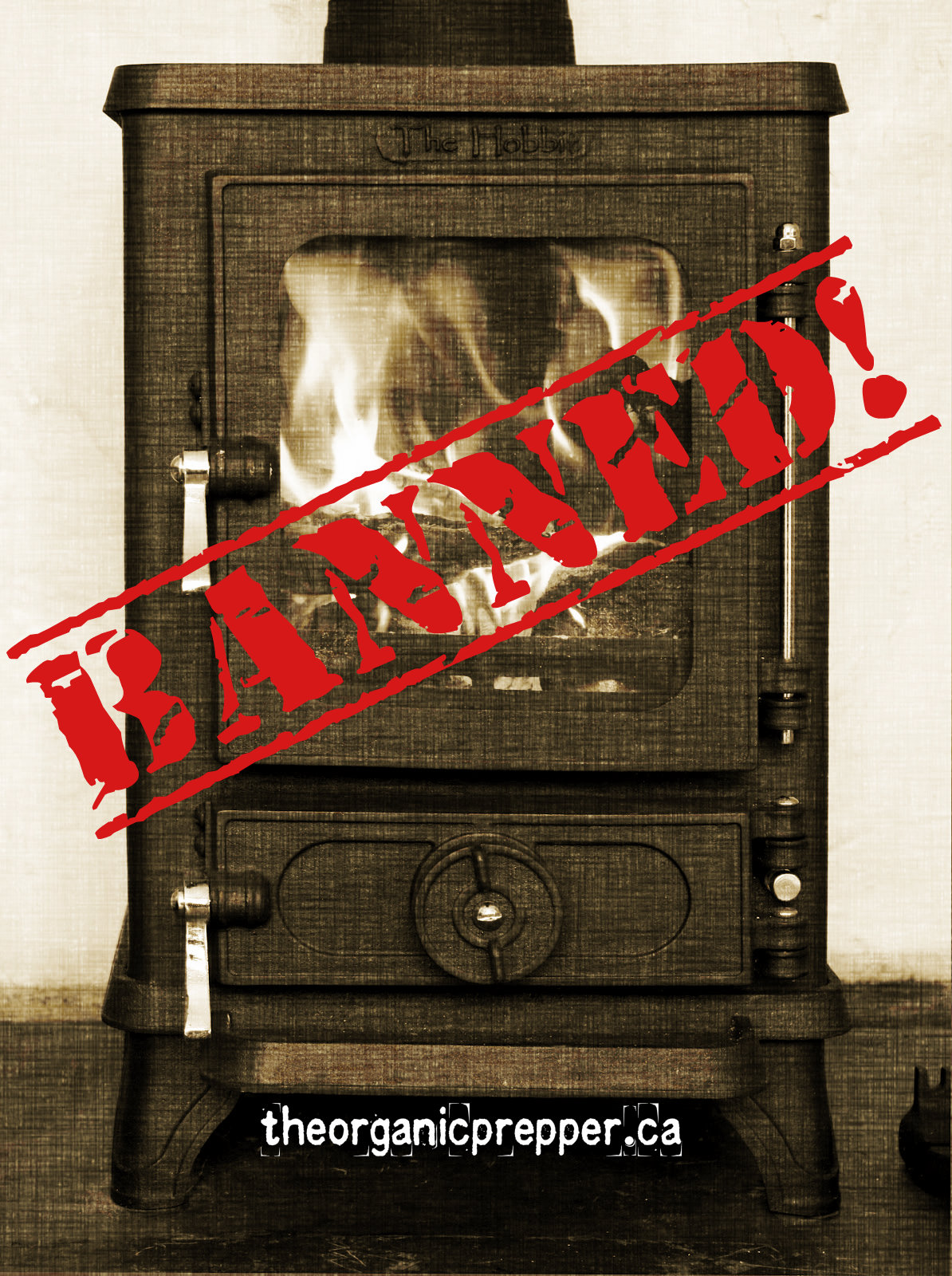
The EPA Takes an Ax to Self-Sufficiency: Most Woodburning Stoves Will Soon Be Illegal

stove

When you think of that little dream homestead in the woods, what does it include?  Probably a well and septic system, a little stream bubbling nearby, a chicken coop, a sunroom for winter growing, and a cozy fire to curl up next to.

When my daughter and I spent a year living in a cabin in the Northwoods of Canada, our woodstove was our lifeline. It was the only source of heat in a place that reached -42 degrees.  It was the only way we could cook when our power went out during snow and ice storms (as it did frequently).  It was the cozy center of our home, and we survived for an entire frigid winter for less than$800. After that experience I vowed never to live in a home without a woodstove.

If the EPA has its way, however, heating your home self-sufficiently with wood could soon become illegal – or at the very least, insanely expensive.

Off Grid Survival reports:

Shortly after the re-election of President Obama, the agency announced new radical environmental regulations that threaten to effect people who live off the grid. The EPA’s new environmental regulations reduce the amount of airborne fine-particle matter from 15 micrograms to 12 micrograms per cubic meter of air.

This means that most wood burning stoves would now fall into a class that would deemed unacceptable under these new draconian measures. The EPA has even launched a nifty new website called Burn Wise to try to sway public opinion.

On their site, while trying to convince people to get rid of their old stoves and buy the new EPA-certified stoves, they state that these older stove must be scrapped and cannot be resold.

From the EPA Site:

The local air pollution agency says I can’t sell my old wood stove to help pay for an EPA-certified wood stove.  Why is that?
Replacing an older stove with a cleaner-burning stove will not improve air quality if the older stove is reused somewhere else.  For this reason, wood stove change out programs usually require older stoves to be destroyed and recycled as scrap metal, or rendered inoperable. (source)

No More of this…..

And here is the information right from the EPA:

Enclosed is the list of wood stoves certified by the United States Environmental Protection Agency (EPA). The EPA Certified Wood Stoveslist contains information about wood stoves or wood heating appliances that have been certified by the EPA along with its manufacturer name, model name, emission rate (g/hr), heat output (btu/hr), efficiency (actual measured and estimated), and type of appliance. It also indicates whether the appliance is still being manufactured. An EPA certified wood stove or wood heating appliance has been independently tested by an accredited laboratory to determine whether it meets the particulate emissions limit of 7.5* grams per hour for noncatalytic wood stoves and 4.1* grams per hour for catalytic wood stoves. All wood heating appliances that are offered for sale in the United States are subject to the New Source Performance Standard for New Residential Wood Heaters under the Clean Air Act and are required to meet these emission limits. An EPA certified wood stove can be identified by a temporary paper label attached to the front of the wood stove and a permanent metal label affixed to the back or side of the wood stove.

See the EPA’s list of acceptable woodstoves HERE.

One of the easiest ways for the government to force this issue is through homeowner’s insurance policies. If you have a mortgage, you have absolutely no option but to carry homeowner’s insurance.  Even if you own you homestead outright, most people consider insuring their homes and property to be a vital safety net. When your policy comes up for annual renewal, the insurance company can require an inspection of your home. At that time, compliance can easily be forced by either charging insanely high rates or through the cancellation of the policies of those who have “outdated” woodstoves.

An Attack on Self-Sufficient Living

The ability to heat your home off-grid is a major part of most preparedness plans.  Heating with wood is the number one way to do this.  Much like our food supplies, the ability to keep ourselves warm and healthy and the ability to cook without being connected to the grid are vital to our freedom.

Those of us who live this lifestyle are constantly targeted. In many places it’s illegal to collect rainwater.  Growing food in your front yard instead of flowers is all but outlawed.  Sellers of raw milk have their farms raided by SWAT teams as though they’re running a meth lab instead of a dairy. We are being Codex Alimentarius-ed and Agenda 21-ed right into slavery and the government and it’s agencies try to make it appear that they are “saving” us.

We, the self-sufficient, by our very nature, are a threat to this insidiously spreading control. Our self-sufficiency means that we won’t be forced to be subjugated, tagged, chipped, and inventoried like our less prepared friends and neighbors.  We won’t have to cave in order to survive. We can eat, stay warm, and stay off the radar.  And this is a threat because we can withstand the assaults on our freedom.  We don’t need the government’s benevolence to survive. Those of us who don’t need the government are the last hold-outs of liberty in a country that has strayed far from it’s freedom-loving origins.

The “Credibility” of the EPA

Don’t be fooled by environmental friendliness or the warm and fuzzy green words.  The EPA is just another tool of subjugation.  Their stamp of approval carries the same “credibility” as that of  USDA or FDA approval. The Environmental Protection Agency, that bastion of clean air and fertile land, wants you to believe that they are taking steps to save us all.

You know, the same folks who upped the legal levels of glyphosate for their friends at Monsanto, even though the herbicide has been proven to cause toxicity and death. The same agency that responded quickly when radiation from the Fukushima disaster reached dangerous levels on the shores of California by closing down 8 of their 18 radiation-testing facilities in California and increasing the “safe amounts” of radiation that we can absorb.

The EPA (or as I like to call it, the Environmental Deception Agency) tends to  find things to be highly threatening to the environment only when those things allow us to be non-reliant on big business.

One controversy after another can be attributed to the EPA, an agency charged with protecting the air we breathe, the soil in which we grow our food and the water that we drink.  At the bottom of each of those controversies can be found ties to the conspiracies of the big businesses that really run the country.  Decisions are being auctioned off to industry lobbyists with the most money and influence.

Environmental protection is only the rule of thumb if it goes along with Agenda 21 – the EPA is all over the green agenda in cases that benefit the redistribution of wealth, but the agency completely ignores blatant crimes against the earth if it involves fracking for the benefit of a natural gas company or poisoning the soil and groundwater for the benefit of a biotech monolith.

– See more at: http://www.theorganicprepper.ca/the-epa-takes-an-ax-to-self-sufficiency-most-woodburning-stoves-will-soon-be-illegal-09282013#sthash.7F6mK1PU.dpuf

New Virus in Transgenic Creations Raises Concerns

The following is probably a difficult read for a lot of folks, but it is very worthwhile. I’ve taken the liberty of putting in bold issues revealed that I feel need the most attention, but please, read it all the way through. It’s terribly important.

Regulators Discover a Hidden Viral Gene in Commercial GMO Crops

Written By:

Jonathan Latham, PhD and Allison Wilson, PhD

Regulators Discover a Hidden Viral Gene in Commercial GMO Crops

Cauliflower Mosaic Virus

Originally published on Independent Science News

How should a regulatory agency announce they have discovered something potentially very important about the safety of products they have been approving for over twenty years?

In the course of analysis to identify potential allergens in GMO crops, the European Food Safety Authority (EFSA) has belatedly discovered that the most common genetic regulatory sequence in commercial GMOs also encodes a significant fragment of a viral gene (Podevin and du Jardin 2012). This finding has serious ramifications for crop biotechnology and its regulation, but possibly even greater ones for consumers and farmers. This is because there are clear indications that this viral gene (called Gene VI) might not be safe for human consumption. It also may disturb the normal functioning of crops, including their natural pest resistance.

What Podevin and du Jardin discovered is that of the 86 different transgenic events (unique insertions of foreign DNA) commercialized to-date in the United States 54 contain portions of Gene VI within them. They include any with a widely used gene regulatory sequence called the CaMV 35S promoter (from the cauliflower mosaic virus; CaMV). Among the affected transgenic events are some of the most widely grown GMOs, including Roundup Ready soybeans (40-3-2) and MON810 maize. They include the controversial NK603 maize recently reported as causing tumors in rats (Seralini et al. 2012).

The researchers themselves concluded that the presence of segments of Gene VI “might result in unintended phenotypic changes”. They reached this conclusion because similar fragments of Gene VI have already been shown to be active on their own (e.g. De Tapia et al. 1993). In other words, the EFSA researchers were unable to rule out a hazard to public health or the environment.

In general, viral genes expressed in plants raise both agronomic and human health concerns (reviewed in Latham and Wilson 2008). This is because many viral genes function to disable their host in order to facilitate pathogen invasion. Often, this is achieved by incapacitating specific anti-pathogen defenses. Incorporating such genes could clearly lead to undesirable and unexpected outcomes in agriculture. Furthermore, viruses that infect plants are often not that different from viruses that infect humans. For example, sometimes the genes of human and plant viruses are interchangeable, while on other occasions inserting plant viral fragments as transgenes has caused the genetically altered plant to become susceptible to an animal virus (Dasgupta et al. 2001). Thus, in various ways, inserting viral genes accidentally into crop plants and the food supply confers a significant potential for harm.

The Choices for Regulators

The original discovery by Podevin and du Jardin (at EFSA) of Gene VI in commercial GMO crops must have presented regulators with sharply divergent procedural alternatives. They could 1) recall all CaMV Gene VI-containing crops (in Europe that would mean revoking importation and planting approvals) or, 2) undertake a retrospective risk assessment of the CaMV promoter and its Gene VI sequences and hope to give it a clean bill of health.

It is easy to see the attraction for EFSA of option two. Recall would be a massive political and financial decision and would also be a huge embarrassment to the regulators themselves. It would leave very few GMO crops on the market and might even mean the end of crop biotechnology.

Regulators, in principle at least, also have a third option to gauge the seriousness of any potential GMO hazard. GMO monitoring, which is required by EU regulations, ought to allow them to find out if deaths, illnesses, or crop failures have been reported by farmers or health officials and can be correlated with the Gene VI sequence. Unfortunately, this particular avenue of enquiry is a scientific dead end. Not one country has carried through on promises to officially and scientifically monitor any hazardous consequences of GMOs (1).

Unsurprisingly, EFSA chose option two. However, their investigation resulted only in the vague and unreassuring conclusion that Gene VI “might result in unintended phenotypic changes” (Podevin and du Jardin 2012). This means literally, that changes of an unknown number, nature, or magnitude may (or may not) occur. It falls well short of the solid scientific reassurance of public safety needed to explain why EFSA has not ordered a recall.

Can the presence of a fragment of virus DNA really be that significant? Below is an independent analysis of Gene VI and its known properties and their safety implications. This analysis clearly illustrates the regulators’ dilemma.

The Many Functions of Gene VI

Gene VI, like most plant viral genes, produces a protein that is multifunctional. It has four (so far) known roles in the viral infection cycle. The first is to participate in the assembly of virus particles. There is no current data to suggest this function has any implications for biosafety. The second known function is to suppress anti-pathogen defenses by inhibiting a general cellular system called RNA silencing (Haas et al. 2008). Thirdly, Gene VI has the highly unusual function of transactivating (described below) the long RNA (the 35S RNA) produced by CaMV (Park et al. 2001). Fourthly, unconnected to these other mechanisms, Gene VI has very recently been shown to make plants highly susceptible to a bacterial pathogen (Love et al. 2012). Gene VI does this by interfering with a common anti-pathogen defense mechanism possessed by plants. These latter three functions of Gene VI (and their risk implications) are explained further below:

1) Gene VI Is an Inhibitor of RNA Silencing
RNA silencing is a mechanism for the control of gene expression at the level of RNA abundance (Bartel 2004). It is also an important antiviral defense mechanism in both plants and animals, and therefore most viruses have evolved genes (like Gene VI) that disable it (Dunoyer and Voinnet 2006).

Cauliflower mosaic virus genome

Gene VI (upper left) precedes the start of the 35S RNA

This attribute of Gene VI raises two obvious biosafety concerns: 1) Gene VI will lead to aberrant gene expression in GMO crop plants, with unknown consequences and, 2) Gene VI will interfere with the ability of plants to defend themselves against viral pathogens. There are numerous experiments showing that, in general, viral proteins that disable gene silencing enhance infection by a wide spectrum of viruses (Latham and Wilson 2008).

2) Gene VI Is a Unique Transactivator of Gene Expression
Multicellular organisms make proteins by a mechanism in which only one protein is produced by each passage of a ribosome along a messenger RNA (mRNA). Once that protein is completed the ribosome dissociates from the mRNA. However, in a CaMV-infected plant cell, or as a transgene, Gene VI intervenes in this process and directs the ribosome to get back on an mRNA (reinitiate) and produce the next protein in line on the mRNA, if there is one. This property of Gene VI enables Cauliflower Mosaic Virus to produce multiple proteins from a single long RNA (the 35S RNA). Importantly, this function of Gene VI (which is called transactivation) is not limited to the 35S RNA. Gene VI seems able to transactivate any cellular mRNA (Futterer and Hohn 1991; Ryabova et al. 2002). There are likely to be thousands of mRNA molecules having a short or long protein coding sequence following the primary one. These secondary coding sequences could be expressed in cells where Gene VI is expressed. The result will presumably be production of numerous random proteins within cells. The biosafety implications of this are difficult to assess. These proteins could be allergens, plant or human toxins, or they could be harmless. Moreover, the answer will differ for each commercial crop species into which Gene VI has been inserted.

3) Gene VI Interferes with Host Defenses
A very recent finding, not known by Podevin and du Jardin, is that Gene VI has a second mechanism by which it interferes with plant anti-pathogen defenses (Love et al. 2012). It is too early to be sure about the mechanistic details, but the result is to make plants carrying Gene VI more susceptible to certain pathogens, and less susceptible to others. Obviously, this could impact farmers, however the discovery of an entirely new function for gene VI while EFSA’s paper was in press, also makes clear that a full appraisal of all the likely effects of Gene VI is not currently achievable.

Is There a Direct Human Toxicity Issue?

When Gene VI is intentionally expressed in transgenic plants, it causes them to become chlorotic (yellow), to have growth deformities, and to have reduced fertility in a dose-dependent manner (Ziljstra et al 1996). Plants expressing Gene VI also show gene expression abnormalities. These results indicate that, not unexpectedly given its known functions, the protein produced by Gene VI is functioning as a toxin and is harmful to plants (Takahashi et al 1989). Since the known targets of Gene VI activity (ribosomes and gene silencing) are also found in human cells, a reasonable concern is that the protein produced by Gene VI might be a human toxin. This is a question that can only be answered by future experiments.

Is Gene VI Protein Produced in GMO Crops?

Given that expression of Gene VI is likely to cause harm, a crucial issue is whether the actual inserted transgene sequences found in commercial GMO crops will produce any functional protein from the fragment of Gene VI present within the CaMV sequence.

There are two aspects to this question. One is the length of Gene VI accidentally introduced by developers. This appears to vary but most of the 54 approved transgenes contain the same 528 base pairs of the CaMV 35S promoter sequence. This corresponds to approximately the final third of Gene VI. Deleted fragments of Gene VI are active when expressed in plant cells and functions of Gene VI are believed to reside in this final third. Therefore, there is clear potential for unintended effects if this fragment is expressed (e.g. De Tapia et al. 1993; Ryabova et al. 2002; Kobayashi and Hohn 2003).

Regulators Discover a Hidden Viral Gene in Commercial GMO Crops

The second aspect of this question is what quantity of Gene VI could be produced in GMO crops? Once again, this can ultimately only be resolved by direct quantitative experiments. Nevertheless, we can theorize that the amount of Gene VI produced will be specific to each independent insertion event. This is because significant Gene VI expression probably would require specific sequences (such as the presence of a gene promoter and an ATG [a protein start codon]) to precede it and so is likely to be heavily dependent on variables such as the details of the inserted transgenic DNA and where in the plant genome the transgene inserted.

Commercial transgenic crop varieties can also contain superfluous copies of the transgene, including those that are incomplete or rearranged (Wilson et al 2006). These could be important additional sources of Gene VI protein. The decision of regulators to allow such multiple and complex insertion events was always highly questionable, but the realization that the CaMV 35S promoter contains Gene VI sequences provides yet another reason to believe that complex insertion events increase the likelihood of a biosafety problem.

Even direct quantitative measurements of Gene VI protein in individual crop authorizations would not fully resolve the scientific questions, however. No-one knows, for example, what quantity, location or timing of protein production would be of significance for risk assessment, and so answers necessary to perform science-based risk assessment are unlikely to emerge soon.

Big Lessons for Biotechnology

It is perhaps the most basic assumption in all of risk assessment that the developer of a new product provides regulators with accurate information about what is being assessed. Perhaps the next most basic assumption is that regulators independently verify this information.  We now know, however, that for over twenty years neither of those simple expectations have been met. Major public universities, biotech multinationals, and government regulators everywhere, seemingly did not appreciate the relatively simple possibility that the DNA constructs they were responsible for encoded a viral gene.

This lapse occurred despite the fact that Gene VI was not truly hidden; the relevant information on the existence of Gene VI has been freely available in the scientific literature since well before the first biotech approval (Franck et al 1980). We ourselves have offered specific warnings that viral sequences could contain unsuspected genes (Latham and Wilson 2008). The inability of risk assessment processes to incorporate longstanding and repeated scientific findings is every bit as worrysome as the failure to intellectually anticipate the possibility of overlapping genes when manipulating viral sequences.

This sense of a generic failure is reinforced by the fact that this is not an isolated event. There exist other examples of commercially approved viral sequences having overlapping genes that were never subjected to risk assessment. These include numerous commercial GMOs containing promoter regions of the closely related virus figwort mosaic virus (FMV) which were not considered by Podevin and du Jardin. Inspection of commercial sequence data shows that the commonly used FMV promoter overlaps its own Gene VI (Richins et al 1987). A third example is the virus-resistant potato NewLeaf Plus (RBMT-22-82). This transgene contains approximately 90% of the P0 gene of potato leaf roll virus. The known function of this gene, whose existence was discovered only after US approval, is to inhibit the anti-pathogen defenses of its host (Pfeffer et al 2002). Fortunately, this potato variety was never actively marketed.

A further key point relates to the biotech industry and their campaign to secure public approval and a permissive regulatory environment. This has led them to repeatedly claim, firstly, that GMO technology is precise and predictable; and secondly, that their own competence and self-interest would prevent them from ever bringing potentially harmful products to the market; and thirdly, to assert that only well studied and fully understood transgenes are commercialized. It is hard to imagine a finding more damaging to these claims than the revelations surrounding Gene VI.

Biotechnology, it is often forgotten, is not just a technology. It is an experiment in the proposition that human institutions can perform adequate risk assessments on novel living organisms. Rather than treat that question as primarily a daunting scientific one, we should for now consider that the primary obstacle will be overcoming the much more mundane trap of human complacency and incompetence. We are not there yet, and therefore this incident will serve to reinforce the demands for GMO labeling in places where it is absent.

What Regulators Should Do Now

This summary of the scientific risk issues shows that a segment of a poorly characterized viral gene never subjected to any risk assessment (until now) was allowed onto the market. This gene is currently present in commercial crops and growing on a large scale. It is also widespread in the food supply.

Even now that EFSA’s own researchers have belatedly considered the risk issues, no one can say whether the public has been harmed, though harm appears a clear scientific possibility. Considered from the perspective of professional and scientific risk assessment, this situation represents a complete and catastrophic system failure.

But the saga of Gene VI is not yet over. There is no certainty that further scientific analysis will resolve the remaining uncertainties, or provide reassurance. Future research may in fact increase the level of concern or uncertainty, and this is a possibility that regulators should weigh heavily in their deliberations.

To return to the original choices before EFSA, these were either to recall all CaMV 35S promoter-containing GMOs, or to perform a retrospective risk assessment. This retrospective risk assessment has now been carried out and the data clearly indicate a potential for significant harm. The only course of action consistent with protecting the public and respecting the science is for EFSA, and other jurisdictions, to order a total recall. This recall should also include GMOs containing the FMV promoter and its own overlapping Gene VI.


A Different Economy…..

This is an excellent article. The accountability that is inherent in transactions between people who are not nameless faceless corporations is tremendous. As you might guess, I am all for it. When we leave our capacity to profit from our labor in the hands of regulators and legislators, we have given up our ability to be independent. While I have tremendous concerns with the overarching control methods available through the monitoring of the internet, I think it is a terrific medium for all manner of things….we just have to be smart about it. I like face to face the best, as I am sure most do.

Here’s the article:

Peer-to-Peer Economy Thrives as Activists Vacate the System

Eric Blair
Activist Post

The Occupy Movement recently celebrated its second anniversary with very little fanfare leaving many to wonder where all the activists went. It seems they, and many anti-establishment activists, are vacating the system rather than occupying it.
Progressives may call it the “sharing economy” while Libertarians may refer to it as Agorism –  a “society in which all relations between people are voluntary exchanges by means of counter-economics, thus engaging in a manner with aspects of peaceful revolution.”
Whatever it’s called, together, they’re opting out of the current socioeconomic matrix and creating a new alternative economy where trading occurs peer-to-peer and increasingly without government-issued currency.
It’s a space where mutual trade occurs without burdensome taxes, regulations, or licenses. Simply put, it’s an underground black market enabled by the Internet and regulated by social feedback mechanisms — and it’s growing exponentially.
Websites like Ebay and Craigslist first made it possible for individuals to sell things or offer services online. Then there was Elance to sell our skills and Freecycle to recycle unused items. And now there are new services that allow users to sublet their stuff; like AirBnB which allows you to rent out a room in your house, Lyft for car pooling or Relay Rides to rent out your car for an hour, or Snap Goods to rent out idle tools or anything else.
In addition to “sharing” stuff, people are shunning banks by using crowdfunding and peer-to-peer lending platforms for raising capital, and digital currencies like Bitcoin are enabling the under-the-table sale of a swelling number of goods and services
It’s also important to acknowledge the growth of passionate silver barterers and the explosion of local food co-ops, which should be considered part of the same movement to opt out of the broken corporate-government system and they’re similarly expanding due to the internet. Local Harvest allows small farmers to sell blueberry pies nationwide or pair up with local customers for cowshares or farmshares.

The Economist describes this movement as follows:

Just as peer-to-peer businesses like eBay allow anyone to become a retailer, sharing sites let individuals act as an ad hoc taxi service, car-hire firm or boutique hotel as and when it suits them. Just go online or download an app. The model works for items that are expensive to buy and are widely owned by people who do not make full use of them.

Tarun Wadhwa of the Singularity Hub writes “The growth of the “sharing economy,” a loosely defined term generally referring to the internet-enabled peer-to-peer exchanges of goods, has brought with it a shift in the way we think about consumption. Its rise has been fast, and loud. What started with a few enterprising individuals willing to let complete strangers sleep in their homes and use their possessions has now developed into a formidable economic force that threatens to upend several different industries.”
This new decentralized economic model is an obvious threat to the command-and-control economy.  It’s shifting billions of dollars out from traditional industries undermining government regulation and tax collection. As such, governments are clamoring to regulate voluntary person-to-person barter.
Authorities claim that these services are in some way unsafe and must be regulated. Yet as the Economist video above explains, surprisingly few cases of fraud are reported.
What’s more, Wired points out that reputation is replacing regulation in the peer-to-peer economy and is proving to be much more effective:

By making both product and trader quality instantly transparent, this approach reduces the risks that often lead to market failure. It also provides a first digital safeguard against much of what regulators aim to protect consumers from.

After all, profit is a much more powerful driver for quality than regulatory compliance. If your last customer – one who has been vetted by others and has built reputation credibility – complains about the hygiene levels of your shared lodging, your future business prospects on Airbnb are pretty bleak.

The technology for transaction-by-transaction feedback from buyers and sellers provides more than enough trust for participants to be comfortable without oversight by government regulators. This fact makes any attempt by authorities to disturb this market seem protectionist or extortionist.
Sharing economy leaders are forming a lobby group called PEERS in an attempt to combat potential regulations:
The PEERS video above does a nice job explaining this new economy from a personal perspective, however the organization was founded by some establishment figures who are calling for “smart regulations”.
Why do we need any regulations for volunteering at a garden cooperative or choosing the best childcare provider as recommended by our peers? Surely any possible dispute could be handled within the community or a civil court, right? Additionally AirBnB and Relay Rides offer insurance to mitigate foreseeable problems. As such, this market is rendering government regulations obsolete.
There may be many different motivations for those participating in this marketplace, but activists seem to all agree, as Buckminster Fuller said, “You never change things by fighting the existing reality.To change something, build a new model that makes the existing model obsolete.”

Monsanto and Gates Work to Prevent Wash State from Knowing GMO

A  new genetically modified food labeling initiative is likely to fail as Monsanto out-funds its opponents.

WASHINGTON, DC - MARCH 27: Activists protest against agricultural biotech company Monsanto outside the White House on March 27, 2013 in Washington, DC. Monsanto, which engineers genetically modified seeds, recently benefited from a section buried in the latest budget bill that allows the agribusiness giant to plant genetically-modified crops without judicial review to determine whether or not their crops are safe. (Photo by Win McNamee/Getty Images)

WASHINGTON, DC – Activists protest against agricultural biotech company Monsanto outside the White House on March 27, 2013 in Washington, DC. Monsanto, which engineers genetically modified seeds, recently benefited from a section buried in the latest budget bill that allows the agribusiness giant to plant genetically-modified crops without judicial review to determine whether or not their crops are safe. (Photo by Win McNamee/Getty Images)

Staff Writer
Intellihub.com
September 24, 2013

WASHINGTON STATE — Initiative 522 (I-522) is all about our right as consumers to know if we are purchasing and consuming genetically modified foods or not. And just like we saw in California with a similar ballot initiative, the chance for large corporate interests to persevere in the end, shooting-down the initiative is likely.

So far opponents of genetically modified food labeling have raised over $11 billion to fight the initiative.

Now Washingtonians are realizing they have no voice as they remain powerless against the Bill Gates supported Monsanto corporation.

Some like the fact that I-522 would also take care of labeling genetically modified fish, which is a big issue amongst Washingtonians.[1] The Washington wheat and apple industry is also covered in I-522 according to the official website.

Others like professor Goldberg, claim that organic supermarkets are actually pushing the bill and not the general public. Melissa Allison, SeattleTimes.com wrote, “Biology professor Goldberg, who has worked with the technology and believes it can help feed people and bring them greater nutrition, calls labeling supporters “the climate deniers of the left.”

He claims Whole Foods and other corporate supporters of I-522 want to heighten the public’s concerns about genetically engineered food “because it will drive people into their grocery stores.”[2] While this may be true, why have Americans become so docile that they could careless what they eat?

Round Up and Aflatoxins

For those who still think Round Up (or any glyphosphate) is a good thing, try telling that to your dead livestock after a spike in aflatoxin either causes them to abort or kills them. Here’s an excellent article, and if you go to the source, there are extensive footnotes:


roundup aflatoxin mycotoxin1 BREAKING: Study Links Roundup Weedkiller To Overgrowth of Deadly Fungal Toxins

by Sayer Ji
GreenMedInfo.com

A new study reveals that Roundup herbicide enhances the growth of aflatoxin-producing fungi, lending an explanation for the alarming increase in fungal toxins recently discovered in U.S corn, and revealing another way in which GM farming is seriously undermining food quality.

A new study lead by Argentinean researchers and published in the Journal of Environmental Science and Health titled, “Influence of herbicide glyphosate on growth and aflatoxin B1 production by Aspergillus section Flavi strains isolated from soil on in vitro assay,”[1] adds to an increasing body of research indicating that glyphosate (aka Roundup), the primary herbicide used in GM agriculture, is seriously undermining the quality of our global food supply, and may help to explain recent observations that GM corn heavy markets, such as the U.S., have a significant aflatoxin problem.[2]

Researchers from the Department of Microbiology and Immunology, National University of Rio Cuarto, Cordoba, Argentina, set out to evaluate the effect of glyphosate (Roundup) on the growth of aflatoxin B1 production by strains of Aspergillus under different water availabilities on maize based medium. Aflatoxin B1, one of at least 14 different types, is a naturally occurring mycotoxin that is produced by Aspergillus flavus and Aspergillus parasiticus, two species of fungi that commonly effect cereal grains.  Known to be one of the most carcinogenic substances in existence, aflatoxin B1 is classified by the International Agency for Research on Cancer (IARC) as “Group 1, carinogenic to humans,” with an oral, rat LD50 (the dose that acutely kills 50% of a test group) of 5mg/kg – compare that to a 6.4 mg/kg LD50 for potassium cyanide, which is used in lethal injection.

The authors of the study pointed out that that little previous research has been performed on the role of glyphosate on the growth rate of aflatoxin-producing fungal species.  The researchers also described the relevance this information has to the Argentinean corn market:

“Aspergillus section Flavi and Nigri Argentina is the world’s second biggest exporter of maize (Zea mays L.), and was responsible roughly for 15 percent of the world’s maize exports in the last three years. During the harvest season 2011/2012 the maize production is expected to be of 20 million tons.  These cereal grains are colonize by several fungi communities, including mycotoxigenic species.”

Argentina’s total acreage dedicated to GM corn, while small in comparison to the U.S. majority stake in the world market, is second only to the U.S. [See figure 1]

341 gm corn2009 BREAKING: Study Links Roundup Weedkiller To Overgrowth of Deadly Fungal Toxins

Figure 1: Acreage of GM maize in million hectares/GMO-Compass.org

Also, Argentina’s GM corn share in the total GM corn acreage of their country is on par with the U.S. [see figured 2 below], indicating that their environmental and toxicological situation in regard to the food quality fallout from GM farming is likely very similar.

341 gm corn2009 ratio BREAKING: Study Links Roundup Weedkiller To Overgrowth of Deadly Fungal Toxins

Figure 2: GM maize share in the total maize acreage of a country/Source: GMO-Compass.org

Researchers Discover Roundup Enhances Growth of Aflatoxin-Producing Fungi

In brief, the researchers discovered that all six different concentrations of glyphosate tested decreased the lag phase of fungi growth proportionately to the increase in glyphosate concentrations.  In other words, the glyphosate enhanced the growth of the aflatoxin-producing Apergillus strains, and at concentrations lower than the range generally detected in Argentinean soils destined to crop production, specifically an agricultural area belonging to the province of Buenos Aires.[3]

In the author’s words:

“This study has shown that the eight Aspergillus flavus and A. parasiticus strains evaluated are able to grow effectively and produce AFs [aflatoxins] in natural medium with high nutrient status over a range of glyphosate concentrations under different aW [water activity] conditions.”

The figure below shows the influence of glyphosate on growth and aflatoxin B1 production:

aflatoxin glyphosate BREAKING: Study Links Roundup Weedkiller To Overgrowth of Deadly Fungal Toxins

Figure 3: Influence of glyphosate on aflatoxin

The discovery that glyphosate enhances fungal growth contradicts several previous studies, including a 2007 study performed by US Department of Agriculture researchers,[4] which did not find that glyphosate increased Aspergillus flavus growth. The authors noted that their findings are consistent with research on similar fungal strains, such as Fusarium,[5] which possesses high tolerance to applied doses of glyphosate, and Rust fungi and Blight fungi,[6] [7] which exhibit enhanced growth on glyphosate-amended media.

They noted: “[S]everal studies have demonstrated that microbial activity and/or biomass can be stimulated following application of some glyphosate formulation to field soil.” This may be explained by the fact that glyphosate-tolerant species of fungi use glyphosate as a source of ‘food,’ utilizing available phosphate or amine structures that result from its metabolic breakdown. Indeed, previous studies indicate glyphosate can be used by fungal strains as a “nutriment” and “energy substrate.”[8][9] [10]

The Toxicological Nightmare of GM Food Grows Darker

A major implication of the study is that there exists a synergism between glyphosate (Roundup) and soil-borne pathogens, which would lead to increased susceptibility to and severity of disease in glyphosate-treated plants.[11]  Not only would Roundup-ready corn contain residues of highly toxic glyphosate, its ‘inactive’ yet still highly toxic ingredients (surfactants), and metabolites (AMPA), but it would also be more likely to contain aflatoxins – taken together, represent a veritable nightmare of synergistic toxicities, whose sum harms no regulatory agency yet adequately accounts for.

The researchers conclude their paper with a cautionary note: “This situation suggests that quantitative changes could occur in these fungi population in the soil exposed to longtime action of this xenobiotic.The survival of these microorganisms, capable to adapt to different glyphosate concentration represents a toxicological risk…”

When one takes into account recent research that Roundup herbicide contributes to the suppression of beneficial lactic-acid producing gut bacteria, while enhancing some of the most deadly known to man, e.g. Clostridium botulinum (1 kilogram (2.2 lbs) would be enough to kill the entire human population), the days of casually classifying the ever-expanding numbers of anti- or non-GMO supporters and activists as alarmists, or GM food itself as “substantially equivalent” to non-GM food, are over. Those who continue to toe Biotech’s party-line, under the much maligned banner of checkbook “Science,” and in face of clear evidence against its safety, will increasingly be perceived as morally, financially and even legally liable for the damages being caused to exposed populations.

Read the full article here: http://www.greenmedinfo.com/blog/breaking-study-links-roundup-weedkiller-overgrowth-deadly-fungal-toxins-1

Rural Cannon Fodder

A very interesting article, from a very interesting food freedom advocate and (ahem) super star, Joel Salatin…..I have put a few things in bold as I felt they really needed emphasis:

USDA: Rural population needed not for farming but for cannon fodder

US Secretary of Agriculture Tom Vilsack

U.S. Secretary of Agriculture Tom Vilsack values rural people less as farmers than as soldiers, says Joel Salatin. Photo: USDAgov/Flickr.

Joel Salatin recently posted this piece on the Polyface Farms Facebook page and we repost it here with Joel’s permission. — Ed

Why do we need more farmers? What is the driving force behind U.S. Department of Agriculture policy?

In an infuriating epiphany I have yet to metabolize, I found out last Wednesday in a private policy-generation meeting with Virginia Democratic gubernatorial candidate Terry McAuliffe. I did and still do consider it a distinct honor for his staff to invite me as one of the 25 dignitaries in Virginia agriculture for this think-tank session in Richmond.

It was a who’s who of Virginia agriculture: Farm Bureau, Va. Agribusiness Council, Va. Forestry Association, Va. Poultry Federation, Va. Cattlemen’s Association., deans from Virginia Tech and Virginia State — you get the picture.

It was the first meeting of this kind I’ve ever attended that offered no water. The only thing to drink were soft drinks. Lunch was served in styrofoam clam shells — Lay’s potato chips, sandwiches, potato salad and chocolate chip cookie. It didn’t look very safe to me, so I didn’t partake. But I’d have liked a drink of water. In another circumstance, I might eat this stuff, but with these folks, felt it important to make a point. Why do they all assume nobody wants water, nobody cares about styrofoam, everybody wants potato chips and we all want industrial meat-like slabs on white bread?

But I digress. The big surprise occurred a few minutes into the meeting: U.S. Secretary of Agriculture Tom Vilsack walked in. He was in Terry McAuliffe love-in mode. And here is what he told us: in 2012, for the first time ever — rural America lost population in real numbers — not as a percentage but in real numbers. It’s down to 16 percent of total population.

I’m sitting there thinking he’s going to say that number needs to go up so we have more people to love and steward the landscape. More people to care for earthworms. More people to grow food and fiber.

Are you ready for the shoe to drop? The epiphany? What could the U.S. Secretary of Agriculture, at the highest strategic planning sessions of our land, be challenged by other leaders to change this figure, to get more people in rural America, to encourage farming and help more farms get started? What could be the driving reason to have more farmers?

Why does he go to bed at night trying to figure out how to increase farmers? How do the President and other cabinet members view Vilsack’s role as the nation’s farming czar? What could be the most important contribution that increasing farmers could offer to the nation? Better food? Better soil development? Better care for animals? Better care for plants?

Are you ready? Here’s his answer: although rural America only has 16 percent of the population, it gives 40 percent of the personnel to the military. Say what? You mean when it’s all said and done, at the end of the day, the bottom line — you know all the cliches — the whole reason for increasing farms is to provide cannon fodder for American imperial might. He said rural kids grow up with a sense of wanting to give something back, and if we lose that value system, we’ll lose our military might.

So folks, it all boils down to American military muscle. It’s not about food, healing the land, stewarding precious soil and resources; it’s all about making sure we keep a steady stream of youngsters going into the military. This puts an amazing twist on things. You see, I think we should have many more farmers, and have spent a lifetime trying to encourage, empower, and educate young people to go into farming. It never occurred to me that this agenda was the key to American military power.

Lest I be misread, I am not opposed to defending family. I am not opposed to fighting for sacred causes. But I am violently opposed to non-sacred fighting and meddling in foreign countries, and building empires. The Romans already tried that and failed.

But to think that my agenda is key to building the American military — now that’s a cause for pause. I will redouble my efforts to help folks remember why we need more farmers. It’s not to provide cannon fodder for Wall Street imperialistic agendas. It’s to grow food that nourishes, husband land that’s aesthetically and aromatically sensually romantic, build soil, hydrate raped landscapes, and convert more solar energy into biomass than nature would in a static state. I can think of many, many righteous and noble reasons to have more farms. Why couldn’t Secretary Vilsack have mentioned any of these? Any?

No, the reason for more farms is to make sure we get people signing up at the recruitment office. That’s the way he sees me as a farmer. Not a food producer. When the president and his cabinet have their private confabs, they don’t see farmers as food producers, as stewards of the landscape, as resource leveragers. No, they view us as insurance for military muscle, for American empire-building and soldier hubris. Is this outrageous? Do I have a right to be angry? Like me, this raw and bold show of the government’s farming agenda should make us all feel betrayed, belittled, and our great nation besmirched.

Perhaps, just perhaps, really good farms don’t feed this military personnel pipeline. I’d like to think our kind of farming has more righteous goals and sacred objectives. Vilsack did not separate good farmers from bad farmers. Since we have far more bad farmers than good ones, perhaps the statistic would not hold up if we had more farmers who viewed the earth as something to heal instead of hurt, as a partner to caress instead of rape. That America’s farms are viewed by our leaders as just another artery leading into military might is unspeakably demeaning and disheartening.

Tragically, I don’t think this view would change with a different Democrat or Republican. It’s entrenched in the establishment fraternity. Thomas Jefferson, that iconic and quintessential agrarian intellectual, said we should have a revolution about every half century just to keep the government on its toes. I’d say we’re long overdue.

Now when you see those great presidentially appointed cabinet members talking, I just want you to think about how despicable it is that behind the facade, behind the hand shaking and white papers, in the private by-invitation-only inner circles of our country, movers and shakers know axiomatically that farms are really important to germinate more military personnel. That no one in that room with Terry McAuliffe, none of those Virginia farm leaders, even blinked when Vilsack said that is still hard for me to grasp. They accepted it as truth, probably saying “Amen, brother” in their hearts. True patriots, indeed.

It’ll take me awhile to get over this, and believe me, I intend to shout this from the housetops. I’ll incorporate in as many public speeches as I can because I think it speaks to the heart of food and farming. It speaks to the heart of strength and security; which according to our leaders comes from the end of a gun, not from the alimentary canal of an earthworm. Here’s to more healthy worms.

– Joel Salatin, Transition Voice

– See more at: http://transitionvoice.com/2013/08/rural-population-not-needed-for-farming-but-for-cannon-fodder/#sthash.ayiixhIX.dpuf

Previous Older Entries Next Newer Entries