Most everyone with any snap at all, knows about chemtrails to some extent. We know they generally contain at least barium and aluminum Then there are other things that often show up in analyzed samples of residue from these things. Sometimes other chemicals, sometimes nanobots, sometimes viruses, sometimes dried red blood cells…We know it’s not good, but we are powerless to really stop it. Heck, the US has had a treaty to NOT do it to other nations, but the government here is free to geoengineer in US skies as much as they want.
Then a few are aware of nanoparticles in our food and cosmetics. Never mind that after the FDA said they were fine for adding as flavor enhancers and preservatives, the only real study done at the time (about five years ago) showed that ingesting this stuff was incredibly detrimental to mice consuming a very small amount of nanoparticles.
What the video I am posting here shows, is actually quite horrific. It is three hours long, and you will likely need to take it in chunks. It isn’t slick, and there are a few areas that I don’t really have any interest in, but what is brought clearly into focus is that we are, and have been, subjected to mechanisms of mind control that seem completely sci-fi in their scope. Perhaps if enough people become aware of the things being done to us, it will weaken the power they are exercising on so many of us. Maybe we can even come up with actual methods to break these actions? I don’t know, but I hope so. They’ve been doing this concertedly since the mid 70’s and it is increasing at a very rapid rate.
SO, for your consideration, Here is the full documentary entitled “Touchless Torture: Target Humanity” , and don’t be surprised if you find yourself saying, “No way.” I found myself with that thought even though it is pretty well documented and I had some familiarity with some of the subject matter.
Ongoing congressional discussions about chemical oversight legislation could determine whether Monsanto should be forced to pay hundreds of millions over its production of now-banned industrial chemicals.
The New York Times reports that the House version of a bill to revise the outdated Toxic Substances Control Act specifically targets legal liability for polychlorinated biphenyls, or PCBs.
PCBs had a wide variety of industrial uses as a fire retardant, including in production of paints, pesticides and paper. But the chemicals were also linked to environmental concerns and severe health problems and were banned in the 1970s.
Monsanto produced nearly all PCBs over the course of more than four decades, and recent litigation over the chemicals has skyrocketed — from individuals dealing with health complications to school districts and municipalities with crumbling PCB-laden buildings.
But a provision inserted in the House version of the chemical bill stipulates that past EPA regulations would disqualify legal claims — and specifically referenced agency restrictions on PCBs.
That, the Times reported, could allow Monsanto attorneys to seek dismissal of PCB-related lawsuits. An attorney representing Monsanto in Texas federal court cited the language during a case in November.
Republican aides denied that the provision was added on Monsanto’s behalf but did not offer further details in the report; Monsanto told the Times that the company did not ask for it and that, regardless, it is not responsible for improper disposal of PCBs.
Numerous states, meanwhile, also worry that the House and Senate versions of the chemical bill would, in different ways, delay or prohibit state restrictions of chemicals under EPA review.
It remains to be seen what language will emerge in a final bill, but despite the numerous complaints, seemingly all involved in the debate despise the Toxic Substances Control Act and want an overhaul to pass.
A few months ago, in preparation for a talk on GMO’s, I came across some information clarifying how the research and educational systems are literally up for sale. People (or corporations) can buy seats on research boards for an average of $20k. Likewise, they can sponsor professorships for a larger sum, usually in the few hundreds of thousands. So, University level science has become incredibly corrupt. The stories of scientists who have been blackballed by the controllers of research are striking, and actually quite sad. The article below covers an aspect of this issue. For those who still think that GMO’s are either needed or safe, they need to be intellectually honest and research the funding and control behind the studies that report that GMO’s -of any variety- are safe.
The source for the article is linked in the headline:
Former University of Illinois food science professor Bruce Chassy is known for his academic gravitas. Now retired nearly four years, Chassy still writes and speaks often about food safety issues, identifying himself with the full weight of the decades of experience earned at the public university and as a researcher at the National Institutes of Health. Chassy tells audiences that before he retired in 2012, he worked “full time” doing research and teaching.
Many consumer and environmental groups want to see more restrictions and regulation on GMO crops. Photo credit: Stephen Melkisethian / Shutterstock
What Chassy doesn’t talk much about is the other work he did while at the University of Illinois—promoting the interests of Monsanto Co., which has been trying to overcome mounting public concerns about the genetically engineered (GMO) crops and chemicals the company sells. He also doesn’t talk much about the hundreds of thousands of dollars Monsanto donated to the university as Chassy was helping promote GMOs or Monsanto’s secretive role in helping Chassy set up a nonprofit group and website to criticize individuals and organizations who raise questions about GMOs.
But emails released through Freedom of Information Act requests show that Chassy was an active member of a group of U.S. academics who have been quietly collaborating with Monsanto on strategies aimed at not just promoting biotech crop products, but also rolling back regulation of these products and fending off industry critics. The emails show money flowing into the university from Monsanto as Chassy collaborated on multiple projects with Monsanto to counter public concerns about genetically modified crops (GMOs)—all while representing himself as an independent academic for a public institution.
A New York Times article by Eric Lipton published last September laid bare the campaign crafted by Monsanto and other industry players to use the credibility of prominent academics to push the industry’s political agenda. That New York Times article focused primarily on University of Florida academic Kevin Folta, chairman of the university’s Horticultural Sciences Department and Folta’s work on behalf of Monsanto. But an examination of recently released email exchanges between Monsanto and Chassy show new depths to the industry efforts.
The collaborations come at a critical juncture in the U.S. regarding GMO public policy. Mandatory GMO labeling is set to take effect in Vermont on July 1; Congress is wrestling over a federal labeling law for GMOs; and several other states are seeking their own answers to rising consumer demand for transparency about this topic.
Many consumer and environmental groups want to see more restrictions and regulation on GMO crops and the glyphosate herbicide many know as Roundup, which is used on GMOs. But the companies that market the crops and chemicals argue their products are safe and there should be less regulation, not more. Monsanto’s roughly $15 billion in annual revenue comes almost exclusively from GMO crop technology and related chemicals.
Amid the furor, the revelations about corporate collaboration with public university scientists to promote GMOs have sparked a new debate about a lack of transparency in the relationships between academics and industry.
Chassy has said he did nothing unethical or improper in his work supporting Monsanto and the biotech crop industry. “As a public-sector research scientist, it was expected … that I collaborate with and solicit the engagement of those working in my field of expertise,” Chassy said.
Still, what you find when reading through the email chains is an arrangement that allowed industry players to cloak pro-GMO messaging within a veil of independent expertise and little, if any, public disclosure of the behind-the-scenes connections.
Critical Collaborations
In a November 2010 email, Monsanto chief of global scientific affairs Eric Sachs tells Chassy that Monsanto has just sent a “gift of $10,000” to the university “so the funds should be there.” He then tells Chassy he is working on a plan for Monsanto and others in the agribusiness industry to support an “academics review” website that Chassy can use to counter concerns and allegations raised by critics of GMOs. “From my perspective the problem is one of expert engagement and that could be solved by paying experts to provide responses,” Sachs wrote. “The key will be keeping Monsanto in the background so as not to harm the credibility of the information.”
In a separate 2010 exchange, Jay Byrne, president of the v-Fluence public relations firm and former head of corporate communications for Monsanto, tells Chassy he is trying to move the Academics Review project forward. He suggests “we work on the money (for all of us).” Byrne says that he has a list of GMO critics for Academics Review to target. He tells Chassy that the topic areas “mean money for a range of well-heeled corporations.”
In 2011, several emails show Chassy and Monsanto chief of global scientific affairs Eric Sachs, along with others, discussing ways to lobby the Environmental Protection Agency against expanded regulation of biotech crops.
In one email exchange from September 2011, Chassy suggests how the biotech crop industry might “spin” a government study that found significant levels of the chemical glyphosate, the key ingredient in Monsanto’s Roundup herbicide, in air and water samples.
In emails from 2012, Chassy and Monsanto’s Sachs and Monsanto’s John Swarthout, who leads the company’s “scientific outreach and issues management,” discuss an upcoming presentation Chassy is preparing to make in China. They discuss Monsanto’s review of and changes to, the presentation. Monsanto’s Sachs instructs Swarthout to send slide decks to Chassy as material for his presentation.
In April 2012, Monsanto toxicologist Bruce Hammond asks in an email if short videos can be created about the “safety of GM crops.” Chassy says that he is applying for funding from the State Department and “also seeking other sources of support” and can use university equipment to make the videos. Chassy asks Monsanto’s Hammond for a list of videos that “you think would be helpful.” Chassy tells Hammond that Byrne’s group v-fluence has helped create and edit the video scenarios.
In separate emails, Monsanto’s Sachs tells Chassy that Monsanto is shooting its own videos,” but says, “Obviously, independent content from the University of Illinois and supported by U.S. government agencies is the preferred approach.” Sachs tells Chassy that Monsanto is happy to help “provide guidance or approaches for additional videos.”
Emails About Money
The emails also discuss money.
In an October 2010 email, Chassy tells colleagues at the university that Monsanto has told him it is going to make a “substantial contribution” to his biotech account at the university.
In an October 2011 exchange, Chassy asked Sachs about a contribution for the university foundation biotech fund. The Monsanto executive responded that he would “make a gift to the foundation right away” if it had not already been made. Chassy instructs Monsanto to mail the check to the head of the university’s department of food science and to enclose a letter saying the check is “an unrestricted grant … in support of the biotechnology outreach and education activities of Professor Bruce M. Chassy.”
And in April and May of 2012 Chassy asks Monsanto directly about an expected “deposit.” In one, on May 31, 2012, as he was preparing to begin his retirement on June 30, Chassy wrote Monsanto’s Sachs again asking “is there any way to find out if a check was issued to University of Illinois for me? I don’t see it in my account yet …”
Also in May 2012, Monsanto made a $250,000 grant to the university to help set up an agricultural communications endowed chair. That donation was just a drop in the bucket of the donations from Monsanto—at least $1.9 million in the last five years, according to the university—for agriculture-related projects.
Continued Close Ties
The close ties between Monsanto and Chassy continued past Chassy’s retirement in June 2012 from the university. Through 2013 and 2014 Chassy frequently appeared as an “independent expert” on the GMO Answers website, a pro-GMO site funded by Monsanto and other agribusiness giants. In that role, he answered questions and concerns about GMOs.
Chassy also has continued to operate Academics Review, publishing critical articles about individuals and organizations, including the World Health Organization’s cancer experts, that report information unfavorable for the GMO crop industry. (I was the subject of at least two such attacks in 2014. Chassy objected to my presentation of both sides of the GMO safety debate in one Reuters article and objected to a second Reuters article that detailed the findings of a USDA report that found both benefits but also concerns associated with GMOs.)
When asked about its interactions with Chassy, Monsanto has said that there is nothing improper with its “engagements” with “public sector experts” and that such collaborations help educate the public on important topics. The university also has said it sees nothing wrong with the relations. A university spokeswoman said Chassy has “strong scientific credibility.” She also said that Monsanto has given the university at least $1.9 million in the last five years.
But others familiar with the issues say the lack of transparency is a problem.
“These revelations regarding the connections are very important,” George Kimbrell, senior attorney with the Center for Food Safety, said. “The basic disclosure that some academics and other ‘neutral’ commentators in the public sphere are actually paid operatives/working directly with the chemical industry rightly alarms the public, as they are being misled.”
Revelations similar to these involving University of Florida Professor Kevin Folta’s connections to Monsanto did spark a public backlash after emails showed Folta received an unrestricted $25,000 grant and told Monsanto he would “write whatever you like.” Folta said in a Jan. 18 blog that he no longer works with Monsanto because of the heated backlash.
The revelations in the emails about Chassy, Folta and other assorted academics leave many questions about who to trust and how to trust information critical to understanding our evolving food system. With food labeling issues at the forefront of debate, it’s time for more transparency.
If you’ve been paying attention to the news for the past week, you’ve undoubtedly heard about the recent Zika virus outbreak by now. The virus, which is currently spreading across the Americas, has been linked to a rare birth defect known as microencephaly, a condition in which infants are born with abnormally small heads and brains. Since the outbreak, there’s been a sizable uptick in infants born with this condition. The World Health Organization estimates that as many as 4 million people could be infected with the virus — and to make matters worse, there’s currently no vaccine to help stop it from spreading.
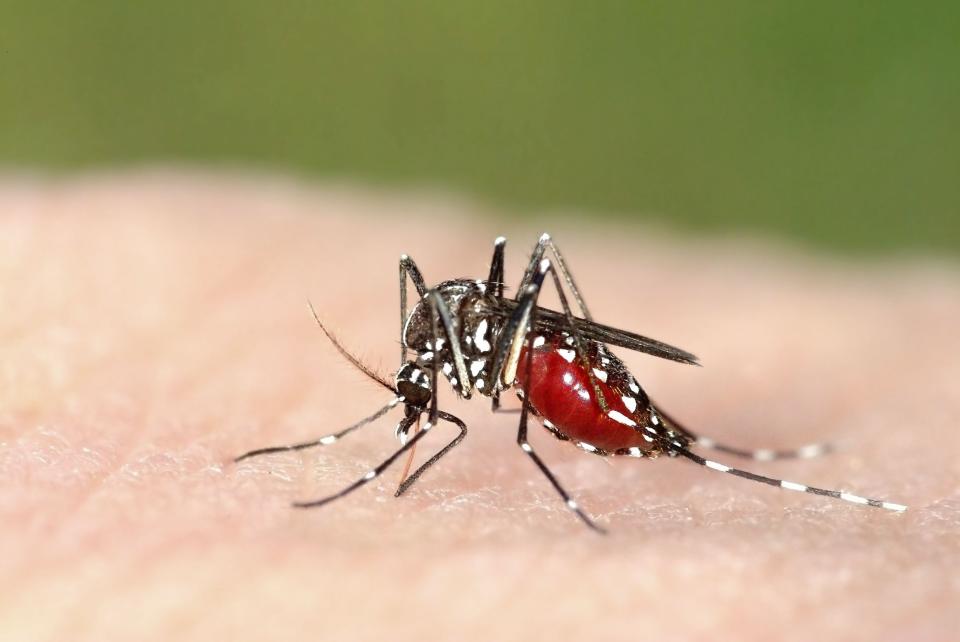
But all is not lost. Biologists are taking a bold new approach to stop the virus from spreading any further. Rather than developing a new vaccine or keeping mosquito populations at bay with insecticides, biotech firm Oxitec plans to fight the spread of Zika by deploying swarms of genetically engineered mosquitoes that will prevent virus-carrying bugs from multiplying.
The science behind it all is immensely complicated, but the overall idea is actually pretty easy to grasp. Basically, Oxitec has created a genetically modified breed of the Aedes aegypti mosquito — the species that is primarily responsible for spreading the Zika virus. This GM version (called OX513A), has been engineered to carry a gene that causes offspring to die before they reach reproductive age. When Oxitec releases these OX513A mosquitoes into the wild, they mate with females and produce offspring that never fully mature — eventually leading to a sizable reduction in the Aedes aegypti populaiton, and (hopefully) a noticeable decrease in the spread of the Zika virus.
It’s basically the biological equivalent fighting fire with fire. To stop the spread of a disease that causes birth defects, we’re essentially using genetic engineering to give mosquitoes birth defects. And it’s highly effective too — Oxitec has reportedly seen a 90 percent reduction in mosquito populations in a number of different trial locations across the globe.
Now here’s the awesome part. As it turns out, the Aedes aegypti mosquito also happens to be the same species that carries a number of other tropical diseases. Oxitec actually developed the OX513A mosquito in an effort to stop the spread of dengue fever, and has already trialed it (with a great deal of success) in various locations in Latin America and Asia. This means that the company’s solution is more or less ready to roll — it doesn’t need to be adjusted in any major way to help fight the spread of Zika.
Moving forward, Oxitec has plans to expand its existing operations in Brazil (which currently cover about 5,000 people) and eventually build a new mosquito factory that will allow the company to scale up and provide mosquito control for a population of over 300,000. The future of vector control is looking bright!
There is so much wrong with the story below. However, it is important that people are aware of it, and even more important that you begin to work on things to provide yourself and your family and neighbors with real food.
When any bureaucrat believes that he can insinuate himself between anyone’s mouth and stomach, you have overreach of incredible proportions. This is the FDA Food Code in effect. This is the result of people allowing the government to control areas of their lives that the government has zero business involving itself in. The Food Safety Modernization Act is going to kill those who worked on “exempting” themselves from the regulations by staying small and local. You still have to apply for an exemption, which gives the tyrants the authority to control you.
The answer is that we must not ask permission. We must deal directly with each other and not allow these tyrants entry into the very thing that sustains us. Heck, if the FDA had things their way, we’d all be eating Soylent Green and other dead food and paying the big pharma, big chemical companies for more medications to address our symptoms that then cause more problems requiring more medications to address the symptoms….and voila! Captive supply for death merchants.
I guess you can tell this makes me rather angry. If it doesn’t make you angry, I submit that you are part of the problem.
Currently, after more than a decade of fighting against this exact type of tyranny, I am dedicating myself to doing many of the projects that I have put off trying to defend against the wholesale onslaught against real food by the global govicorp. I must do all I can to feed my family and provide for my neighbors. I encourage everyone else to do the same. Here is the article:
FORT WORTH TX – Eldon Hoolely, who runs a small, family operated dairy farm is being summoned to court on Monday after some of their raw milk product was found inside the city limits of Fort Worth. The City of Fort Worth is now claiming that Rosey Ridge Farms, which is located nearly 40 miles south of city limits has somehow committed $3,000 worth of city ordinance violations.
Elmer DePaula, a health superintendent for the city claims that Rosey Ridge Farms was operating an illegal food establishment within the city limits. When in actuality, a food cooperative was purchasing the raw milk and transporting the product back to Fort Worth to distribute to it’s members.
Hoolely is licensed to sell his raw dairy products out of Rosey Ridge Farm, and says he’s being targeted as if he was running an establishment in Fort Worth itself.
“I never delivered anything to Fort Worth, when it leaves the farm, it’s bought and paid for, and in the hands of the consumer,” he said. “We run a very clean, raw milk operation, and people are really wanting to get back to real food again.”
Once the raw milk leaves Hooley’s farm, he has no operational control as to where the product ends up.
From their website: “Rosey Ridge Farm is located 2 ½ miles off I-35W approximately 35 miles south of Fort Worth. We are a fully licensed and inspected Grade A Retail Raw Dairy with a Food Manufacturing Permit for other dairy products, including Raw Aged Cheese from our dairy. All Natural grazing is practiced for our cows and calves. We do not feed any GMO grain and unless we have a dry year with poor quality feed, do not feed any grain. The farm consists of a 35 cow dairy of Jersey and Jersey Brown Swiss cross cows that are well fed and cared for and milked twice a day. Pigs and chickens are fed whey from the cheese and leftover milk by-products. Our chickens are cage free and roam freely over fields after the cows and calves and lay very nutritious eggs. We do not use antibiotics, hormones, or steroids in our dairy. We farm around 250 acres for grazing and hay. Oats and wheat is planted in the fall for winter grazing while native and forage grasses are grazed in warm weather.
Please come by and see us! Enjoy the country life and be a part of wholesome community building at the farm. Bring your children and let them pet the animals and enjoy a horse ride. If you come in the late afternoon, you can get in on the milking. For groups, please have us schedule an event for you.”
So now their family is in jeopardy of losing $3,000 of their hard earned income to unjust fines placed upon them. The charges are that they distributed some “unfit” food, and are operating an illegal food establishment.
Recently the ordinance was updated and passed by the Fort Worth City Council to ensure raw milk was specifically mentioned, “… it is the distribution of raw milk and raw milk products which is prohibited, regardless of retail status.”
Real Milk Texas have expanded their popularity and are raising awareness about the health benefits and chemical free raw dairy products.
The growing movement of the people to make their own food choices is being stifled by the federal, local and state governments with their concerns about public health. Mr. Hooley told brettsanders.me that
“It’s not about acting against the government, it’s about the government overreaching and telling us what foods we can and cannot eat”. He shared this Thomas Jefferson quote with me “If the people let the government decide what foods they eat and what medicines they take, their bodies will soon be in as sorry a state as are the souls who live under tyranny”.
Hooley concluded with “Altering nature is not the answer, and that healthy unpasturized milk and farm fresh chemical free foods is the closest thing to nature for our health and well being, and the government needs to keep their hands off our food “.
He and his Family are asking for help by showing up at the courthouse on Monday morning in downtown Fort Worth to support his and other small farms around the country in bringing the ‘farm to table’ concept the forefront. Here is the link to the event.
(NaturalNews) If it’s been deemed bad in other countries, that’s often when the United States comes in and welcomes it with open arms. In this case, we’re talking about the fact that a California judge recently dismissed two lawsuits that claimed the Food and Drug Administration (FDA) illegally approved a harmful drug additive – ractopamine hydrochloride – used in animal feed.(1)
Indeed, despite having information about the weight gain inducing drug’s detrimental effects on animals, and that the active ingredient, found in the brand Paylean, is banned in 150 countries, U.S. District Judge Yvonne Gonzalez Rogers turned a blind eye.(1)
FDA records revealed that pigs in particular have suffered horrific consequences from being given the drug, which is designed to make them gain weight without having to consume a great deal of feed. While cost effective for the farming industry, it’s been found to have rendered 160,000 pigs unable to walk, to experience hyperactivity and broken limbs, and even to die.(1)
In fact, a Food and Environment Reporting Network (FERN) investigation determined that ractopamine is fed to “an estimated 60 to 80 percent of pigs in the United States” and has “resulted in more reports of sickened or dead pigs than any other livestock drug on the market.” Over the years, farmers and veterinarians have repeatedly expressed concern over ailing pigs.(1)
Still, the judge feels it’s appropriate to dismiss the lawsuits while these horrors continue to unfold.
Judge’s unbelievable reason for dismissing lawsuits
A portion of the judge’s explanation for the motion to dismiss reads as follows:
Due to statutory and regulatory requirements that applications to FDA for new drugs remain confidential… plaintiffs only became aware of the approvals, and FDA’s associated decision-making, when they were final and published in the Federal Register… Thus, plaintiffs were not able to participate in the administrative process prior to the FDA approvals at issue… Central to defendant-intervenor’s motion to dismiss, plaintiffs do not allege that they pursued any administrative remedies with the FDA relating to their NEPA grievances following the FDA approvals.(2)
So there you have it. The FDA is protected by secrecy, able to approve harmful drugs under a cloak of application confidentiality, knowing full well that participation in approval processes is limited. Not everyone is in on it, of course, especially those who the FDA knows would be likely take issue and dare to ask questions.
Organizations who take issue with this additive include the Center for Food Safety, the Sierra Club, the United Farmworkers of America and the Animal Legal Defense Fund, all of whom – along with others – originally filed the suit in 2014. They maintained that it violated the National Environmental Policy Act (NEPA) and Administrative Procedure Act when the animal feed additive containing ractopamine hydrochloride was approved. They are also adamant that the FDA did not properly test the feed additive, which is manufactured by Elanco, a division of Eli Lilly.(1)
What this means for you
What does this mean for your food and for those who advocate the humane treatment of animals? It means that animals will continue to be given drugs that severely compromise their health. They are dying, trembling and living in a constant state of fear.
It also means that the food you eat involves an additive – ractopamine hydrochloride – which has actually been deemed “not for human use,” yet has turned up in tested meat samples. This doesn’t just pertain to pigs, either; it’s been found that ractopamine is fed to turkeys and cattle as well.(3)
If this has you shaking your head in disbelief and disgust, it should. Once again, greed enters the picture – one that’s well-framed by loopholes and hush-hush regulatory processes.
It seems like every week there is another heavily weighted study showing how negative Round Up is for life. Here’s yet another article on a US study that, of course, Monsatan is baling about:
April 25 (Reuters) – Heavy use of the world’s most popular herbicide, Roundup, could be linked to a range of health problems and diseases, including Parkinson’s, infertility and cancers, according to a new study.
The peer-reviewed report, published last week in the scientific journal Entropy, said evidence indicates that residues of “glyphosate,” the chief ingredient in Roundup weed killer, which is sprayed over millions of acres of crops, has been found in food.
Those residues enhance the damaging effects of other food-borne chemical residues and toxins in the environment to disrupt normal body functions and induce disease, according to the report, authored by Stephanie Seneff, a research scientist at the Massachusetts Institute of Technology, and Anthony Samsel, a retired science consultant from Arthur D. Little, Inc. Samsel is a former private environmental government contractor as well as a member of the Union of Concerned Scientists.
“Negative impact on the body is insidious and manifests slowly over time as inflammation damages cellular systems throughout the body,” the study says.
We “have hit upon something very important that needs to be taken seriously and further investigated,” Seneff said.
Environmentalists, consumer groups and plant scientists from several countries have warned that heavy use of glyphosate is causing problems for plants, people and animals.
The EPA is conducting a standard registration review of glyphosate and has set a deadline of 2015 for determining if glyphosate use should be limited. The study is among many comments submitted to the agency.
Monsanto is the developer of both Roundup herbicide and a suite of crops that are genetically altered to withstand being sprayed with the Roundup weed killer.
These biotech crops, including corn, soybeans, canola and sugarbeets, are planted on millions of acres in the United States annually. Farmers like them because they can spray Roundup weed killer directly on the crops to kill weeds in the fields without harming the crops.
Roundup is also popularly used on lawns, gardens and golf courses.
Monsanto and other leading industry experts have said for years that glyphosate is proven safe, and has a less damaging impact on the environment than other commonly used chemicals.
Jerry Steiner, Monsanto’s executive vice president of sustainability, reiterated that in a recent interview when questioned about the study.
“We are very confident in the long track record that glyphosate has. It has been very, very extensively studied,” he said.
Of the more than two dozen top herbicides on the market, glyphosate is the most popular. In 2007, as much as 185 million pounds of glyphosate was used by U.S. farmers, double the amount used six years ago, according to Environmental Protection Agency (EPA) data.
Read more at Reutershttp://www.reuters.com/article/2013/04/25/roundup-health-study-idUSL2N0DC22F20130425#We3PpH2hcL7tFrpy.99
The attorney responsible for pushing the “Responsible Ohio” legalization effort for cannabis isn’t openly admitting that he is an oligopolist, or a fascist, but I’ll say that he is. If he takes umbrage with it, he is welcome to call me and we can argue semantics and right and wrong in person. The people paying for it because they will be the ten entities allowed to grow it there are the same. If it bothers them, oh well. In effect, they are entering into a realm of not being protected from public comments putting their character into question because they are attempting to ensconce a cartel into a state’s constitution. Nothing about it indicates any respect for the idea of a level playing field or free market economics.
Here is an article on this issue. If my spidey-sense is serving me right, this is likely to be similar to what Show Me Cannabis might offer up in 2020 if we fail to get the Missouri Cannabis Restoration Act (2016-013) through in 2016…Hopefully, we won’t have to go down that path:
Don Wirtshafter, an Ohio lawyer who has long fought to make marijuana legal, nonetheless said he opposed Issue 3, a legalization amendment, seeing it as “opportunists seeking monopolistic gains.”Credit Andrew Spear for The New York Times
COLUMBUS, Ohio — As a member of the International Cannabinoid Research Society, a collector of antique marijuana apothecary jars, the founder of an industrial hemp business and “a pot smoker consistently for 47 years,” Don Wirtshafter, an Ohio lawyer, has fought for decades to make marijuana legal, calling it “my life’s work.”
But when Ohio voters go to the polls Tuesday to consider a constitutional amendment to allow marijuana for both medical and personal use, Mr. Wirtshafter will vote against it.
Issue 3, as the proposed amendment is known, is bankrolled by wealthy investors spending nearly $25 million to put it on the ballot and sell it to voters. If it passes, they will have exclusive rights to growing commercial marijuana in Ohio. The proposal has a strange bedfellows coalition of opponents: law enforcement officers worried about crime, doctors worried about children’s health, state lawmakers and others who warn that it would enshrine a monopoly in the Ohio Constitution.
A selection from Don Wirtshafter’s collection of antique marijuana apothecary jars. Credit Andrew Spear for The New York Times
The result has been one of the nation’s oddest legalization campaigns. It pits a new generation of corporate investors against grass-roots advocates like Mr. Wirtshafter, who deplores “opportunists seeking monopolistic gains” and laments that America would have been much better off “if they would have just let the hippies have their weed.”
A recent poll by the University of Akron shows voters evenly split, but if the proposal passes, Ohio will be the first state to approve marijuana for personal use without first legalizing medical marijuana. That would put Ohio, a swing state, at the forefront of the national movement to overhaul marijuana laws — just in time for the 2016 presidential campaign. Gov. John R. Kasich of Ohio, a Republican candidate for president, opposes Issue 3.
“If Ohio wins, it will be a significant step forward for the broader movement — nothing will excite attention like that,” said Ethan Nadelmann, the executive director of the Drug Policy Alliance, which has helped lead the national drive for legalization. But his group is remaining neutral rather than endorsing Issue 3, he said, “because of the problematic oligopoly provision.”
To complicate matters, the Ohio General Assembly has put a competing initiative, Issue 2, on the ballot; known as the antimonopoly amendment, it would block Issue 3 by prohibiting the granting of special rights through the State Constitution. There is certain to be a protracted legal battle if both measures pass.
The story of how Issue 3 got onto the ballot begins here in Columbus, the capital, with Ian James, a political consultant whose company, the Strategy Network, specializes in gathering signatures for ballot initiatives. In 2009, his firm helped legalize casino gambling in Ohio through a measure that amended the State Constitution and specified where casinos could be located. Jan Lefebre, a ResponsibleOhio staff member canvassing in Columbus, Ohio, met Shannon Lakanen, left, who supported Issue 3, a proposed constitutional amendment to allow marijuana for both medical and personal use. Credit Andrew Spear for The New York Times
Mr. James said he had “taken that premise and applied it to marijuana.” In early 2014, he said, he began meeting with lawyers and a potential investor, James Gould, a Cincinnati sports agent, to talk about a “tightly regulated system” to make marijuana available in Ohio. An organization called the Ohio Rights Group, then represented by Mr. Wirtshafter, was already gathering signatures for an initiative to make medical marijuana legal.
But Mr. James had a more ambitious plan.
With help from Mr. Gould, he found 10 investment groups willing to put up a minimum of $2 million each to finance a campaign to pass an amendment that would legalize marijuana for medical use and personal use in small amounts; set up a commission to regulate it; and designate 10 parcels of land — each owned or optioned by funders of the initiative — where marijuana could be legally grown and cultivated for commercial use.
Adults 21 and older would also be allowed to grow small amounts of marijuana — up to four flowering plants — for themselves. The state commission would license retailers, who would be required to win elections in local precincts.
The backers call themselves ResponsibleOhio. Among the investors: the former professional basketball player Oscar Robertson, the fashion designer Nanette Lepore, Mr. Gould and two great-great-grand-nephews of President William Howard Taft. Each investment group has committed as much as $40 million to build facilities if Issue 3 passes.
Photo
Ian James, a political strategist, has worked extensively with ResponsibleOhio, the pro-legalization group led by wealthy investors. If Issue 3 passes, they would have exclusive rights to growing commercial marijuana in Ohio. Credit Andrew Spear for The New York Times
Mr. James, whose detractors note that his firm is earning more than $5 million to run ResponsibleOhio, makes no bones about what critics call “the corporatization” of the marijuana business. He said the sale of marijuana would, beginning in 2020, generate $554 million a year in tax revenue for Ohio; 85 percent would go toward safety services and infrastructure repair.
“We have clearly taken this from the tie-dye to the suit-and-tie approach, there is no question about that,” Mr. James said. “Right, wrong or indifferent, this is the way legalization is moving in this country now.”
National advocates are split: The Marijuana Policy Project, like the Drug Policy Alliance, is neutral on Issue 3, while the National Organization for the Reform of Marijuana Laws, or Norml, gave it an uneasy endorsement. Some legalization proponents say Mr. James has created a new model.
“If he is successful with this, a bunch of very rich people will be interested in hiring him to try it in other places,” said Douglas A. Berman, a law professor at Ohio State University who has advised ResponsibleOhio.
Mr. James says he has no plans for other states, though at least five — including California and Nevada — are expected to have ballot initiatives in 2016.
Photo
Buddie is the mascot for ResponsibleOhio, a pro-legalization group led by wealthy investors. Credit Andrew Spear for The New York Times
Outraged lawmakers in Ohio’s Republican-controlled legislature, unwilling to cede control over drug policy, responded with Issue 2, which passed the House with bipartisan backing and the Senate along party lines. State Representative Michael F. Curtin, a Democrat and former editor of The Columbus Dispatch, helped draft the measure, and is a driving force behind Ohioans Against Marijuana Monopolies, the opponents’ coalition.
He calls Issue 3 “a prostitution of the initiative process.”
ResponsibleOhio is making its case to voters on the airwaves (Mr. James said his group would spend as much as $9 million on radio and television ads); with celebrity endorsements (Montel Williams, the talk show host who touts medicinal marijuana as treatment for his multiple sclerosis, was here last week); and with paid canvassers who, Mr. James said, will have knocked on one million doors by Election Day.
But perhaps the group’s most contentious marketing effort has been Buddie, an anthropomorphic marijuana bud who looks a bit like a spear of asparagus wearing green cowboy boots and a blue cape, and who has been turning up on college campuses around the state. Critics liken him to Joe Camel, the cartoon character accused of marketing Camel cigarettes to children.
On the campus of the University of Cincinnati on Thursday, Buddie posed for photos and found no shortage of fans among students; most eagerly accepted free T-shirts (with messages like “O-High-O”). Many who stopped were passionate about legalization. Others said it mattered little to them. One, Lee Idoine, told campaign workers who accompanied Buddie that he “worried about the big businesses getting an edge on the market right away.”
Mr. Wirtshafter, who practices law in Athens, Ohio, but resigned as the lawyer for the Ohio Rights Group after it endorsed Issue 3, said Buddie proved “how little the organizers of Issue 3 knew about cannabis, its politics and its users.” Mr. Wirtshafter is now active with a new group, Legalize Ohio 2016, which plans its own ballot initiative next year.
On Saturday, he planned to attend a Halloween celebration with a mascot of his own: Monopoly Man.
If you’ve heard me speaking on the issue of cannabis and legalizing this plant the produces food, fiber, fuel, and medicine, you may have heard a little bit about why the “medical” initiatives are actually not a wonderful deal. Usually you have to exhaust all pharmaceutical attempts at addressing your issue. Then have a special doctor recommend medical cannabis for you or your loved one’s issue, then you have to get approved by the state for it, and then you have to get to an approved dispensary that sells it. In effect, it can be “legal” in name only and if you are found to have it without all the hoops being properly jumped through, you could be a felon.
Putting sick people through the meat grinder of the medical industrial complex with all the negative effects of pharmaceuticals doesn’t seem compassionate to me at all. Below is an article on this issue in New Jersey:
By KIM MULFORD – Associated Press – Saturday, October 31, 2015
CHERRY HILL, N.J. (AP) – Michelle Teel sees a pain specialist to help her manage the devastation that five years of breast cancer treatment has wreaked on her body. The 35-year-old Deptford woman suffers from bone pain and a stubborn six-inch leaking wound on her chest that won’t heal.
Oxycodone does little to ease her discomfort.
“I’m in pain every day,” the former reporter said.
“If I come up with the money, I want to try the (medicinal) marijuana,” Teel said. “I want to be on something that works.”
Though five alternative treatment centers are now open across the state, including two in South Jersey, patients still face hurdles accessing legal cannabis. Widely praised by doctors for its strict regulations, the state’s marijuana program faces bitter criticism from patients and their advocates.
“The program is so artificially restrictive, the vast majority of people who can benefit from medical marijuana therapy can’t access it in New Jersey,” said Ken Wolski, who leads the Coalition for Medical Marijuana New Jersey.
Since New Jersey launched its patient registry three years ago, about 5,600 people have enrolled in the medicinal marijuana program. In the three weeks since Compassionate Sciences, Inc., opened its dispensary in Bellmawr, it has served more than 460 patients, most commonly for intractable skeletal muscular spasticity, inflammatory bowel disease and multiple sclerosis.
Doctors have been slower to sign on.
Currently, 354 physicians in New Jersey can write prescriptions for marijuana, 29 more than last year. Another 79 doctors are registered, but inactive. New Jersey is the only state that requires doctors to register in the program before they can write prescriptions for cannabis, Wolski said.
The state limits marijuana prescriptions to patients with certain qualifying conditions, including glaucoma; inflammatory bowel disease; intractable skeletal spasticity; lateral sclerosis; muscular dystrophy; multiple sclerosis; seizure disorder; severe or chronic pain due to cancer and HIV/AIDS; terminal cancer; and terminal illness.
Psychiatric conditions, such as post-traumatic stress syndrome, depression and anxiety, are not included. More debilitating conditions could be added to the state’s list, if they are approved by a review panel.
Though the state Department of Health must convene the review panel at least once a year, it hasn’t done so yet, according to Donna Leusner, a department spokeswoman.
“The Department is in the process of contacting individuals that were recommended to gather more information on their background and expertise,” Leusner said in an email.
Even if a review panel agrees more conditions should be approved, its decision can be overruled by the state health commissioner, Wolski said.
“It seems like an exercise in futility,” Wolksi said. “We’re not really hopeful there’s going to be meaningful expansion” of the medical marijuana program.
Parents of children with epilepsy have urged the state for years to permit the sale of edible marijuana products. For now, they brew marijuana-infused oil in their home kitchens, unable to test their homemade concoctions for potency.
The state hasn’t yet permitted dispensaries to manufacture other forms of the herb, such as topical ointments, lozenges or oils. Compassionate Sciences, Inc., in Bellmawr submitted an application earlier this year to produce two topical treatments and a lozenge. Leusner said it was still under review.
The program also requires a doctor’s approval before patients can get a marijuana card.
Physicians can only prescribe marijuana to patients they’ve seen at least four times. Typically, doctors only accept direct payment for such visits, Wolski explained.
Once approved by a doctor, patients are charged $200 to register in the state’s medicinal marijuana program for two years. Nearly half of those registered in the program last year qualified for a reduced $20 charge to register.
Patients must pay out of pocket for marijuana, which costs $480 an ounce at the Bellmawr dispensary. The marijuana is taxed at 7 percent.
New Jersey’s legal marijuana is “the most expensive” in the country,” Wolski said.
“Anybody whose been impoverished by their illness or marginally employed, they can’t afford this program,” Wolski said. “It’s a shell of what it could have been.”
Even so, patient demand is high, said Dr. Andrew Medvedovsky, a neurologist and pain specialist with RA Pain Services in Washington Township.
“Over the 2½ years I’ve been in practice, many, many patients have asked me about medical marijuana,” said Medvedovsky, who referred patients elsewhere before he joined the state’s program in July.
Since then, he has prescribed cannabis to about 50 patients, including children with severe epilepsy. He sees patients with complex conditions that can be difficult to treat with conventional pharmaceutical drugs.
Some of his patients take four pills at night to ease painful spasms, “and they still can’t fall asleep.” He’s also concerned about the side effects and addictive nature of powerful opioids and benzodiazepines.
“They don’t provide relief,” Medvedovsky said. “They don’t really help a large population of patients.”
Marijuana offers another option for patients who have hit the limits of conventional medicine, he explained. Still, some of his patients don’t qualify for the program, because they don’t have one of the approved conditions.
“Many patients told me if they could smoke marijuana legally,” Medvedovsky said, “they would be so happy to get off their other medications.”
But it’s not easy, even for those who clearly qualify. The program permits terminally ill people to receive medicinal marijuana, for example. Just over 300 of them were enrolled in the program last year, according to state records.
Wolski pins the blame on the state’s restrictions and its lack of outreach about marijuana’s therapeutic benefits. Besides controlling pain, the herb improves appetite, helps with bladder control, and raises the spirits of those facing a terminal prognosis, he said.
“It really helps people who are elderly and dying in so many ways,” Wolski said. “It’s a sin, really, to keep it from these people.”
(((Look, I want to be very clear here. I don’t even use cannabis, because it IS illegal, and the seizure aspects are waaaay too high of a price to consider for something I would only rarely do if it were indeed legal….so I am not trying to get protections for my habit in position.)))
Over the course of the past few months I’ve been doing a fair amount of investigation on the issue of cannabis and various efforts to legalize the plant for the general benefit of humanity. Initially, I looked at the issue of legalizing cannabis as a simple matter of civil liberties with a massive pseudo criminal front propped up by drug court fees, seizure laws, probation and the expenses paid to the system in that, cheap prison labor and increased family court revenues due to foster care and custody issues…And yes, it also incidentally had benefits for people with serious medical issues.
Honestly, I have had a complete paradigm shift. Complete.
Not that the prison industry complex and costs to society associated with those issues are irrelevant, but there is a much larger, and much more evil truth about the control of cannabis that absolutely must become common knowledge. It’s particularly important that those who largely identify with conservative and Christian principles, or strong Constitutionalist ideologies become fully aware of the collusion between government and corporations to remove a beneficial plant from our access. Cannabis actually heals. And it restores life to people who are very ill. Hundreds of studies show this to be true, and also that cannabis is tremendously beneficial for our overall health.
The reason this has come to the forefront for many of us is that it is becoming increasingly difficult to hold to the idea that “Reefer Madness” has any basis in fact. It simply isn’t factual. Sometimes there are people that use cannabis that are just literally criminals and have no regard for their fellow man. These same criminals may also consume carrots, but the carrots are not the cause of their deficient characters. With or without cannabis, these people would be violent. Cannabis does not cause crime. Violent cartels exist because of cannabis being illegal. So in effect, the only violence that can truly be attributed to cannabis is state sanctioned violence through unjust laws. Simply put, the controls on this plant are the reason for violence associated with the plant or it’s distribution.
The tipping point on the truth around cannabis being put into the status of a Schedule One controlled substance (the Schedule One designation means it has NO medicinal value) has been achieved among the people. For those who have some qualms about whether or not this plant needs to be flatly legalized, please watch this video about Rick Simpson oil. This man has given people -as in freely given- cannabis oil, and they have been cured of all manners of disease including multiple types of cancer and terminal cancer. If you watch that video and still have any uncertainty left in you, watch this video, and forgive the one instance of yelling at the very beginning. The facts are that corporate interests paid to have cannabis categorized as a Schedule One controlled substance. Corporate interests, violent cartels, the prison industry and tyrannical seizure laws fattening the wallets of a few, have been the only beneficiaries of cannabis control.
Multitudes of people have died from being denied the best thing on earth to beat cancer. And the people in the corporations, the politicians that continue to be bought off from taking right action, and the pharmaceutical companies, are complicit in their deaths. Yes, I said complicit. The facts are in. Cannabis prohibition must end and will end very soon. Just look at this list of the plethora of studies that show the benefits of cannabis in treating human ailments. There are hundreds of studies on the effectiveness of cannabis, not just in treating symptoms of disease, but actually curing the disease in many instances. It can’t be covered up any longer. However, we do have some questions that we need to answer for ourselves as we move forward on cannabis.
The first question is whether or not we are happy with the current state of controlled and declining health and access to alternative/natural treatments? Currently, the FDA -who took 30 years to admit that vitamin C is helpful in thwarting the common cold- is in control of our food and our medicine. On average, FDA approved medications kill 100,000 people per year. Those are their own reports on the FDA’s website. The FDA has stated they are justified in exercising authority to control what we consume because the Almighty gave commands on dietary laws in Scripture. They think they have as much authority as the Creator of the Universe. Seriously. Check it out here. (page 26 of 30)The FDA also holds the position that “raw milk is inherently dangerous and should never be consumed by any one for any reason.” Never mind the fact that if that were a true statement, there would never have been a second generation of human beings.
Honestly, I could go on for a full-length book about the criminal behavior of the FDA in relation to our food and medicines, but I’ll restrain myself. Just watch network tv for one night, count up the recalls and suits being advertised along with all the new medications you should talk to your doctor about, then ask yourself if you think they are doing work that is truly beneficial for humanity. If you can truthfully say that you are pleased with the quality of our nutrition, not knowing whether or not you are consuming genetically modified organisms, and the health care system in this country, then you need do nothing. If you are not satisfied with the status quo of chronic pain, disease and debilitation, and lack of personal control, then it’s time to do things differently.
The next series of questions we must answer is what kind of business model “We the People” want to follow as we end prohibition on this plant? Do we want to stick with the controlled access, medical industrial cartel dialectic, where production, distribution, and access are licensed and heavily regulated, and keep fascism growing? Or do we want to seek free market enterprise and let everyone who is interested put their own money on the line and succeed or fail on their own merits? Have layers of bureaucrats proven themselves to be beneficial to our literal wellbeing? Do we think we personally should have the ability and choice to make decisions about what we consume? Or do we believe the bureaucrats, paper pushers and corporations have proven themselves to have a legitimate and beneficial hand in securing our health?
Once we’ve answered these questions to our satisfaction, then we must decide how we move forward on the issue of cannabis legalization and access. In Missouri, we will have two very different initiatives on the ballot in 2016 for a proposed Constitutional amendment.
Since I’m from the Show Me state, and these two initiatives are responsible for bringing me to the paradigm shift I mentioned above, I bring you “The Tale of Two Initiatives”. One is very short and flatly legalizes it. The other is 4 pages of small print and proposes to regulate cannabis within the Constitution of the state.
From that short overview, it is very likely that those who know me have already determined which initiative has won my support. But it’s necessary for everyone to make up their own minds about this, so the remainder of this rather lengthy article is going to focus on the nuts and bolts of these two initiatives. Other states have similar proposals in position.
Let’s deal with the short one first. This initiative, identified as 2016-013, was written by Mark Pedersen formerly of the Kansas City NORML group. Even many major proponents of legalizing cannabis have said it was too radical. Notably, the national level of the KC group that worked with Pedersen, NORML (the National Organization for Reform of Marijuana Laws) is reported to be the biggest opponent of this initiative. We’ll have to deal with the reasons behind NORML opposing this amendment in a subsequent article. For now, we’ll just look at the “radical” amendment first and talk about possible pros and cons related to it.
2016-013 is currently being circulated for the collection of signatures to get onto the 2016 November ballot. It proposes to remove cannabis from the controlled substances list. It doesn’t place limits on the amount one person may possess or grow. It also doesn’t have any age limits set within the confines of the proposed amendment to the Constitution. It secures the right of people to grow enough for their personal use and prevents extra regulatory controls on farmers and processors of all cannabis products, including all strains, cannabis sativa, cannabis indica, cannabis ruderalis, and crosses of these cannabis strains. It prohibits the mere presence of cannabis and cannabis products from serving as cause to charge with impaired driving. And I do admit that it does indeed seem radical on its face. But let’s examine the issues so we can make determinations with solid information.
First up, let’s look at the “radical” idea of not limiting the amount that an individual may grow. This is terrifically important. If you watched the Rick Simpson “Run From the Cure” video I linked earlier, you are aware that a single full treatment for cancer or serious health issues requires a pound of cannabis. The oil from the plant is extracted and a pound will render about 2 ounces of oil. It’s a lot of cannabis. What’s more, if a person has received chemo or radiation, they will need at least 2 full protocols of the cannabis oil to fully heal. It can take a lot of plants to get those amounts of cannabis. The street value of a single treatment amount bought by the ounce is about $4800.00 right now. If you can get the entire pound and buy it all at once you might be able to get a discount and get it as low as $3400. Is that too high of a price to cure cancer? Certainly not, but what if you don’t have $3400 to $4800? Does your ability to pay for a treatment make you worthy of having it? Conversely, does the inability to pay make you a less valuable human being? If there aren’t limits placed on the number of plants one may have, it opens the door for people to be better able to heal themselves and to take personal responsibility for their own well being.
Next let’s look at the thing that really struck me personally about the 2016-013 initiative. There is no age limit set forth for possessing or using cannabis. I thought that was pretty over the top, and I told the people who contacted me about the initiative that it was my opinion that it needed an age limit. They made some pretty good arguments against it. One of those arguments was very basic from a freedom advocate’s point of view. The age of majority isn’t stipulated in the Bill of Rights. Also, it isn’t a static thing. It is 21 for some things and 18 for other things and it isn’t something that should be ensconced in our Constitution to secure a right. Even more importantly, in light of the healing potential of cannabis oil, would anyone with any compassion in them want to prohibit a parent faced with a seriously ill child from being able to help that child? I wouldn’t. It would be unconscionable to put anyone in that position, and instead run them through a bureaucratic and medical industrial complex maze to do what every parent must do to be right in the eyes of their Creator and provide for the child help in a time of trouble. Also, it is emphatically evident that parents have a duty to protect their children from ingesting things that they shouldn’t be ingesting. If you are going to have cannabis in the house, you have to be responsible and not allow your children to use it on their own. In other words, BE A PARENT!
Next let’s take an actual look at the issue of THC in the system and driving under the influence. THC being present in the system is simply not at all equal to impairment. Yes, THC is the psychoactive chemical in cannabis, but its presence within a person’s system doesn’t mean that the person is impaired. It isn’t like blood alcohol content, in that a person could have high levels of THC in their system, but still not be impaired. If someone is using cannabis to treat themselves for health reasons, THC will be high, but they are not likely to be impaired if they have been following a protocol for any length of time at all. There is a lot of science behind this fact, and it is important to look at the science and make logical decisions about THC as opposed to emotional decisions predicated on a faulty basis. In no way shape or form am I saying that you cannot be impaired by cannabis consumption. You certainly can be impaired. That impairment would be evident in a motor skills test that was video taped and witnessed by at least two witnesses. Whether people like it or not, that would be evidence of impairment, but THC levels are not a credible assessment of impairment.
A study using coordination testing showed inevitable failure on field sobriety testing if blood THC levels were 25 to 30 ng/ml. But, many failed testing at 90 and 150 minutes after smoking even though plasma concentrations were rather low. The researchers had the foresight to conclude that “establishing a clear relation between THC plasma concentrations and clinical impairment will be much more difficult than for alcohol”. This is because alcohol and THC are chemically different and are metabolized differently inside the body.
Now we are ready to take a look at the “Show Me Cannabis” (aka Mo NORML) initiative proposition.
First off, this initiative, 2016-009, isn’t being circulated for signatures yet because the proponents of the initiative have reportedly “gone back to the drawing board”. However, it is available from the Missouri Secretary of State’s office at this link. I have put in a couple of emails asking for a conversation with the gentleman heading up this initiative and have received no replies, so I cannot relate any responses to questions I have regarding this initiative.
In the first sentence, this initiative is providing for regulatory control of cannabis to Missourians over the age of 21. It stipulates that regulations are to be promulgated for many purposes. Here are a few of those. Promulgate regulations to allow for state licensed producers, retailers, and distributors of cannabis. It states that revenue generated by cannabis will be used to fund police and firefighter pensions and retirement plans as well as elementary and secondary schools. That the revenue will be used to prevent: the establishment of cartels, under age 21 use, and to prevent advertising cannabis to those under the age of 21. It allows for households to grow up to six plants, have up to 16 ounces of dried cannabis, or 20 ounces of liquid cannabis. It proposes to expunge nonviolent cannabis convictions. Also to require a person to get a license to purchase, sell, manufacture, deliver or process cannabis. It requires the labeling of the THC content on all cannabis products, and provides for limitation on the level of THC allowed in cannabis that may be sold. It provides for a 25% excise tax on the first “fair market sale” of all marijuana….And more. Lots more, actually.
Let’s start with the 25% excise tax on the first “fair market sale” of any cannabis. Well, right there we have a problem. “Fair market sale” is defined in this proposed amendment as “means with respect to the sale of a product, a sale in which the purchase price of the product is not less than the price that a willing seller would accept and a willing buyer would pay in the open market and in competition with other similar products.” Hmmm.
If this is absolutely constrained to the FINAL sale of the product to the consumer of the product, that means that if you are buying from a “licensed retail establishment” that you will be paying approximately 33% in taxes to the State. (The 25% excise and the 8% sales tax) It doesn’t state that it is on the final sale though. It says it is on the “first sale in an open market”. So…does that mean when the grower sells to someone for either distribution or manufacturing that the grower has to collect the 25% for the state? Here is the definition of an excise tax. (It’s rather complex, and this article is already very long, so please read the link) It certainly sounds to me as though the tax is something that is supposed to be collected on the sale by the grower after he pays the license fee to be able to sell the product at all.
He must then increase the down line cost of the product by adding an additional 25% cost to the next in line. Then when you get to the retail portion, the cost of goods is further increased by the state sales tax. So, let’s say the licensed grower sells an ounce for $100 for his labor and upkeep, and has to collect $125 from the licensed wholesaler/distributor or manufacturer to whom he sells. The distributor or wholesaler then has to mark up the product by whatever percentage will allow him to pay his license fee and make a living wage to the retailer, who then must again mark up what he sells the product for in order to cover his own living wage. Presume you do typical mark up of 30% for the distributor/wholesaler (more for the manufacturer as there are additional processes involved) as the distributor/wholesaler is supposed to be moving volumes. Now you’re looking at $125 + $37.50= $162.50. Then the retailer usually has to double as they have more insurance liability by having people come in and out of their location, and they have to deal with displays and such. Now you’re looking at $325 per ounce before the typical 8% sales tax ,which is another $26, so the cannabis consumer pays $351 per ounce and the state makes $51 plus licensing fees every step of the way. Mind you, $100 an ounce as a starting price is terrifically low. But is this really going to help out the average person a whole lot? I’m all for the State making money on the retail, but my rule of thumb is what did Yahweh ask for a tithe? Only 10%. Why does the State deserve more than 2 and half times what He requests? Maybe I’m the only one who thinks this way…I kind of doubt it though.
Someone will say, “But you can grow up to six plants, and that surely is enough for a household!” Well, let’s look at the six plant limit. Below you’ll find a little scenario that is not at all unreasonable. Just ask anyone who has ever gardened.
So you decide you like to garden and you’ll grow your own cannabis and therefore bring down the cost of making cannabis available for your household. You order seeds and spend $90 for ten seeds. Really. That’s a pretty good price, too. So you very carefully germinate your seeds and 9 out of ten germinate. Now you have to throw three down the toilet or you’ll be over your six plant limit. You carefully place these in small pots. They begin to put on leaves and now you have your six plants! You’re all legal and looking forward to excellent yields…Then you come home from work and two of your seedlings wilted on you. You mist them and hope they’ll recover. Well, they don’t. So now you have four plants and no more seeds to germinate. You figure that’s all fine because the advertisement said this was a high yielding variety and you can only have 16 ounces of dried product anyway. So whenthey get to be about 15 inches tall you put them outside into the best area of your backyard for good sun, but not too much, and you check on them daily. You patiently wait for September when you should be able to harvest. In the end of June, you and your family go away for the weekend and when you come home, one of your plants has simply disappeared. And the Japanese beetles picked that weekend to hatch out and eat your remaining plants up like crazy. So you set about making a protective enclosure for them and that involves shade cloth and posts and a gate and it takes you the rest of the week to get that done. You only have a couple of hours to work on it every night because this endeavor isn’t one that actually pays the bills. At this point you’re thinking it’s probably a lot easier to just buy the stuff, but you’re stubborn and keep after it until September. They’re looking okay, but the yields in the advertisement don’t look attainable…Harvest time comes and you get a total of three ounces from your three plants. Probably because the Japanese beetles hit right at flowering time…So you have three ounces after 6 months of tending and you’re scratching your head to figure out if it’s even worth trying again.
Imagine going through that when you are ever so hopeful that you will get a good yield on a strain that will help your child with epilepsy, or a parent with debilitating arthritis, diabetes, or cancer. Six plants? At what stage of maturity? And what happens if you are over that level and get caught by Code Enforcers or the police? Well, we can’t answer that other than to say the legislature will authorize fines and penalties for going over the “Household Exemption” level. It does limit it to up to $1000 or a year in jail. Does that sound good? Does it count toward the retirement funds and school funds prescribed in this amendment proposal? The proposed amendment says “revenue”. Do the enforcement fines and penalties count toward revenue?
Let’s consider the issue of using the amendment to aid law enforcement and firefighters pensions and retirements, and helping out the public school system with additional funds. While I am pro-education and pro-firefighter and all for peace officers, don’t we already spend a fair amount of tax money on these things? Are these funds being managed well? Isn’t this what various lottery proceeds are supposed to enhance as well? If we throw more money at them, do the actual students and the actual public servants ever really benefit? With the seizure laws that have been so onerously used, I have a really hard time thinking the public needs to give more money to police so that they can get more money by citing more people for regulatory violations as promoted in this proposed amendment.
There are some good things that are done in this proposed amendment. One is expunging of nonviolent cannabis offenses. But when you compare these two initiatives that, on their face, are supposed to legalize cannabis in Missouri, one flatly does so, and the other creates a plethora of bureaucracies and potential regulatory abuses along with continued legal system fines and penalties.
Let me be very clear here, while there is no part of me that wants to tolerate minors “getting stoned” or people driving while impaired, it is apparent that the ability to control those things still exist within our legal construct. Minors do NOT have the same rights as adults. Nor do they have the same responsibilities. People who drive while they are chemically/physically impaired by cannabis to the point that they cannot properly react to the hazards on the road are not being responsible, and should be charged with driving under the influence. Video evidence should be sufficient for the enforcement of driving while impaired.
Please check out all the links I posted in this incredibly long article. It’s very important that when we have amendments to consider on the ballot that we are wise in our decisions about them. We cannot be reactive and responsible at the same time. Study it out and be certain of your decisions.
I encourage you to read these amendments again, and if you have concerns, please feel free to voice them and let’s see if we the people can positively, and responsibly, disentangle ourselves from the corporately controlled nanny state on this issue.



 A selection from Don Wirtshafter’s collection of antique marijuana apothecary jars. Credit Andrew Spear for The New York Times




 Truth Farmer
You must be logged in to post a comment.