Great News for Arkansas!

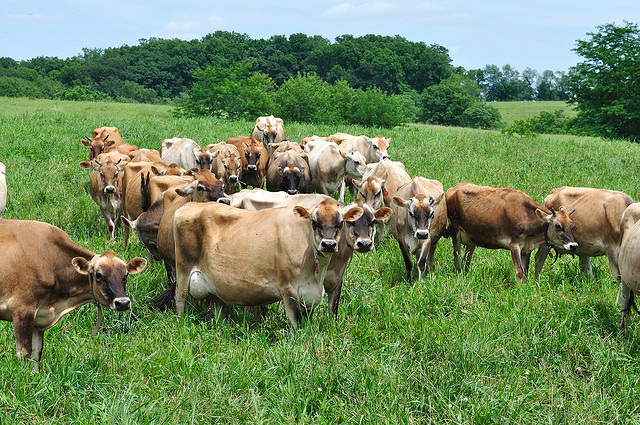
It’s wonderful! Arkansans now have the right to drink milk!!! They’ve been able to get limited amounts of goat milk for a long time, but now it’s opened up to cows as well. Good job to all those activists in Arkansas that worked getting this bill through!

Raw Milk Bill Moves Forward In Arkansas

APRIL 14, 2013

in ARKANSASBUSINESSFRONT PAGEGOVERNMENT

raw milkHis office in Little Rock is putting out the word that Gov. Mike Beebee will sign House Bill (HB) 1536, allowing the “incidental sale” of raw milk in Arkansas.

The Arkansas raw milk bill, once thought to be dead, was resurrected for two quick floor votes that by Thursday had put it on Beebee’s desk for signature. Until now, Arkansas banned sales of raw milk in the state. It only allow farms to sell up to 100 gallons of unpasteurized goat’s milk each month.

HB 1536 is patterned after existing state law in that it allows only on-farm sales of up to 500 gallons of raw milk each month. These are referred to as “incidental sales.”

Under HB 1536, “whole milk” is defined as an unpasteurized product produced on an Arkansas farm. The bill dictates that the “whole milk” should come from “healthy cows, properly fed and kept” that produce a proper mix of butterfat and non-fat solids.(full article here)

Monsanto Protection Act Moves to States

Monsanto-GMO-FoodsMissouri’s Monsanto Protection Act

©Doreen Hannes

Nothing says, “owned by Monsanto” better than Missouri’s HJR 7 and 11. Representative Jason Smith of Missouri, the Republican Nominee for US Congressional seat of retired Representative JoAnn Emerson, has put in a proposed Constitutional Amendment that would “forever protect agricultural technology” in Missouri. Emerson evidently hand picked Smith as her replacement and reportedly he flew to DC several times to be introduced to his future colleagues. Interestingly enough, one of Emerson’s daughters is a chief lobbyist for Monsanto, and Smith has received campaign donations from Missouri Senator Roy Blunt’s “Rely on Your Beliefs” PAC. Most will recall that Blunt admitted to allowing Monsanto to write the “Monsanto Protection Act” that recently passed in HB933.

There are similar protect Monsanto bills in several other States during this spring legislative session, all being touted as “Right to Farm” bills. Those States are Delaware, Montana, Indiana, and Oklahoma. People concerned with healthy food choices and the continuation of family farms should get on their State’s websites and make sure that this type of protect Monsanto legislation isn’t progressing in their State. (read the rest of my story here)

From Weston A Price….Flawed CDC Study on Raw Milk

Not that it is at all astonishing, but the detractors of raw milk have just lost the ability to use the oft cited CDC study indicating that raw milk is terrifically dangerous. Well, if they want to pretend they are intellectually honest, that is….

“April 3, 2013–Washington, D.C.–( GlobeNewswire )–A recent CDC study claims that unpasteurized milk and products made with unpasteurized milk cause 150 times more outbreaks than pasteurized milk or products made from pasteurized milk. After careful analysis, The Weston A. Price Foundation (WAPF) finds the CDC study to be substantially flawed and misleading.

In 2013, bills to expand raw milk access are being introduced in as many as sixteen states. The CDC report was issued during the 2012 legislative season. Raw milk proponents say the CDC report could have an impact on a number of state bills in 2013 that aim to broaden consumer access to raw milk. Raw milk bills in Indiana, Iowa, and Wyoming died in committee. Another example, would be Wisconsin, where Assistant Majority Leader Glenn Grothman plans to introduce a raw milk bill. Last week, Wisconsin public health officials and medical ‘experts’ put out an anti-raw milk statement that relied heavily on the CDC study.

The study, by Langer et al, can be viewed here:

http://wwwnc.cdc.gov/eid/article/18/3/pdfs/11-1370.pdf

“The CDC data released in the Langer paper, March 2012, actually showed no statistical difference in the rate of illness attributed to raw milk or products produced from raw milk compared to those produced from pasteurized milk,” says Sally Fallon Morell, president of the Weston A. Price Foundation, “so CDC used the number  of ‘outbreaks’ to make raw milk look bad.   CDC defines an outbreak as two or more illnesses, and outbreaks involving raw milk or raw milk products involve far fewer individuals than outbreaks involving pasteurized milk. What really counts is the number of illnesses.” See WAPF press release, February 2012, CDC Cherry Picks Data to Make Case Against Raw Milk.

The report has numerous scientific flaws that call in to question its credibility.  For instance the report claims that there are more outbreaks in states that allow raw milk sales. The premise that allowing raw milk sales in a state leads to more outbreaks is not valid because the researchers lumped all dairy products together for analysis rather than limiting it to fluid milk.  “Since they fail to present analysis that compares laws concerning fluid milk and outbreaks attributed to fluid milk, we must conclude that they didn’t find any statistical difference,” says Fallon Morell. “Despite the obvious motive to demonstrate a link between changing the laws to permit raw milk and increased public risk, they in fact demonstrate that they are unable to find any such consequences.”

“The CDC clearly documents the fact that it has no data to show a statistical increase in illnesses in those states that legalized sale.  The real effect of changing these laws is to enhance the public health and increase the number of families that have access to wholesome, unprocessed milk with its vital nutrition and enzymes intact,” explains Fallon Morell.

A close examination of reports on illness associated with raw milk reveals that there are an average of 41 illnesses attributed to raw milk each year, of which about 23 are confirmed illnesses.  According to a federal agency phone survey, 3.04 percent of the population consumes raw milk. The most recent figures from the CDC published in March 2013 report that there are an estimated 876,209 foodborne illnesses per year in the U.S.

“Using these figures, we might expect to see 26,637 foodborne illnesses per year among those people drinking raw milk” says Dr. Ted Beals, a retired pathologist who has made a study of raw milk safety.  “Of those illnesses we see only about 41 illnesses per year attributed to the raw milk they drink.  Only 0.2% of their illnesses attributed to all the foods they eat are associated with the raw milk they drink almost daily. These government numbers show us that raw milk is a very safe food.”

The report confirms that there have been no deaths from fluid raw milk over the period of the report.  By contrast, three people died from pasteurized milk in Massachusetts in 2007.  The government reports 15 deaths per year from raw oysters and 30 deaths per year from eggs.  “Clearly government agencies are applying a double standard to raw milk, singling it out as ‘inherently dangerous’ when other foods obviously pose a greater threat to health,” says Fallon Morell.

“We don’t want anyone to get sick from raw milk,” says Fallon Morell, “and with reasonable management practices by farmers and consumers, we could reduce the number of illness even more than the extremely low numbers now experienced.  Continued government opposition to freedom of choice is unproductive. Health officials need to acknowledge consumer demand for this nutritious food.  Producer and consumer groups are capable of setting reasonable and effective standards. Health departments need to cease their entrenched antagonism and support both public and private measures that benefit raw milk safety. And when illnesses do occur, we need to take an unbiased look at what went wrong so that we can improve milk safety.”

 westonaprice.orginfo@westonaprice.org.

Concentration in Agriculture Continues to Rise

This is a great article that helps to illustrate issues that truly affect family farmers. The USDA fails to enforce the anti-trust acts on the books that are supposed to protect the most vital part of our economy from control in the hands of a few. Now people might argue that it is against capitalism to protect the economy from concentration, but the truth is that it is impossible to have a healthy economy with excessive consolidation.

When access to market, seeds to plant, fertilizer to use, and prices received are all controlled, there IS no free market. Such is the case in the vast majority of agriculture. This scenario leads to the proliferation of biotech as they are the ones with the most money in their pockets and, as evidenced by the Monsanto Protection Act insertion into the Ag appropriations extension and Blunt admitting he “did it for Monsanto”, it should be clear that this topic is extremely important for our health and well being.

The “Missouri Monsanto Protection Act” will lead to even more concentration in this State. Representative Jason Smith, the sponsor of HJR 11 and 7, is insisting that the bill will save farmers from undo regulation at the hands of HSUS. However, the group that evidently pushed him to sponsor this tripe has some pretty obvious issues with their listed members. That group is Missouri Farmers Care. Not all of their members are in the column of the nasty and nefarious, but enough of them are that it certainly implicates the group as being a shill for the biotech industry while running under a deceptive title pretending they “care” about small family farms. Just have a look at their membership page.

Currently, Monsatan (Monsanto) owns the lion’s share of the global seed market. In the US, it is even more concentrated than in other nations. The question for the Missouri legislators (and Montana, Delaware, Indiana and Oklahoma, by the way) is who do they represent? Are they wholly owned subsidiaries of Monsanto, or do they represent the people? Their vote on this purported “Right to Farm” act will tell.

Without further adieu, here’s a look at the reality of concentration in the agricultural arena from the Daily Yonder:

With the rising concentration of companies that provide “inputs” for farmers — seeds, farm machinery, fertilizer — the prices for these goods have been rising faster than the cost of what farmers produce. Monsanto has a near monopoly on some kinds of seeds

Editor’s Note: One of the primary concerns of The Daily Yonder over the past six years has been the increasing concentration of businesses in the business of agriculture. Simply, fewer firms are providing us everything from fertilizer to groceries. 

Big business is getting bigger when it comes to growing our food.

Below is a summary of a recent report that looks at what this increasing concentration means for ag research and development. It was written by researchers at the Economic Research Service, an invaluable part of the U.S. Department of Agriculture.

To see the full report, go here

Since the 1990s, global market concentration (the share of global industry sales earned by the largest firms) has increased in the crop seed/biotechnology, agricultural chemical, animal health, animal breeding, and farm machinery industries – all of which invest heavily in agricultural research.

By 2009, the largest four firms in each of these industries accounted for at least 50 percent of global market sales. Market concentration was particularly high in animal genetics and breeding, where the four-firm concentration ratio reached 56 percent in 2006/07 (the latest year for which data are available).

Growth in global market concentration over 1994-2009 was most rapid in the crop seed industry, where the market share of the four largest firms more than doubled from 21 to 54 percent. The top eight firms in all five input sectors had between a 61 and 75 percent share of global market sales by 2009.

Firms increase their market share either by expanding their sales faster than the industry average or by acquiring or merging with other firms in the industry. Firms can expand their sales faster than others in the industry by offering better products or services (often an outgrowth of larger R&D investments), improving their marketing ability, or offering lower prices (often through economies of scale). The leading input firms in 2010 had faster sales growth than the industry average, but a significant amount of that growth came from acquisitions of other firms.

Reasons for Concentration

Reasons for mergers and acquisitions vary by industry and firm circumstances but include market forces and the emergence of new technologies. Government policies can also affect the ability of firms to compete in markets and their incentives to merge with or acquire other firms.

In the crop seed and animal breeding sectors, the emergence of biotechnology was a major driver of consolidation. Companies sought to acquire relevant technological capacities and serve larger markets to share the large fixed costs associated with meeting regulatory approval for new biotechnology innovations.

In the animal breeding sector, vertical integration in the poultry and livestock industries enabled some large firms to acquire capacity in animal breeding as part of their integrated structure.

In the farm machinery industry, many of the major mergers and acquisitions can be traced to large financial losses sustained by some leading firms during periods when the farm sector was in prolonged recession, which substantially reduced demand for farm machinery as farmers delayed major capital purchases. Firms experiencing large financial losses are often vulnerable to acquisition.

The agricultural chemical sector has been heavily affected by changes in government regulations governing the health, safety, and environmental impacts of new and existing pesticide formulations: larger firms appear better able to address these stricter regulatory requirements.

Consolidation in the animal health sector appears to be largely a byproduct of mergers and acquisitions in the pharmaceutical industry, as most of the leading animal health companies are subsidiaries of large pharmaceutical companies.(full article here)

What We Have to Look Forward to with ADT, formerly NAIS

Recently the requirements for initial tagging under APHIS’ final rule on Animal ID began to be implemented in Missouri. It caused a kerfuffle at many auction barns throughout the State as the owners weren’t prepared for the requirement. Australia is further along than we are in following the edicts of free trade under the WTO regulator’s guidelines. They have a program called NLIS. Here is an update from down under:


Penny Finally Drops For NSW FMRS ASSOC with RFID NLIS.

ABA Chair Brad Bellinger said that a sense of relief was felt through the NSW Sheep Industry when they read NSW Farmers Assoc Fiona Simpson announce that they will not be supporting sheep RFID.
New leadership within the organisation has obviously led to better policy setting where the financial welfare of their members is now at the forefront instead of Government as it had in the past.
While NSW FMRS correctly points to the enormous financial cost to producers as their reason for not backing the scheme,the fact is that it does not provide adequate trace back.
A trial commissioned by the ABA on the efficacy of RFID NLIS Cattle conducted over 14 property identification codes in all mainland states involving the movements of over 50 000 head of cattle showed 34% had lost their whole of life traceability.
A year by year description on the data showed that the accuracy level continued to drop as time progressed.These findings are consistent with the Price Waterhouse Coopers report commissioned by the Federal Government ,that admitted that the number of cattle that had lost Whole Of Life Traceability was considerable and that the problem would snowball over time.
With now over 130 million tags on the cattle database the direct costs to producers in tags and reading charges alone is close to 3/4 of a billion dollars,we have definitely been sold a very expensive lemon.
Mr Bellinger would remind the NSW Farmers Assoc that their support of Cattle RFID was conditional.Stipulating that the system must work.The ABA has all the evidence to prove that it doesn’t.
We congratulate NSW FMRS on their sheep RFID policy but we ask for the penny to drop and abandon their support for Cattle RFID.

For more information contact Brad Bellinger on: 02 67254282
Or David Byard on: 0409 426 710.
Email: ausbeef@bigpond.com

Now, This Would Be A Good Constitutional Amendment for Missouri

Recently, I wrote about Jason Smith’s HJR 7 and 11,which is a proposed Constitutional Amendment for the State of Missouri. By the way, Jason is the Pro Tem in the Missouri House and the Republican nominee to fill Joann Emerson’s seat in the US Congress. It is widely rumored that Smith was flown to Washington four times to be introduced to his future colleagues by Emerson. It is possibly coincidence one of Emerson’s daughters is a lobbyist for Monsanto and that Smith introduced this bill, which would strongly enhance Monsanto’s stranglehold on Agriculture in this State. Possibly. I just don’t know. It’s one of those thing that makes you go, “Hmmm…”, as that old adage goes.

What isn’t questionable is that HJR 7 and 11 and SJR 22 (it’s companion) are flying through the process at Jeff City quicker than a greased pig. And is NOT good for Missouri farmers, Missouri consumers, or economic freedom overall. Please read my first article on this legislation here to get some background on why I see this as terrifically dangerous and deceptive as I do.

An interesting thing about Missouri is the many options available for changing/amending the Missouri Constitution. Battles in ballot language are often fought in the back rooms of the State Offices and voters must go to extensive lengths to find out the full text of the actual proposal on the ballot. When people are voting on a Constitutional Amendment, they should not only be allowed easy access to the language, they should read it and be certain they understand the effects of the proposed amendment. We want the legislators to “read the bills”, why would we be satisfied with out own decisions on issues if we ourselves don’t read the actual text?

After two calls and a facebook message to Rep. Smith, I finally received a return call from Smith’s office, but I was outside dealing in the real world at the time.  I called back and left another message, but haven’t yet heard back from the staffer that left a message on my machine. Sigh.

Since this thing is moving so quickly, and the questionable terms “modern” and “agricultural technology” show no signs of being removed from the language, it seems that the public should have the opportunity to look at potential substitute language that would actually be beneficial for farmers, ranchers and consumers as well as the Missouri economy.

I spent quite a bit of time looking at the language and thinking it was completely hopeless. Then it clicked. A light came on and I found language that I have shared with a few traditional farming advocates and some other concerned groups and they all said they would definitely support this language.

For your consideration and comments, I submit a truly helpful and freedom enhancing substitute for Smith’s HJR 7 & 11: (the things in brackets and struck through are removed from the language of Smith’s bill-the bold italicized is inserted instead)

Section 35. That agriculture which provides food, energy, health benefits, and security is the foundation and stabilizing force of Missouri’s economy. To protect this vital sector of Missouri’s economy, the right of farmers and ranchers to engage in direct trade with consumers [modern farming and ranching practices] shall be forever guaranteed in this state. No law shall be enacted which abridges the right of farmers and ranchers to employ agricultural [technology and modern livestock production and ranching] practices that secure independent family farm’s ability to save seed, preserve livestock bloodlines, or impede their access to market.

Section B. Pursuant to Chapter 116, RSMo, and other applicable constitutional provisions and laws of this state allowing the General Assembly to adopt ballot language for the 3 submission of a joint resolution to the voters of this state, the official ballot title of the amendment proposed in Section A shall be as follows: “Shall the Missouri Constitution be amended to ensure: 

• That the right of Missouri citizens to employ modern farming and ranching practices and equipment that insure the continuance of diversified small farms shall not be infringed”.

So what do you think? Is it too radical to think that people should have the ability to purchase their food from sources that they want? Do corporations and governments acting in the best interests of those corporations increase our freedom and improve our general health? In short, are people too stupid to decide what they want to eat?

 A  personal note for my friends and readers:

Put this in the whining column, my computer died on me. I amattempting to deal with my husband’s dinosaur that -for no apparent reason- decides to take you to links on pages of articles without clicking on them, starts to type in the middle of preceding paragraphs at will, and will only run one program at a time. I am waiting for a new hard drive, while praying that it isn’t the logic board on my computer that is fried. I have ten years of research in Mac format backed up, but when these Macs decide to quit on you, it is rather expensive to fix them and sometimes downright impossible to get funds together to do do it. Grrr. So if you ever wanted to donate anything to help me keep the alligators at bay, now would be a great time!

Cutting Meat Inspectors Under Sequestration

As noted in an earlier post, Vilsack, Secretary of the USDA is going to be furloughing meat inspectors. When you have no inspectors, the packing plant is shut down. Prior to his notice of furloughing these inspectors, he announced that foreign meat plants would either NOT be inspected at all, or the inspections would be vastly reduced. Currently, or rather previously, the USDA typically inspected foreign plants once or twice a year. But in the US, if a USDA inspector is not on site, the plant must be shut down. So….one is left only to surmise that the entire meat packing and provisional sector (ie ranching, chicken and turkey producers, hog growers) will find themselves out of business in the not so distant future. Why? Because the Federal government doesn’t want to make cuts to their budgets in logical places.

If you buy your meat at the grocery store, you will likely experience either a shortage and massive price increases, or a plethora of imported meat….Either way, you really need to source your meat from a grower in your area. Get it processed locally, and KNOW with much more certainty what it is that you are eating. The USDA is going to create a food shortage by their actions here.

Here is an article from a group I can barely tolerate. They think raw milk is scary, and push for the FDA and USDA to further hamstring the producers of food and consolidate the market even more:

Vilsack: Under Sequestration, USDA Cannot Avoid Furloughing Meat Inspectors

By Helena Bottemiller | March 4, 2013

Under the sequester, which recently put in place across-the-board budget cuts, the U.S. Department of Agriculture has no choice but to eventually furlough meat inspectors, Agriculture Secretary Tom Vilsack again said on Friday.  The statement comes after some lawmakers and industry groups questioned whether USDA needed to furlough inspectors and argued that the department had a legal obligation to provide meat inspection.

When it comes to meat inspection, “there will be disruption in that process,” said Vilsack, in remarks at the Commodity Classic, a convention of corn, soybean, wheat and sorghum farmers. “Make no mistake about it, there is not enough flexibility in the sequester language for me to move money around to avoid furloughs of food inspectors.”

“It is not something I want to do, its not something I like doing, but it’s the law and it’s something I am going to have to do, unless this thing gets resolved,” he added.

With the mandated cuts, which kicked in on March 1, USDA’s budget in 2013 will be less than it was in 2009, according to Vilsack, who highlighted that the department had recently trimmed more than $700 million by modernizing and reducing waste.

Under the sequester, USDA’s operating budget will be reduced by another billion to a billion and a half dollars and there is no flexibility in how the cuts are structured, he told the audience.

“The way this is structured, every line item of our budget and every account that’s not exempted by Congress has to be cut by a certain percentage,” said Vilsack, adding that he has no flexibility to move money between programs, so funds from nutrition, for example, cannot be moved to cover food safety.

Vilsack noted that it wont just be the roughly 8,000 meat inspectors in more than 6,000 plants that are impacted, but also the 250,000 people who work in the plants.

He also said there was no way for USDA to further reduce administrative or travel costs in order to avoid the cuts because USDA has been reducing spending in anticipation of budget reductions.

“Frankly, I have to apologize to all of you, because this is crazy what is happening,” he said. “This shouldn’t happen. In a functioning democracy, this shouldn’t happen. People should recognize that we have fiscal issues and we should address them – it’s a combination of additional revenue and cuts.”

In a press conference following his speech, Vilsack responded to questions about a recent letter from several U.S. senators that took issue with meat inspector furloughs and asked for the department’s legal justification for the move.

The secretary said USDA is working on developing that legal opinion, but said again he believes there is currently no way to avoid inspector furloughs unless Congress comes up with an alternative to the sequester.

Vilsack explained that even within FSIS’ budget there was no flexibility to avoid inspector furloughs because 87 percent of that budget directly funds or supports inspectors. He said another five percent goes toward operating expenses and the rest funds testing, analysis and other “back room stuff.”

On top of that, the secretary said he is only legally allowed to furlough individual employees for 22 total days. “You could furlough everybody else other than inspectors for 22 days and you would still have to furlough inspectors. And by furloughing those other people the inspectors couldn’t do their jobs.”

According to Vilsack,  furlough notices will be sent out this week to “start the clock” on notice procedures, but he did not specify whether that would include inspectors.

© Food Safety News

More Headlines from Food Policy & Law »

“We must genetically engineer babies….”

It’s amazing to me that there isn’t a wholesale aversion to the idea being espoused by many in the field of genetics that we truly SHOULD genetically engineer babies for “the good of us all”….

Texas Farmer Ordered to Dump His Milk

The war on raw dairy is going to to continue to increase. No matter what the “health” departments and the FDA say, this is not because they are concerned with our actual health. It is simply a control issue.

Below is an excerpt and link to a recent “enforcement action” on a “permitted” raw dairy farmer in Texas.

This kind of stuff makes me angry on a cellular level.

It’s a waste and a crime against the farmer and the people that he provided raw milk to before this destruction. No one was ill, no allegations of concern about the quality of the milk were made. No HARM occurred to anyone, but the State revoked his permit and made him dump 700 gallons of milk for not requiring all of his customers to come to his farm. As if in a “free” society there is any logic in government telling people what they may or may not eat or how they may or not procure what they want to eat.

There is a scripture that pretty well sums up this issue: “Woe unto those who call good evil and evil good”. Nuff said.

Texas Forces Raw Milk Dairy to Dump 700 Gallons of Milk

Written by 

If you’re new here, you may want to sign up for FREE weekly updates delivered to your inbox featuring Real Food recipes, nutrition & health articles, and the latest in sustainable agriculture, food politics & philosophy.

Texas Forces Miller Dairy Dump Milk Help Raw Milk Bill

Texas is one of the many states where sales of raw milk are legal. However, unlike some states, Texas does not permit raw milk to be sold off the farm where it’s produced.

In other words, you can not buy raw milk at a farmer’s market or in a retail store. I am lucky enough to live a few miles down the road from a raw milk dairy, so I can drive up to the farm store and pick up milk once a week without any hassle. Unfortunately, many other Texas raw milk drinkers aren’t so lucky.

Some consumers who live quite far from the farms that produce their milk have taken to arranging a sort of driving/delivery system where a group representative buys the milk at the farm and delivers it to drop points in various locations where participants reimburse the driver. Or buyers place orders “at the farm” over the phone or online, but the farm delivers the milk to them. Arguably, these practices are illegal, a mere play on words to mask a violation of the spirit of the law while still adhering to its letter. (read the rest here-there is a video of the milk being dumped as well)

Deception? Danger? “Right to Farm”? Missouri Alert!

Nothing says “Owned by Monsanto” like  House Joint Resolution 7 &11 put forward by Rep. Jason Smith, newly nominated candidate for Missouri’s US Congressional District 8, and Rep Reiboldt of the 160th. The bill just passed out of the House committee and now moves on to the House floor.

This bill (HJR 7 & 11-rolled together) is to become a Missouri Constitutional Amendment ballot initiative if it passes out of both Houses of the Legislature….and it, unlike raw milk, is inherently dangerous and should never be approved by anyone, for any reason.

The sell on this bill is that animal rights advocates are endangering all farmers and ranchers by advocating to constrain every day practices in agriculture. While it IS true that animal rights activists and bureaucrats are trying to stop people from disbudding, castrating, vaccinating and other things, some of which may be truly objectionable, this proposed Constitutional Amendment will ensure that CAFO’s (Concentrated Animal Feeding Operations) proliferate, and lay the ground for no holds barred transgenic manipulation and proliferation of ALL genetically engineered organisms in our State.

A missouri television station covered this in their typical (arguably necessary) sound bite manner here:

Here is the full text of the Amendment copied from http://www.moga.mo.gov, the bold text within the verbiage is what we need to concern ourselves with. It won’t all appear on the ballot across the State should it pass the legislature.

“Submitting to the qualified voters of Missouri an amendment to article I of the Constitution of Missouri, and adopting one new section in lieu thereof relating to the right to farm.

Be it resolved by the House of Representatives, the Senate concurring therein:

That at the next general election to be held in the state of Missouri, on Tuesday next 2 following the first Monday in November, 2014, or at a special election to be called by the 3 governor for that purpose, there is hereby submitted to the qualified voters of this state, for 4 adoption or rejection, the following amendment to article I of the Constitution of the state of 5 Missouri:

Section A. Article I, Constitution of Missouri, is amended by adding one new section, 2 to be known as section 35, to read as follows:

Section 35. That agriculture which provides food, energy, health benefits, and security is the foundation and stabilizing force of Missouri’s economy. To protect this vital sector of Missouri’s economy, the right of farmers and ranchers to engage in modern farming and ranching practices shall be forever guaranteed in this state. No law shall be enacted which abridges the right of farmers and ranchers to employ agricultural technology and modern livestock production and ranching practices.

Section B. Pursuant to Chapter 116, RSMo, and other applicable constitutional provisions and laws of this state allowing the General Assembly to adopt ballot language for the 3 submission of a joint resolution to the voters of this state, the official ballot title of the amendment proposed in Section A shall be as follows: “Shall the Missouri Constitution be amended to ensure: 

• That the right of Missouri citizens to employ modern farming and ranching  practices and equipment shall not be infringed”.

We must  ask questions…What is “modern” in this language? Is it using electricity and machines? What does that actually mean?

So, the voters will get this question: “Shall the Missouri Constitution be amended to ensure that the right of Missouri citizens to employ modern farming and ranching practices and equipment shall not be infringed”

But behind the scenes, and NOT on the ballot, if Missouri voters accept this proposal, they would be approving the entire bold section above forever in our Constitution! Including that dastardly last sentence.

Here it is again:

No law shall be enacted which abridges the right of farmers and ranchers to employ agricultural technology and modern livestock production and ranching practices. 

In light of Monsanto being headquartered in St Louis as they are, and Monsanto’s  roughly 90% control of the total crops in genetically modified corn and soy, having sold their GMO pig, and moving ever forward in patenting and mutating all life on the planet, that scares the heck out of me!

Would this proposed Amendment destroy any chance of our ever having a right to know if we are eating GMO products or not? It sure could be argued that letting people know what they are consuming would prohibit farmers from using some “modern” “technology” in their ag endeavors.

This bill is NOT good for farmers. It will greatly increase further consolidation of agriculture, increase proliferation of genetically modified patented life forms, and destroy local control of the spread of the consolidating (ie. Family Farm Destroying) CAFO’s.

There is only one segment of the population that this is “good” for. The Biotech and Mega Farm Corporations.

We must call our representatives and let them know this bill has major problems. Not the least of which is that the voters won’t even see the entire language they are supposed to vote on. There are some truly good legislative efforts in the House and Senate right now….this just is NOT one of those.


„

Previous Older Entries Next Newer Entries