Another little Ditty on the GFSI

The other day I posted something from a third party company working with the FSMA (Food Safety Modernization Act) relating to that and the GFSI. Today I came across this, complete with side commentary by the lovely Monsanto owned and operated Michael Taylor, Head of the FDA. I just thought there may be a few of you who might be interested in seeing the streamlining inherent in the consolidated, centralized, harmonized and standardized global food take over. The GFSI comes to you via the corporate control side. But Michael Taylor let’s us know, they are all working hand in hand:

GFSI Certification

A ticket to doing business in the global market

LISA LUPO | February 8, 2013

Global standards. Consistent audit schemes. Validated certifications. Across the food supply chain, the concepts are being increasingly discussed, tested, and required. It is a trend that is being reported in articles, white papers, and reports from around the world, such as the 2012 report from the United Nation’s Food and Agriculture Organization (FAO) on global trends which stated, “Developed countries place growing importance on information and logistics technologies, and food safety and quality standards.” What is driving this trend? Are processors adopting global standards? And, if so, is it by choice or mandate? And, most importantly—What does this really mean to the industry?

To gain some perspective, we put the questions to a number of industry suppliers who focus on or work with audits, standards, and certifications on a daily basis.

All those who responded verified the trend, noting that they are seeing a definite increase in food manufacturers seeking certification, primarily that of Global Food Safety Initiative (GFSI) certification. The key drivers of the trend are major retailers and other next-level customers who are realizing a need for global consistency. And this is having a trickle-down effect, with an increase in the demand for certification in several food sectors, including packaging, storage and distribution, produce, and pre-farm gate, said Robert Prevendar, managing director of NSF International’s Global Supply Chain Food Safety programs. In many ways, he said, certification to GFSI-benchmarked standards is, in essence, becoming a ticket to do business in the global marketplace. (entire article here)

Monsanto IS Evil on a Stick!

One of the most important cases regarding Monsanto and their monopolistic and unethical control of our seed supply, and therefore our food supply, is coming before the SCOTUS next week. This will be a hugely important ruling for food freedom, farm freedom and environmental concerns.

I wanted to share two things with you on this subject, and have two articles that are inextricably intertwined below:


New CFS Report Exposes Devastating Impact of Monsanto Practices on U.S. Farmers

Today, one week before the Supreme Court hears arguments in Bowman v. Monsanto Co., the Center for Food Safety (CFS) and Save our Seeds (SOS) launched our new report, Seed Giants vs. U.S. Farmers.

The report investigates how the current seed patent regime has led to a radical shift to consolidation and control of global seed supply and how these patents have abetted corporations, such as Monsanto, to sue U.S. farmers for alleged seed patent infringement.

Seed Giants vs. U.S. Farmers also examines broader socio-economic consequences of the present patent system including links to loss of seed innovation, rising seed prices, reduction of independent scientific inquiry, and environmental issues.

Among the report’s discoveries are several alarming statistics:

  • As of January 2013, Monsanto, alleging seed patent infringement, had filed 144 lawsuits involving 410 farmers and 56 small farm businesses in at least 27 different states.
  • Today, three corporations control 53 percent of the global commercial seed market
  • Seed consolidation has led to market control resulting in dramatic increases in the price of seeds. From 1995-2011, the average cost to plant one acre of soybeans has risen 325 percent; for cotton prices spiked 516 percent and corn seed prices are up by 259 percent.

Additionally, Seed Giants vs. U.S. Farmers reports a precipitous drop in seed diversity that has been cultivated for millennia. As the report notes:  86% of corn, 88% of cotton, and 93% of soybeans farmed in the U.S. are now genetically-engineered (GE) varieties, making the option of farming non-GE crops increasingly difficult.

While agrichemical corporations also claim that their patented seeds are leading to environmental improvements, the report notes that upward of 26 percent more chemicals per acre were used on GE crops than on non-GE crops, according to USDA data.

At the launch of the report via teleconference today, experts from the Center for Food Safety and Save our Seeds were joined by Mr. Vernon Hugh Bowman, the 75-year-old Indiana soybean farmer who, next week, will come up against Monsanto in the Supreme Court Case.  When asked about the numerous comparisons being drawn between his case and the story of David and Goliath, Mr. Bowman responded, “I really don’t consider it as David and Goliath. I don’t think of it in those terms. I think of it in terms of right and wrong.”

In December of 2012, the Center for Food Safety and Save Our Seeds submitted an amicus brief to the Supreme Court on behalf of Mr. Bowman, which supports the right of farmers to re-plant saved seed. Arguments in the case are scheduled for February 19th.

Download the report here: http://www.centerforfoodsafety.org/wp-content/uploads/2013/02/Seed-Giants_final.pdf 

75-year-old soybean farmer sees Monsanto lawsuit reach U.S. Supreme Court


brazil-soybean-field-afp
Topics: 

Who controls the rights to the seeds planted in the ground? A 75-year-old farmer takes the agricultural giant to court to find out

As David versus Goliath battles go it is hard to imagine a more uneven fight than the one about to play out in front of the US supreme court between Vernon Hugh Bowman and Monsanto.

On the one side is Bowman, a single 75-year-old Indiana soybean farmer who is still tending the same acres of land as his father before him in rural south-western Indiana. On the other is a gigantic multibillion dollar agricultural business famed for its zealous protection of its commercial rights.

Not that Bowman sees it that way. “I really don’t consider it as David and Goliath. I don’t think of it in those terms. I think of it in terms of right and wrong,” Bowman told The Guardian in an interview. (click here to read the full story)

Morningland Dairy- The Final Solution

©Doreen Hannes 2013

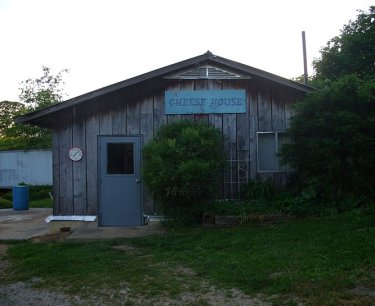
The Door to Morningland Dairy Cheese House

The Door to Morningland Dairy Cheese House

On August 26th, 2010 the destruction of Morningland Dairy began. Having lost a two and half year battle with cancer of the State, the interment will take place on January 25th, 2013.

People involved in all aspects of food production, be it growing, processing or distributing, should read through all the documentation and understand that Morningland’s saga is the model for all independent food production under the FDA’s new Food Safety Modernization Act. Critical to this destruction are “science-based standards” as opposed to scientifically accurate controls and concerns. The Global Food Safety Initiative combined with “Good Agricultural Practices” and the “Guide to Good Farming” will ensure that an inability to feed the population will occur.  Morningland Dairy is an early casualty of these “science based standards”.

Visions and Hopes-The Birth

Joseph and Denise Dixon took over Morningland Dairy after Denise completed a two year internship with the founders of Morningland, Jim and Margie Reiner. The Dixons finalized the purchase and began improvements on the Missouri Milk Board inspected and approved raw milk cheese plant in October of 2008. The entire family was tremendously pleased because this would allow Joseph to be home with the family instead of on the road working as an electrician in the eastern half of the United States.  The Dixons wanted to expand the varieties of cheese made by the company and ventured into a broader array of production.

Their desire was to help other families in the historically poverty stricken Missouri Ozarks to make an actual living on the farm and allow families to stay together. They consulted with the Missouri Milk Board and arranged for two families to begin providing goat milk to Morningland and launched a popular goat milk cheese line shortly after taking over the company.

Goat Cheese Ready for Labeling

Morningland had six employees and other farming families dependent upon the continuance of the cheese plant. On August 26th, 2010, it came to a screeching halt.

While Joseph and Denise were at a cheese making conference in Washington State, the plant manager received a call from the Missouri Milk Board stating that there was an issue of potential contamination found by the California Department of Food and Agriculture (CDFA) in Morningland cheese.

The cooler of $250,000 worth of cheese was immediately put under embargo, more accurately understood as house arrest, by the Missouri Milk Board. Don Falls, an inspector for the Milk Board, told the plant manager, “You should be back up and running by early next week.” Obviously, that wasn’t true. As a matter of fact, the very next morning, presumably after he spoke with the FDA, Falls’ entire attitude changed.

Over the weekend, the FDA leaked a nation wide recall on all of Morningland’s cheese produced in 2010. Not just the two batches that California indicated might be “suspect” for contamination, but their entire year’s production. Most of the cheese implicated as “suspect” by California had already been consumed. No complaints or ill effects were reported by any of the consumers of any of Morningland’s cheese. Nonetheless, the FDA required all of their products to be recalled.

Cheese in Morningland’s Cooler In Happier Days

Death by Bureaucracy

 Very few people realize the FDA has an armed and very military aspect. They showed up at Morningland in camouflage and made a lovely impression on those able to be at the unveiling of the future of food safety “FDA style”.

The FDA and Milk Board worked hand in hand to ensure that this little cheese plant in the midst of the Missouri Ozarks, that hadn’t made anyone sick in 30 years, would never make another batch of cheese for their loyal customers. Yet the FDA, who admit to killing 100,000 people a year, are allowed to gain ever more control over everything we take into our bodies. So the tally on deaths over the 30 year history of Morningland Dairy versus the FDA is:  Morningland “Zero”, FDA “3 Million”…or somewhere near that.

Despite significant effort, the FDA found no contamination in any cracks or drains in the cheese plant or even on the legs of the milk talk in the dairy barn. This evidence was not allowed to be introduced as part of Morningland’s defense because the Missouri Attorney General’s office contended that the FDA “was a separate issue.”

When pointedly asked what the specific process for getting the cheese plant back into production was, the Milk Board representative said it would involve a panel and consultation with the FDA to determine if that were a possibility. The members of the panel, other than the Milk Board and the FDA, and the specific requirements and processes were never delineated and no effort to achieve anything other than the destruction of the plant was ever evidenced by any official arm of the State of Missouri.

Neither the State of Missouri or the FDA ever conducted any tests on Morningland’s cheese. As a matter of fact, when Morningland tried to contract with a State approved lab to do proper tests on batches of their cheese, they were told that the lab simply did not want to get involved in the controversy. Morningland was denied the ability to legitimately test their product and defend their livelihood.

Adding insult to injury, Milk Board employee Don Falls testified in court and under oath that, improperly collected cheese samples, taken with no supervision and no instruction by an employee of Morningland for the plant’s manager, were in fact the State’s own tests.  This remains a very sore point for Joseph Dixon. He says, “When one commits perjury and no one in authority will hold them accountable for it, that individual and the system they support are nothing more than liars and thieves. In this case, the theft is of our ability to provide for our family and is based on bearing false witness to harm people who have harmed no one.”

Real Life Costs

 While bureaucrats masquerading as “protectors of public health” continue to be paid every month for the tortures they put people through, those being raped and pillaged by the very system that is supposed to “protect” them have to somehow come to terms with the fact that their very own tax dollars are being used to continue the offense.

When it became clear to the Dixons that the Missouri Milk Board was unwilling to work with them toward any resolution that would allow the cheese plant to resume operation or allow for the least bit of recompense for the $250,000 of cheese in the cooler, not even deeming the cheese safe for ultra high pasteurization to be put into dog food, Joseph contacted his previous employer and went back to work as an electrician….away from his home and family.

The Dixons, parents to 12 children, steeled themselves to do what they admonished their children to do. To stand for what was right no matter what the odds against them were. After their appeal for trial by jury was denied, they knew that they would need to face a State Agency, represented by the State Attorney, in front of judges appointed by the State. While they hoped that truth would prevail and that reality would actually be addressed, they didn’t go into this battle wearing rose colored glasses.

Initially, after over five weeks of dumping milk, some of their adult children milked the cows and Morningland sold into the commercial pasteurized chain, trying to make the farm pay for itself. When milk prices plummeted and the cost of feed soared, the decision to close the milk barn down was made. But the Dixons still needed to make the payment on the property they couldn’t use to make a living with any longer. They also had to pay to keep the cheese cooler running as the cheese was still under house arrest and effectively a ward of the State.

With Joseph again away from home during the week, and all the expense of keeping things in tact on the farm, things were difficult. Then Denise’s father became bed-ridden and her mother broke her ankle, so Denise and the younger children went to Ohio to care for her parents.

While the State employees continued to collect their wages, Denise Dixon nursed her mother back to wellness and cared for her father until he passed away. During this time, she had to make a couple of trips back to Missouri to face charges of contempt and allegations of attempting to sell illegal product.

None of the human issues in the disruption of lives and the stress of such assaults by the State seem to be taken into account when figuring the costs of these kinds of actions.

Should one believe the deductions set forth by Missouri’s Courts in this case, and take as fact the aspersions and allegations cast against Morningland in the court transcripts, the conclusion could be drawn that the State was the “Knight in Shining Armor” protecting the unwitting public against immoral people trying to poison their customers with products they created to be harmful.

But the truth is, the truth of the matter doesn’t matter. At least not to agents of the State of Missouri, but the People of Missouri generally hold a different opinion.

“Admittedly,” says Denise, “some of the tactics employed and the characterization of us running a “filthy” facility with “diseased animals” stunned us, but our Father is still in charge, and our hope is not in justice being served in man’s system.”

The End is Near

After exhausting all appeals, the cheese, still being kept cool in the refrigerator at Morningland Dairy, is set to be fully destroyed by the agents of the State, the Missouri Milk Board, on January 25th, 2013.

Two and a half years later, one could reasonably argue that the untended cheese has already been destroyed, and to some extent, that would be accurate. Just imagine that you close your refrigerator door and don’t get permission to look into it for 2 ½ years. How would that look to you? While pickles or olives might still be alright, it is highly likely that your dairy products would be a little bit off after such neglect, right?

Denise Dixon said, “After 6 months, the Colby was already gone, and that was about one fourth of the total cheese inventory. After not tending to it, no turning, no repackaging, no monitoring, at least half the cheddar has been ruined. The destruction has already taken place. Our family business, our livelihood, and our ability to provide people with living, positive food has been destroyed.”

Morningland's Cooler Now

Morningland’s Cooler Now

The Missouri Milk Board has ordered two dumpsters to be delivered to Morningland Dairy. So the cheese, which is “not fit for dog food”, will be put into dumpsters and delivered to a landfill to be consumed by wildlife which evidently are immune to the pathogens feared to be present.

Morningland Dairy will never be in business again.

No offer has been made by the Milk Board to prescribe the conditions that would need to be met by the operators to allow them to resume business. The Judge presiding over the case originally did write a regulatory prescription from the bench that was completely implausible for anyone to meet. It included a requirement to insure that no milking animal had bacteria indicative of potential mastitis at all prior to milking the animal.

To put that one judicial regulation into perspective, allow me to draw a parallel for those unfamiliar with milking animals. You milk twice a day, every day. The milk is “commingled” into one tank. So, imagine this….before sending your child to school, you must take a nasal swab and have it cultured to ensure that your child is not harboring a potential bacterial infection before boarding the bus. You would have to pay for this lab technician to be present every morning and for the tests. When your child came home in the afternoon, the same process would be repeated. You would have the immense pleasure of paying for this and keeping the records to validate the bacterial level present at each measuring.

While the scenario imagined above may not be literally impossible, it is certainly improbable, and it would be impossible to have any profit above the cost of production in such a scenario. But that wasn’t all that this judge set forth as regulation for Morningland from behind the bench, with no comprehension of dairy production or cheesemaking. The other prescriptions the judge made would have cost more than $100,000 in hard costs, with additional continuing costs for excessive testing during the cheesemaking process. He also still required the destruction of all cheese in the cooler, not allowing any batches to be cleared through testing. Additionally, the Missouri Milk Board never indicated that they would accept Morningland returning to production even if they did comply with the Judge Dunlap’s outlandish prescriptions.

The Missouri Milk Board nor the FDA have offered any process by which Morningland might be allowed to resume business and the courts have seemingly upheld Judge Dunlap’s regulating from the bench.

The Battle Is Over

Joseph and Denise Dixon of Morningland Dairy have given everything to this fight. Battling the State wasn’t really about them at all, but about our nation, our freedom, and our ability to choose food for ourselves and for our families that is truly nourishing and real. They held nothing back, but finally, the repeated systemic attacks have run their full course, and the dreams, hopes and labors of love poured into Morningland have succumbed.

As Joseph Dixon has summarized, “The state of Missouri has 6 million people from whom they draw tribute (taxes), from which they could fight us. To fight them, we had 65 cows.  And the truth never seemed even to be a consideration, let alone a goal.”

The Dixons no longer have those cows. They no longer have the cheese. They no longer have the family business and have lost all Joseph’s retirement savings, which the cheese represented. They are left with a skeleton. A milk barn with no cows, and a cheese plant with no milk, nor permission to ever make cheese again.

On January 25th, friends and family will witness the pulling of the plug on the cooler and the removal of the $250,000 worth of food created to nourish but prevented from fulfilling it’s purpose by bureaucracy and science based standards that have no basis in true science.

Rest In Peace, Morningland. Righteous judgment will come.

 =======

For all articles and documents, please visit The Uncheese Party. You can also donate to help the family begin the next segment of their lives.

Fines of $500 per Day for Garden

The issue brought forth in the following article is becoming entirely too commonplace. What better way to destroy a nation than to prevent the people from being able to feed themselves without governmental permission?

ORLANDO, Fla. –

A College Park couple’s vegetable garden is on the chopping block again after the city threatened fines if they don’t uproot it by Thursday, according to the Institute for Justice Florida Chapter.

Jason and Jennifer Helvenston are launching “Plant a Seed, Change the Law,” a protest of Orlando’s law, which they say violates their constitutional right to peacefully use their property to grow their own food.

In November, Local 6 broke the story about the controversial garden after the city told the Helvenstons their 25-by-25-foot front yard vegetable garden was not in compliance with the city’s code. 

https://www.youtube.com/watch?v=cdnf8j8NZ9E

After hundreds of emails supporting the couple flowed in and initially allowing the Helvenstons to keep their garden, saying it will hold off on violations, the city has since asked the couple to uproot the garden and replace it with a lawn or face fines.

“The greatest freedom you can give someone is the freedom to know they will not go hungry,” said Jason Helvenston. “Our Patriot Garden pays for all of its costs in healthy food and lifestyle while having the lowest possible carbon footprint. It supplies valuable food while being attractive. I really do not understand why there is even a discussion. They will take our house before they take our Patriot Garden.”

According to Ari Bargil, an attorney for the Institute for Justice, the Helvenstons have a scheduled inspection and will be fined starting on Thursday, up to $500 a day….(Read the full story and see more links here)

Evidently, the public pressure was sufficient and the City backed down a bit:

https://www.youtube.com/watch?v=Uyn7URfKCXM

Video

The FDA uses their FSMA Powers to Close Organic Peanut Plant

In the, “Gee, that doesn’t surprise me” column, the FDA’s first use of their extensive powers under the Food Safety Modernization Act, closes an organic peanut butter plant.

Share

PORTALES, N.M. (AP) — Farmers in a revered peanut-growing region along the New Mexico-Texas border should be celebrating one of the best harvests in recent memory.

Instead, millions of pounds of their prized sweet Valencia peanuts sit in barns at a peanut butter plant shuttered for two months amid a salmonella outbreak that sickened 41 people in 20 states.

Farmers are worried about getting paid for their peanuts, nearly a third the plant’s 150 workers have been laid off, and residents wonder what toll an increasingly contentious showdown between the nation’s largest organic peanut butter plant and federal regulators could ultimately have on the region’s economy.

The tension boiled over when the Food and Drug Administration on Monday said it was suspending Sunland Inc.’s registration to operate because of repeated safety violations, meaning the plant will remain indefinitely shut down as the company appeals the decision. The company had planned to reopen some its operations this week after voluntarily recalling hundreds of products and closing its processing and peanut butter plants in late September and early October.

……(Read full article here)

You Will Eat What We Say You Will Eat…And you will enjoy it

This is the wave of the future, folks. You won’t be able to get food without receiving permission and farmers won’t grow it without being licensed, certified, audited and inspected. The FDA says we have no right to any particular food for ourselves or our children, that we have no right to bodily or physical health through our food choices, and that we have no right to contract. They also say that they are carrying out their public health mission within those assertions. This article  shows the state equivalent of the FDA at work in Wisconsin.

FTCLDF has screwed up a number of cases…and there are serious concerns on my part about many of their methods– but Pete Kennedy has been true, and the following article is written by him.

From the Socialist Democratic Republic of Wisconsin:

Wisconsin: DATCP Raids Hershberger Farm
BY PETE KENNEDY, ESQ.  | JUNE 8, 2010

The morning of June 2, 2010 started out like most other busy days on the farm of Vernon & Erma Hershberger and their family of eight boys and one girl, ranging in age from 18 down to 2 years. Shortly before 10:00 a.m., Vernon went to pick up some equipment from a neighboring farm.  Immediately after he left, Cathleen Anderson, Regulatory Specialist from the Wisconsin Department of Agriculture, Trade and Consumer Protection (DATCP) along with Sauk County Health Department Sanitarians, Nick Oasen and Mitch Lohr, arrived and entered the farm store building, paying no heed to “Private Property” signs posted on the building.  Erma immediately called Vernon on his cell phone; and she asked the officials to wait for him outside the building, which they did, stepping out into the parking lot.

Vernon refused consent even after they threatened to get a warrant, explaining to the officials that they had no jurisdiction to inspect his farm because he had not applied for a license and he was not selling to the public but merely distri-buting products to members of his private buying club.

Upon arriving at the scene, Vernon was asked by Anderson for his consent to let them do an inspection of his private facility.  Vernon refused consent even after they threatened to get a warrant, explaining to the officials that they had no jurisdiction to inspect his farm because he had not applied for a license and he was not selling to the public but merely distributing products to members of his private buying club.

At 11:45a.m. Jacqueline Owens, Field Service Director from DATCP, showed up with a warrant along with four or five deputies from the local Sherriff’s Department.  Anderson handed Vernon the warrant; Vernon requested a few minutes to look it over which they granted, but when he asked them to wait until he had called his attorney they refused saying that the warrant was valid and they would wait no longer. They then entered the farm store building.

They began the inspection in the storage freezers in what is call the “processing room” and took
inventory of all the items that were in the freezers, also making notes about labels and temperatures.  They did a total inspection of the building including the restroom facilities, the lighting, and anything else that they would typically inspect in a licensed facility.  After they were done in the processing room they went into the grocery storage room and then into the culturing room, taking a basic inventory of everything that was on the shelves. They then moved on into the walk-in cooler.

In the cooler, they wrote down every individual item name and lot number and any other information that they could find.  Next, they went into the store area where there were two chest freezers, a three-glass-door display freezer and approximately twenty feet of shelving.  After they had gone through the whole store, Oasen commented on the cleanliness of the building and processing equipment along with the overall appearance of the facility.

Vernon said he was shocked!  He had dealt with ‘cease and desist’ letters and even went through a long, drawn out lawsuit but nothing quite like this.

Anderson and Owens took a total of twelve samples of various products;  Vernon took a similar sample of each item.  When the sampling was done, Owens said, “Now comes the hard part.”  Owens went on to advise Vernon that they were going to tape shut all the chest freezers and put tags on the doors of the other coolers and freezers and that he would not be allowed to take anything off the shelves without  written approval from DATCP.  She told him the tags would be good for 14 days;  if things were not worked out between DATCP and the farm, the agency could extend them for another 14 days.  She ended saying that they would leave him some food for his family to eat but that everything else must stay intact on the shelves as it was then.

Vernon said he was shocked!  He had dealt with ‘cease and desist’ letters and even went through a long, drawn out lawsuit but nothing quite like this.  His head was going in circles:  How to make the mortgage payments? Would the inventory be left on the shelves to rot?

As all these things were going around in my head, I thought to myself:  As we head into the future we do not know what it holds but we know Who holds it and that’s what counts.

Just as if all that wasn’t enough, after the officials were done with the taping and sealing they headed for the milkhouse.   After taking samples, they gave Vernon a paper demanding that the milk in the bulk tank must be disposed of by dumping it out onto the fields.  In order to make sure that the milk could not even be used by Vernon’s family, they opened the lid and dumped in a large glop of blue dye.  By the time the officials left it was 5:00 p.m.

After the day’s chores were done, Vernon said, “I sat down and went into our business email and WOW!!  Fifty new messages–how’s that for some support?”  He then called the Farm-to-Consumer Legal Defense Fund to ask a few questions.   He also talked with David Gumpert and then Ted Beals on some sample testing issues.  After looking over the emails, he tried to  get some sleep; it was close to 11:00 p.m.

In Vernon’s words:
Coming from an Amish background, we had been taught the biblical principles of non-resistance and loving and praying for our enemies and those who persecute us.  I slept only a few hours and meditated a long time, seeking the Lord and His will in these troubling circumstances.  What would Jesus do?  Bible passages like: “Blessed are you, when men shall revile you and persecute you, and say all manner of evil against you falsely for my sake”. (Matt. 5:11)  “But I say unto you, ‘Love your enemies, Bless them that curse you, do good to them which hate you, pray for them which despitefully use you, and persecute you’.” (Matt. 5:44)  Also Psalms 37 has promises that we can claim for our own if we trust in him.

There is another phrase that is very powerful that I strongly believe in:  There’s no greater love that a man can have than to lay down his life for his friend.  If we become so passionate about something that we are willing to lay down our lives for it, there is a power that kicks in, which is beyond measure.  As all these things were going around in my head,  I thought to myself:  As we head into the future we do not know what it holds but we know Who holds it and that’s what counts.

Update
On June 8, Owens and Anderson returned to the farm without a warrant, attempting to conduct another inspection.  Vernon refused the request for inspection and the officials left his premises.  Before they left, they served Vernon a ‘Summary Special Order’ which would subject him to fines of up to $5,000 per violation if he is not in compliance with Wisconsin food and dairy law.

Patricia Barrett, Esq.
Sauk County District Attorney
Sauk County Court House
515 Oak Street
Baraboo, WI  53913Fax (608)355-3282

patricia.barrett@da.wi.gov

How You Can Help
DATCP has referred Vernon’s case to the Sauk County District Attorney, Patricia Barrett, for potential prosecution.  Everyone is urged to contact Barrett’s office and request that she not prosecute the Hershberger case.  Sauk County residents are especially encouraged to contact the District Attorney and inform her that you will not vote for her the next election if she pursues the Hershberger case.  The District Attorney has already taken so many calls on this case that they are no longer accepting them; but you can still contact the DA’s office by email, fax and/or postal mail.  Here is the contact information:

Here are some points to make:

  1. The County DA should not be spending taxpayer money, pursuing cases like this in which there is no victim or injury.  There has been no complaint filed by anyone against the Hershbergers.
  2. The only injury in a case like this occurs when the farmer or food distributor is prosecuted and consumers who were obtaining foods they deem best for their health and the health of their families have now lost their source of those foods.
  3. The right of consumers to obtain the foods of their choice from the source of their choice is a political issue; cases like this in which there has been no injury do not belong in the courts.  The County DA should exercise her discretion not to take on these cases.
  4. With the tough economic times and all the cutbacks in government spending, the County DA should not be using its remaining enforcement dollars pursuing victimless crimes.
  5. Let the County DA know how food direct from farms has benefitted your health and the health of your family.

DATCP does not respect freedom of food choice nor the right to be left alone.  The agency’s enforcement actions do not protect the public health; they only deny individuals the right to obtain the foods they believe best for their health and the health of their families.

Please help Vernon and Erma Hershberger.

NanoTech is not science fiction….

foodfreedom.wordpress.com/2010/04/14/new-study-shows-possibilities-and-dangers-of-nanotechnology/#more-1725

I came across this article at the above blog, and wanted to say “Thanks!” to Rady for linking to my show and this blog…..This is a very interesting article on nanotech, and if you follow this link, there are many more things about nanotech available:

news.medill.northwestern.edu/chicago/news.aspx?id=162744>

I found it really intriguing that the researcher said “There’s nothing special about blackholes” regarding the development through the merger of astrophysics and nanotech a nanotube of carbon. Truly, this is beyond my ken….But sometimes I think funny thoughts anyway!

I really don’t want anything less than 100th the size of a virus in my food—OR my air. How about you?

Stealth Care

Today is the day that the House of Representatives are supposed to vote on the “Health Care” bill. Most agree that about 30% of the general population approves of the gov’t run and socially paid for program. Of the remaining 70%, probably 30% are violently opposed to the scheme.

I wonder what the fall out from all of this will be.Some are predicting violence in the streets. The latest version shows in excess of $12 trillion for many things other than health. Our GDP is enough to cover it if that were all we were doing, but there is no way to continue to spend more than we earn and delude ourselves into thinking we can be ‘free’ under that type of policy. This is just one bill and it has over $12 trillion in it. These aren’t funds from somewhere else, or things that have been paid for previously, these are new “bills”….with new charges.

The funny thing is that we don’t even have the collateral to cover the debts we are already obligated to cover. So if they (the international bankers and other nations being the ‘they’ in this case) took everything we have in the country, it still wouldn’t cover our debts and future obligations. Now we are going to add to it! And I sit and worry about paying the electric bill–Ha!

If it weren’t for the fact that we trade real labor for fake money to pay fraudulent taxes on things we don’t own, I might be able to get excited for our children’s future. As it stands, I just want them to be able to eat. Ya know, they live longer if they eat than if they have insurance. Paper isn’t very nourishing.

BTW, it’s a dreary day here.

Next Newer Entries