The Missouri Milk Board prepared and gave their version of the timeline on Morningland Dairy’s destruction to the representatives and senators in the Missouri Legislature.
There were a great number of obfuscations and a few outright lies in their timeline. To correct those, and to make sure that Reps and Senators had clear information, Denise Dixon went through and provided clarification and correction where needed on the timeline offered by the Milk Board. Denise emailed this and the original Rebuttal and Request for Humane Treatment (my words) given by Morningland to the Milk Board in October of 2010. The Milk Board, Attorney General’s Office and the Governor were also emailed both of these documents.
In the interest of full transparency, I have copied these documents for everyone to see. Please feel free to share them and spread the info all across the county. The fact is that there is a war on real food at the agency level. Since there is supposed to be a balance of power in our system of government, the legislature DOES have the ability to affect the conduct of the Milk Board if they choose to do so….More on that another time. For right now, here are the communications from the Dixons in response to the Milk Board Timeline given to our elected officials here in Missouri:
Adding/Correcting/Refuting the Missouri Milk Board (SMB ) Timeline
Dear Reader,
So much is missing, misleading, or false in the original timeline. Thank you for your attention to these matters.
Sincerely,
Joseph & Denise Dixon
Morningland Dairy
SMB Timeline
State of Missouri vs. Morningland Dairy
Joe and Denise Dixon, owners
Correction: State of Missouri vs. Morningland of the Ozarks, LLC
August 25, 2010 – Stephen Beam, Ph.D, Chief, California Dept. of Food & Agriculture Milk and Dairy Food Safety Branch reported two raw milk cheeses found w/Listeria monocytogenes and Staphylococcus aureus from Morningland Dairy 29-428. Case to be filed in LA County. Added: The cheese that California allegedly tested was said to have come from Rawesome Foods, a food co-op in Venice, California that was raided at gunpoint by several state and federal agencies on June 30th, 2010. Rawesome members were ordered to leave the co-op building, cameras inside the co-op building were covered up or turned off, and 17 un-iced coolers of food were removed from the building and taken away.
August 26, 2010 – Received lab reports, submission sheets, and label photos for two cheese samples from California Dept. of Food and Agriculture Milk and Dairy Food Safety Branch confirming contamination. Note: Contrary to California regulation, our cheese that was allegedly taken in the Rawesome Foods raid was not tested within a 24-48 hour period of time, nor was an equal sample provided to us to test. In fact, it was 55 days before our cheese was tested, and how the cheese was kept (and how often they really tested the cheese) is unclear. To our knowledge, the Milk Board did not question California’s lack of protocol in handling and testing the cheese.
– Investigation at Morningland plant begun on-site, plant production and product shipment halted, product inventory placed under embargo. Plant records inadequate to verify raw milk cheese was aged properly for sixty-day period as required by 21 CFR Section 133 for interstate shipment. Refutal: Contrary to the milk board’s statement, Morningland Dairy (Morningland) did have adequate records to verify that our cheese was aged for 60 days. Missouri Milk Board Inspector Don Falls and his assistant Roger Neill, using our completed ‘make sheets’ and the dates physically recorded on each batch of cheese, were, in fact, able to confirm that all cheese that was less than 60 days old was indeed in our cooler.
– Notice of Condemnation/Seizure posted on refrigerated cheese storage door. Notice of Condemnation/Seizure contingent on sample analysis. Morningland plant personnel cooperating fully. Note: Falls and Neill confirmed that the two batches of cheese (represented by the two samples from California) were completely gone from our cheese cooler, having been sold, shipped and consumed, with no complaint of illness, yet all of our cheese was embargoed/seized that day.
Also on this day our plant manager, Jedadiah York, following instruction from Joe Dixon, spoke to Falls about selecting a laboratory for testing. Falls told York that it so happened, while attending a recent seminar, he had picked up a business card for a lab (Microbe Inotech) in St. Louis, and he suggested that Morningland use this lab for testing. He said that he was unfamiliar with this lab and that he wanted to keep the card, in case he might want to contact them in future, so York could make a copy of the card, which York did. (After the results came back, however, in discussing the lab’s analysis, Falls told us that the Milk Board used Microbe Inotech often. We later learned that Falls and the Milk Board, in fact, have done business with Microbe Inotech at least since 1999.)
August 27, 2010 – Morningland requested permission to select samples from consumer ready packages of cheese for an analysis at an approved laboratory “to confirm quality”. Fourteen samples were collected by Morningland plant manager, from random make dates and lots, under supervision of State Milk Board. Samples sent to Microbe Inotech laboratory in St. Louis.
Correction: It was on August 26th that Joe Dixon, through plant manager York, requested to have our cheese tested, and Inspector Falls said ‘yes’. Dixon did not request to use “consumer ready packages” as samples; we wanted and expected legitimate sampling to be done. Falls told York that he and Neill would be staying at a nearby motel and would return again the next morning, so the Dixons assumed that Falls would supervise proper procedure in the taking of samples (as the Milk Board did at Homestead Creamery cheese plant in northern Missouri in January of this year.) However, Falls said nothing to our plant manager about proper sampling procedures. Instead, Falls simply looked on as York naively chose 14 pieces of precut cheese as samples. Falls recorded the date codes of each piece of cheese that was chosen. Falls added his name as witness to the improper sampling.
Also on this day, Michelle Thompson of the FDA contacted Morningland and told plant manager York about the “need” to recall all of its cheese produced in 2010. Ms. Thompson kept emphasizing the importance of such a recall, pressuring York to fill out the form she’d e-mailed and to register the recall on the site she’d sent him – right away. York contacted us about pressure from the FDA to do a recall, and we told him not to do anything yet, that Denise Dixon would handle that after we returned from the State of Washington late on the 29th and could talk to Inspector Falls on the 30th. Ms. Thompson even attempted to contact York on Saturday the 28th, via phone calls and e-mail, to see why the recall had not yet been implemented.
Also, despite the fact that no decision had yet been made by Morningland to do a recall because questions remained unanswered, on this day it was leaked by a state or federal agency to the press that Morningland Dairy was recalling all of its cheese from 2010.
August 30, 2010 – Lab analysis revealed samples positive for Listeria monocytogenes and Staphylococcus. Correction: No results from the lab were received on this day. FDA environmental team from Springfield FDA residence Post on-site to begin swab sample collection to attempt to locate origin. Note: As soon as Falls and Neill arrived that morning, Denise informed Falls that the sampling had been improperly done, that the test results would not reflect the quality of the cheese alone, and that we would need to re-do the test, using legitimate sampling procedures. (We were not yet aware of the fact that Falls had supervised the improper sampling.) Falls answered that we should just wait to see the test results before arranging for a proper sampling and testing.
Also on this day, Denise Dixon spoke with Michelle Thompson of the FDA, questioning the need for recalling our entire production of cheese in 2010, due to no report of illness, and Ms. Thompson informed Denise that if Morningland did not do the recall that the FDA would do it for us, and that this would look bad on Morningland’s part. When Denise questioned Falls why it was necessary to do such a large recall when no illnesses had occurred, Falls also insisted we go ahead with the recall as it was. Denise questioned why this was necessary, and Falls told Denise that Morningland needed to do the recall first and ask why afterward.
August 31, 2010 – Morningland issued voluntary recall of all products in cooperation with FDA. Note: As explained in the preceding paragraph, our recall was not voluntary.
September 02, 2010 – FDA recorded cheese inventory of Morningland Dairy. Total = 29,845 lbs.
40# blocks – 688 = 27,520 lbs
20# blocks – 56 = 1,120 lbs
10# blocks – 9 = 90 lbs
5# blocks – 37 = 185 lbs
1# pkgs. – 485 = 485 lbs
<# pkgs. – 85 = 85 lbs
Note: Falls testified in court trial, on or about January 11-12, 2011, that he had inventoried our cheese cooler. This was false. As of that day, Falls had never counted our cheese. After the court judgment had been made in Feb., 2011, there was one occasion when Falls came to check on the cheese in our cooler, and he did do an inventory then.
Above is a fairly accurate inventory of the number of blocks, but the blocks weighed substantially more than their size categories of 40#, 20#, 10#, etc. For example, the average 40# block actually weighed about 48 lbs., so the total weight of destroyed cheese was actually 36,420 lbs.
September 03, 2010 – Laboratory test analysis confirms contamination in cheese product made from January to August 2010. This is the day we received the lab results from the improper sampling. After receiving the fax from Microbe Inotech containing our test results, Denise Dixon noted that there were two date codes that had been misread by Falls. One week later, we received a second set of test results, with the two date codes changed. The cover sheet read that Falls had called the lab and had the date codes corrected, even though we had not authorized Falls as our spokesman to Microbe Inotech.
Note: The second set of test results also showed a modification of the lab’s analysis. The first analysis listed some samples as “weakly positive” for Listeria and Staph. We asked Falls what ‘weakly positive’ meant, and he answered that he didn‘t know but he would find out; when the 2nd set of test results arrived, we noted that some samples were now listed as “99% probable weakly positive”.
Second Note: These results were from the lab that Inspector Falls coerced us into using. Also, when it was discovered that two of the date codes had been incorrectly recorded by Falls as Mr. York chose the pieces, Falls simply called the lab and had the dates changed, and the lab faxed us a new copy with the changed dates and a modified analysis!
– MDA press release confirming lab results. It is very important to understand that even if the tests were accurate, these results were from improperly taken samples that could have been affected by the cutting and/or packaging equipment, the vacuum bags, the person/s handling the cheese, and from any of the other cheese that was cut at the same time. No instructions were given to the employees who cut and wrapped the small pieces of cheese that were taken for testing. Because no legitimate sampling was performed, using proper sampling techniques, the cheese was never properly tested.
Also important to note is the fact that, the test results didn’t actually come back ‘positive’; the results read, ‘weakly positive’. We asked the milk board what that meant; they said they would try to find out, and then the second set of results that the lab sent, after Falls had the lab change the two date codes, read ‘99% probable, weakly positive’. We also asked the milk board what that meant, and they said they didn’t know. According to Black’s Law Dictionary, probable is 51%, so 99% of 51 is 50.5%, so it appears to have tested ‘50.5% weakly positive’, whatever that means. Since the vast majority of listeria bacteria is harmless, we asked to do further testing to find out if it was a harmful subtype, and they said they would not do any testing. When we pressed them, they said that we could do further testing at our own expense, so we were arranging to do so (at a cost of about $10,000) when we learned from the milk board that any further testing we might do could be used only for educational purposes, and that it would not make any difference to the milk board’s decision to destroy our cheese! We could not afford such an expense if it would not help to clear any of our cheese.
Another Note: At the trial, on or about Jan. 11-12, 2011, Falls testified that the test from Microbe Inotech was the state’s test. This is false. The test was done in the names of Joseph & Denise Dixon, and we paid for the test ourselves. The state (Milk Board) paid for nothing in testing, nor did the Milk Board assist in ensuring that proper sampling occurred. The Milk Board refused to do any proper testing of our cheese.
Also of note: At our hearing on June 29, 2011, Falls admitted that Missouri had no regulation regarding the presence of Staph in milk products.
September 09, 2010 – Dixons present FDA Public Servant Questionnaire re PL 93579. Note: When we presented the public servant questionnaire to Audra Ashmore of the FDA, she looked at it, and we saw her hand shaking as she handed it back, stating, “I can’t fill this out.” One sample question from the public servant questionnaire was, “Will the public servant uphold the Constitution of the United States?”
– MDA Plant Industries Div, Feed and Seed Division: Morningland cheese is considered adulterated and will not be allowed for use in pet food or feed.
Note: Gene Wiseman of the Milk Board told us that our cheese was not even fit for dogs to eat, that being ultra-pasteurized would not make our cheese fit for dogs to consume.
September 10, 2010 – SMB reviewed recommended procedures for sanitation to plant manager.
– Cow cheese confirmed as common denominator for high Listeria monocytogenes analysis from samples analyzed. We are not aware of any such confirmation, and we request a dated copy of this alleged confirmation.
September 14, 2010 – SMB recommends Morningland Dairy of the Ozarks, LLC utilize California Mastitis Test (CMT) to identify and pull problematic cows from production. Official raw milk samples from the farm:
Date 1/25/2010 2/23/2010 3/22/2010 4/20/2010 5/25/2010 6/29/2010 7/27/2010 8/24/2010
Bac 13,000 5,700 6,300 9,300 12,000 5,000 4,400 10,000
SCC 440,000 700,000 620,000 830,000 670,000 620,000 700,000 1,700,000
Note: We are not aware of any recommendation from SMB in regards to utilizing a mastitis test. We request of the milk board to please show us a dated copy of such a recommendation of the CMT to Morningland.
Another note: An explanation of these numbers should have been included. Any dairyman can tell you that sometimes he/she experiences a rise in cell count in his milk, which occurs as the result of any of various circumstances, including testing error. The regulations allow for occasional spikes in the count because of the general understanding that it is easy to experience a temporary spike in count, and that such a spike can almost always be easily corrected. Our understanding is that the regulations allow that unless a dairy experiences 3 spikes out of 5 consecutive tests, no action is necessary. If tests show 3 spikes in 5 consecutive tests, then the dairy is given a warning, and if a 6th test shows a continued spike in cell count, then the dairy is put on probation and its milk is not purchased until it can show, by testing, that the count is at or below 750,000.
Our milk test results above show two spikes (over 750,000) in an 8-month period, but they were not consecutive spikes and did not even elicit a warning. We actually showed in court that we had 3 spikes in 19 samples, and none were consecutive. Our test results were completely acceptable for any dairy. We have never received the first warning; neither was any effort to assess or observe our cows to determine their condition made by our inspector or any member of the Missouri Milk Board as the result of milk tests.
Also to be noted: Joe Dixon asked Don Falls why the regulations read the way they do, allowing for spikes in testing . Falls replied that sometimes the testing itself can be inaccurate.
Also to be noted: All of the 99 swabs that FDA took in our milk barn and in our cheese plant came back negative for presence of bacteria – in other words, 100% clean. This analysis was not allowed to be introduced into evidence at the trial.
September 15, 2010 – SMB requests Dixons to destroy all cheese products inventoried; to clean and sanitize facilities in order to resume production quickly. Refutal: The Missouri Milk Board NEVER stipulated any process or procedures that would allow us to “resume production quickly”. If they contend that they did make such an offer, we request written and dated proof of the offer and it’s stipulations. Morningland never received any such offer, even though we asked several times what it would take for us to be allowed to resume production. When asked how Morningland might resume production, Inspector Don Falls stated that the methods would be discussed in conference with the Dept. of Health and Senior Services, The Missouri Dept of Agriculture, the Missouri Milk Board, and the FDA, but no solution was ever presented to us. Even the FDA, long after the trial, sent us a letter stating that they had concluded their investigation, but at the same time threatening us that they could come back anytime and open up another investigation of Morningland Dairy.
September 16, 2010 – Morningland Dairy requests farm inspection to upgrade from manufacturing grade to grade “A” farm permit. Dairy farm inspectors on-site to inspect and review recommendations for improvement.
September 29, 2010 – Morningland Dairy passed inspection to produce and ship grade “A” milk.
October 1, 2010 – Packet of materials including GMP hand delivered to Joe Dixon. Dixon agreed to destroy cheese inventory on October 8, 2010. Refutal: Joe Dixon never agreed to destroy the cheese inventory. He simply stated that if the cheese were to be destroyed it would need to take place on a Friday, since he was working out of state Sunday through Thursday.
October 4, 2010 – Dixon changes his mind and refuses to destroy cheese. Correction: As explained in the previous paragraph, Joe Dixon did not agree to destroy our cheese, so he did not change his mind. On or about October 6th, 2010, we sent a letter to the Milk Board rebutting many of their statements concerning Morningland, stating that we did not want to destroy the cheese, and offering a compromise. We offered to destroy all of our cut pieces of cheese, and to properly test each batch of our remaining cheese to establish its character. Any cheese that tested positive for certain bacteria we would not sell; each batch that tested negative for certain bacteria we would be able to sell. (NOTE: This letter is attached to this e-mail.)
October 22, 2010 – Attorney General Koster seeks injunction to require Morningland Dairy to destroy contaminated cheese products. Note: On October 6, 2010, Denise Dixon e-mailed letters to many government officials to request help with the threat of the Milk Board to destroy all of our cheese, including the Governor, State representatives and Senators, and also Attorney General Koster. When Denise was promptly contacted by one of the staff in Koster’s office, she thought she had found someone who was concerned about the destruction situation. However, the AG’s office was informing her that she needed to be in court the next day. This particular court appointment was cancelled by the Attorney General’s office later that day, but it was on that day that we knew the Milk Board rejected our offer for compromise.
October 2010 – Attorney for the Dixons and Missouri Attorney General’s Office engage in lengthy settlement negotiations so that Morningland can test its untested cheese and sell it if cheese shows no signs of contamination. Refutal: This statement here is intentionally misleading. Some negotiations between our attorney and the Attorney General’s office did occur about testing the cheese, but these were NOT settlement negotiations, nor was ANY mention made by the AG’s office or the milk board that we could sell our cheese if it showed no signs of contamination. If they contend that they did make such an offer, we request written and dated proof of the offer and it’s stipulations. As we arranged for testing, we learned from Falls that the AG’s office and the Milk Board were allowing further testing only for “educational purposes“, and that the Milk Board intended to destroy all of our cheese regardless of the results of further testing, even if it tested clean. We could not afford to spend the $10,000 or more that it would have cost for testing because, according to Falls, the testing could not clear our cheese for sale, so we ceased our efforts to arrange for the testing.
– Dixons decide to go forward with lawsuit for a takings claim rather than test cheese, as testing would cost too much money. Note: Plant manager York asked Falls how many times we would need to test a batch of cheese before we could sell it. Falls answered that the cheese would still be ’suspect’. York asked then if one of our 40# blocks tested ‘clean’ 100 times – would we be able to sell it? Falls answered, “No, it would still be ‘suspect’.”
January 11-12, 2011 – Bench trial scheduled in Howell County Circuit Court. Note: At the beginning of the trial on January 11, 2011, we requested a jury trial, but were denied one by Judge David Dunlap.
February 23, 2011 – Final Order of Permanent Injunction issued by Judge David Dunlap, Howell County Circuit Court. Judge Dunlap orders cheese destroyed and requires Morningland to implement several sanitation practices when making cheese again, including the use of sanitizer and latex gloves. Dixons complain that order is too costly and requests amended judgment. Note: Even though, as the Milk Board knows, we used sanitizer and latex gloves throughout our plant, Judge Dunlap’s order did mention the use of sanitizer and latex gloves, along with several costly changes. Nearly all, or possibly all, of the “sanitation practices” that Morningland was ordered to implement are not according to Missouri regulation, and are therefore not required in other Missouri cheese plants. For example, a former supplier of goat milk to Morningland started his own small cheese plant after we were shut down with the embargo. This former supplier’s inspector for his new cheese plant was Don Falls. Falls told the owner of this new plant to use the same type of air flow system that is in place at the Morningland plant, even though the judge’s order demands that Morningland’s air flow system be replaced before resuming production, despite the FDA tests finding no environmental contamination. Additionally, the Judge ordered that Morningland “verify” that no animal has mastitis. That instruction is not possible to implement. Stripping of teats prior to placing milkers does not constitute a verifiable lack of mastitis. That can only be done through culturing of milk.
Second Note: Denise Dixon made inquiries to dairy and cheese plant suppliers, as well as a cheese plant consultant, as to the cost of implementing all of the changes to our plant that were ordered by Judge Dunlap. The cost of implementing such changes was over $100,000 up front, with additional testing costs to be incurred during the aging phase.
Third Note: During inspection, Inspector Falls NEVER advised us of the need for any of the “sanitation practices” ordered by the judge.
May 23, 2011 – Amended Judgment and Order issued by Judge David Dunlap, Howell County Circuit Court. Judge Dunlap reaffirms earlier order and clarifies that the court found all of the cheese to be contaminated based on a representative sample and that the court found the cheese making facility was unsanitary. Important Note: The two conclusions on which Judge Dunlap based his judgment were TOTALLY UNFACTUAL and based on NO EVIDENCE, as witnessed by the fact that Morningland NEVER received any letters notifying us of any violations of regulation.
Note: We believe that it cannot be overstated that the only cheese testing done was from improperly taken samples that could have been affected by the cutting and/or packaging equipment, the vacuum bags, the person/s handling the cheese, and from any of the other cheese that was cut at the same time because the samples were not handled properly for testing. Inspector Falls knew that the sampling on August 27, 2010 was improper from the very beginning, since he looked on that day and also signed his name as a witness of the sampling.
As for being “a representative sample”, the samples actually represented less than one half of one percent (.039%) of our cheese, and because those were taken improperly, they really did not represent any of our cheese. Falls knew and was reminded often (by Denise Dixon) of the need to test properly obtained samples in order to obtain accurate data on our cheese.
Note also: No evidence was entered at trial to indicate any unsanitary conditions in the Morningland cheese plant. Morningland attempted to enter the 100% clean test results from the 99 swab samples taken by the FDA, but the FDA’s test results were denied entry by Judge Dunlap.
June 29, 2011 – Judgment in Contempt ordered by Judge David Dunlap, Howell County Circuit Court. Judge Dunlap ordered Morningland to cease selling contaminated cheese. Refutal: This statement is blatantly false. Morningland was called into court for a hearing as the result of a verbal confrontation between Don Falls and Joe Dixon, and because the Milk Board found Morningland-labeled cheese being sold in a Columbia, MO store. Falls had arrived at Morningland several days before the hearing, unannounced, to check on the embargoed cheese. Since Dixon was working out of state, Dixon told Falls over the telephone that Falls was welcome to look at and even count the cheese, but that, since we’d been forced out of business, the Dixons had begun using the rest of the plant for personal storage, so Falls was not welcome in the rest of the plant. (Please note that there are two large windows which make it easy to see into the Morningland vat room, and that it was very apparent to anyone who bothered to look from the outside of the building that the vat room was being used for storage purposes.) After seeing that all of the embargoed cheese remained untouched in the cheese cooler, Falls left. A short time later, a Milk Board employee found some pieces of Morningland-labeled cheese in a Columbia retail store. Falls was aware that Morningland was no longer an LLC and had become a private member association (we announced this on the first day of the court trial, Jan. 11, 2011.) We were buying cheese in bulk from 2 other licensed cheese makers and cutting and wrapping it for our private association members. Instead of contacting us for an explanation of the presence of the cheese in the store (we learned at the hearing that a member of the association had ordered cheese from us and had made the mistake of placing the cheese in his mother’s store to sell) the Milk Board forced us to court to answer to 3 accusations:
1) Making cheese without implementing the $100,000 worth of changes to our plant, as ordered by Judge Dunlap
2) Selling embargoed cheese from our cooler
3) Hindering the Milk Board from inspecting the Morningland plant.
Because he worked out-of-state, Joe Dixon could not attend the hearing. Denise Dixon had to fly back to Missouri from Ohio, where she was caring for her elderly parents. At the hearing, Denise Dixon easily showed that the Dixons were not making any cheese and that they were not selling embargoed cheese, but the judge found the Dixons in contempt for not allowing Falls to inspect the entire plant. Importantly, and contrary to the Milk Board’s timeline statement, we were not ordered to cease selling contaminated or embargoed cheese at the hearing, because we had never sold embargoed (or contaminated) cheese.
September 27, 2012 – Appeal from Circuit Court of Howell County Affirmed by Missouri Court of Appeals Southern District.
December 29, 2012 – Supreme Court of Missouri en banc denied application to transfer case from Missouri Court of Appeals.
January 10, 2013 – Morningland asks if the State Milk Board will agree to destroy cheese on January 25, 2013, pursuant to the court order. State Milk Board agrees. Refutal: Morningland never asked the Milk Board to destroy our cheese. The Attorney General’s office informed the Dixons’ attorney that the milk board would carry out the destruction of our cheese on Wednesday, January 23rd. The Dixons’ attorney requested the destruction to take place on a Friday, in order for Joseph to be able to attend. Friday, January 25th, became the date of destruction.
January 25, 2013 – Five State Milk Board employees arrive on site at 8:00 a.m. and are met by 30-40 protesters, some of whom are armed. Staff called Howell County sheriff and State Highway Patrol to assist in managing the crowd. At approximately 10:00 a.m., the highway patrolmen persuade the protesters to let SMB staff onto the Morningland farm. Cheese was removed and destroyed as per court order by 5:00 p.m. Correction: These statements are deliberately misleading. The five state milk board employees (including Inspector Don Falls) arrived and came on the Morningland farm at 8:00 a.m. Not one person hindered any of the five milk board employees from going wherever they needed or wanted to go on the farm. The videos that were taken of Falls and the other four Milk Board employees, who stated they were just “doing their job” ,were made between 8:00 a.m. and 9:00 a.m., and the Milk Board employees were at our cheese cooler then. Only two US Military Veterans out of the 40-50 people who came in protest of the taking of our cheese wore legal, open-carry weapons. Not one of the people in attendance threatened anyone with physical harm. All who were there, including the sheriff’s men and the state highway patrolmen, can attest to these facts.
Important Note: The five Milk Board employees, including Don Falls, wore no special gear to load all of our cheese (this cheese, according to the Milk Board, was supposed to be too dangerous even for dogs to eat nearly 2-½ years earlier) and allowed people – even elderly folks – to handle the “dangerous” cheese as it was being loaded. Inspector Falls even watched a child play on the dumpster load of cheese, showing his full awareness that our cheese posed no threat to anyone.
Questions: If our cheese was dangerous enough to have to destroy it nearly 2-½ years ago, why would the five Milk Board employees wear no protective gear when they came to take it on January 25th, why would they allow the public (whom they say it is their job to protect) to handle the cheese, especially a child, and why would they “contaminate” their vehicles with germs from that so-called dangerous cheese, only to possibly contaminate other dairies or plants that they inspect next? Where is the integrity of the Missouri Milk Board‘s conduct? Where is the integrity of the Missouri Attorney General’s Office in searching for the truth? Where is the integrity of Judge David Dunlap in making an unfounded judgment?
An Important Comparison
We recently spoke with Mr. Tim Flory at his small cheese plant (Homestead Creamery) in northern Missouri. His plant was temporarily shut down by the Missouri State Milk Board in January of this year, when one batch of its cheese was linked with an illness from an alleged e-coli bacterial contamination. The Missouri Milk Board destroyed only that one batch, used proper sampling procedures that were conducted by the Milk Board, in testing of other batches of Flory’s cheese, and allowed Flory to resume business in less than a month.
Conversely, Morningland Dairy has NEVER had a illness connected with our cheese, yet the Milk Board refused to do any proper testing. We were, instead, forced to recall eight months of cheese sales, and every single one of our 70+ batches of cheese was destroyed, along with our business, by the Missouri State Milk Board!
In conclusion, we implore our representatives to become statesmen again, and search for the truth!
John 8:32 – “…and you shall know the truth, and the truth shall make you free.”
======================
Rebuttal of Missouri Milk Board Statements (in response to original Order to Destroy)
Many of the “facts” as stated by the Missouri Milk Board et al in the order to destroy and the attachments thereto are both incorrect and unscientific. A brief rebuttal to the major inconsistencies and substantive errors follow:
1) To date, there has been no legitimate test performed on Morningland Dairy cheese, although Morningland Dairy owners have repeatedly requested that proper tests be done. California authorities did not sign the test they allegedly performed until 55 days after product was seized at gunpoint from Rawesome Foods. No sample of said product was shared with Morningland Dairy as is required by California and Missouri statutes; therefore, there is no confirmation of the findings reported by California Food and Department of Agriculture.
2) Morningland Dairy plant manager, Jedadiah York, and Plant Owner/Gen.Manager, Denise Dixon, apprised Don Falls of the Missouri State Milk Board that more than two samples of Morningland Dairy cheese had apparently been tested in California, and that those results should be considered in the situation of alleged contamination of Morningland Dairy cheese. Mr. Falls’ reply was that he was not told about it, and we repeatedly asked him to look into that situation. Mr. Falls later stated he could not get that information from California, and that it was up to Morningland Dairy to request it. Instead of getting the requested information, he repeatedly stated that we just needed to “concentrate on doing the recall”.
3) Despite being aware that several types of Morningland Dairy cheese had been tested and evidently tested clear by the California Department of Food and Agriculture, Mr. Falls insisted that all of our cheese must be recalled, not just the two batches that were identified from the alleged contamination found in the California test.
4) No Missouri State Milk Board representative obtained samples from Morningland Dairy. Instead, at the request of Morningland Dairy owners, samples were taken by a Morningland Dairy employee, and submitted to Microbe Inotech Laboratories, Inc., of St. Louis, MO, (this lab was suggested by Don Falls of the Missouri State Milk Board) on August 27, 2010 for testing.
5) Contrary to section 196.565 of the Revised Missouri Statutes, the only witness to the sampling from Morningland Dairy was the employee who did the sampling. When Morningland Dairy owners, Joseph & Denise Dixon, learned how the samples were taken, they knew that the tests would be inaccurate and, consequently, erroneous. Despite repeatedly informing Don Falls and also Audra Ashemore, of the FDA, of the faulty sampling methods, both of these individuals used the results of this inept test in their reports.
6) Mr. Falls failed to see to it that samples bore the signature of the person taking the samples, which is required by section RSMo.196.565. Although Mr. Falls states that an employee of Morningland Dairy delivered said samples to Microbe Inotech Laboratories, Inc., the samples were in fact given to a family member of Joseph & Denise Dixon. This family member, in turn, met another family member in Edgar Springs, MO, who then took said samples to said lab. Neither of these family members is an employee of Morningland Dairy. These facts are reported to illustrate the falseness of Mr. Wiseman’s statement that “State Milk Board staff documented chain of custody and maintained the integrity of samples by ensuring the storage containers where the cheese products were kept were properly sealed, labeled and secured.”
7) Three FDA representatives took 100 swab/sponge tests of the cheese plant and the milk barn at Morningland Dairy during the first week of September. The following week, Audra Ashemore of the FDA, called Plant Manager York, to say that the swab test results were in, and that the tests came back clear. When Mrs. Dixon requested a copy of these test results, Ms. Ashemore stated that Morningland Dairy would receive a copy, and that the FDA did not have a copy. To date, Morningland Dairy has not received a copy of said results, and no mention has since been made of the fact that both the cheese plant and the milk barn tested clear.
In conclusion, due to the lack of scientific evidence, lack of transparent protocol and complete lack of any illness associated with our cheese, and the absurdity of the assertion that ALL, nearly all, or even some of Morningland Dairy cheese is actually dangerous, we –again- offer to test each batch of cheese in our cooler prior to shipping the product to our customers.
Because of the fact that it is far from a light matter to put families out of work and out of business when no harm has occurred to anyone in a thirty-year history, we are more than reluctant to destroy nearly 50,000 pounds of food based on erroneous tests. We have always appreciated the input and advise of the Missouri Department of Agriculture and Milk Board and have no issues with following logical and scientifically accurate suggestions and recommendations. We do, however, have no desire to harm our customers or ourselves by following unjust, unscientific, faulty processes that destroy the health and livelihoods of those involved with our company.
At this point, October 6th, 2010, we have been required to recall 6 months of work, have been completely shut down and forced to dump milk for nearly 5 weeks, are being told we must destroy at least 8 months of work. Further, we have no assurance that we will be allowed to continue to produce our product without subjection to overzealous enforcement actions on the part of the FDA or the Missouri Milk Board.
We seek justice, reason, logic and decency, and we desire to live peaceably and to profit from our labor. Due process is inherent in our system, and we request that it be followed.
Proposed Remedy from Morningland of the Ozarks, LLC to the Missouri Milk Board and Representatives of the Missouri Department of Agriculture
1) Morningland Dairy will diligently strive to put into action those reasonable procedural recommendations rendered in the Memorandums from the MO State Milk Board and Dr. Harold Treese, as finances and circumstances allow.
2) Morningland Dairy will dilligently perform a microbial test, using proper sampling procedures and using a state approved lab of our choice, on each batch of cheese in order to identify any contamination, and will offer for sale only cheese batches that are found to be free of contamination. Any cheese batch that tests positive for contamination willl not be offered for sale.
 The Hygiene Hypothesis states that when children lack early exposure to infectious agents, parasites, and symbiotic microorganisms like normal gut flora such as would naturally occur in a rural or farm environment, they are much more likely to suffer from autoimmune disorders such as allergies or asthma.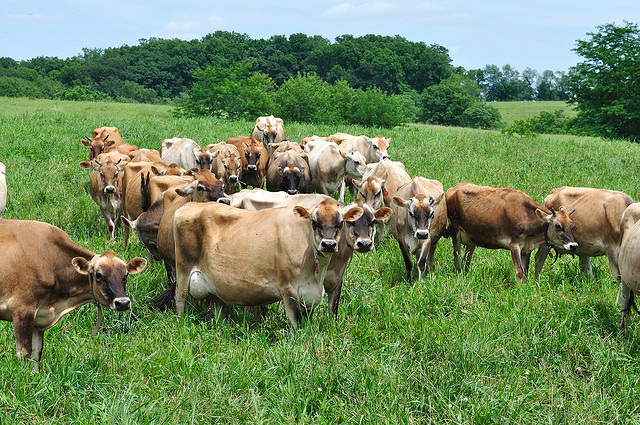
 Would you be surprised to hear that the human race is slowly becoming dumber, and dumber? Despite our advancements over the last tens or even hundreds of years, some ‘experts’ believe that humans are losing cognitive capabilities and becoming more emotionally unstable. One Stanford University researcher and geneticist, Dr. Gerald Crabtree, believes that our intellectual decline as a race has much to do with adverse genetic mutations. But there is more to it than that.


 Global standards. Consistent audit schemes. Validated certifications. Across the food supply chain, the concepts are being increasingly discussed, tested, and required. It is a trend that is being reported in articles, white papers, and reports from around the world, such as the 2012 report from the United Nation’s Food and Agriculture Organization (FAO) on global trends which stated, “Developed countries place growing importance on information and logistics technologies, and food safety and quality standards.” What is driving this trend? Are processors adopting global standards? And, if so, is it by choice or mandate? And, most importantly—What does this really mean to the industry?



 Truth Farmer
You must be logged in to post a comment.