Legalized, But Heavily Controlled Medical Marijuana Doesn’t Give Access in NY

Currently there are 23 states with some form of legalized access to cannabis. Most of these states have severely restricted the ability of people in need to actually get the cannabis that will likely help them or their loved one with the myriad of illnesses that cannabis can help to treat. Illinois, New York, Nevada, Connecticut, Massachusetts, and even Colorado are having issues with medical patients getting access to what they need.

Here’s a story from New York. The daughter of the main interviewee has a terrible form of epilepsy that can kill…

Despite pleas, quicker medical-pot bill in flux

The fate of legislation meant to speed up New York’s not-yet-launched medical marijuana program remains in flux.

The state Legislature passed a bill in mid-June that would allow the Department of Health to suspend certain regulations in order to allow a company to produce and distribute the drug to chronically ill patients prior to the program’s official launch.

That bill, however, has not yet been formally sent to Gov. Andrew Cuomo’s desk, an official act that would start a 10-day clock for the Democrat to sign or veto it.

And with the state awarding its five available medical-marijuana growing licenses last week, it’s unclear whether there would be enough time for one of those companies to get up-and-running before January, when the state’s full program is scheduled to launch.

“We are still pushing for it to get signed,” said Julie Netherland, deputy state director for the Drug Policy Alliance. “It’s great that the (registered organizations) were announced, but our concern remains that the program could be delayed and further delay access to patients who are critically ill.”

Under a 2014 law, the state Department of Health is required to launch its full medical-marijuana program by Jan. 5, 2016. But that date can be delayed until the health commissioner and State Police superintendent certify that the program can be implemented “in accordance with public health and safety interests.”

If the June bill is signed by Cuomo, the health department would be required to create a “special certification” for patients with a “progressive and degenerative” disease or those whose life or health is at risk without the drug.

Those patients would be allowed access to marijuana-based prescriptions before the full program launches, and Health Commissioner Howard Zucker would be able to suspend agency rules to allow a license holder to distribute the drug early.

The emergency-access bill was largely spurred by concerns from parents of children with severe forms of epilepsy, who traveled many times to the state Capitol to advocate for its passage. Some strains of medical marijuana — New York’s plan only allows non-smokeable forms — have shown promise for taming epileptic seizures.

Cuomo has not signaled whether he supports the bill. Since it hasn’t yet been sent to his desk by the state Assembly, he has not yet been forced to act on it. The sponsoring house of the Legislature and Cuomo’s office traditionally make joint decisions on when to send legislation to the governor’s desk.

In a statement Friday, Cuomo spokesman Rich Azzopardi said the Democrat’s administration will keep “all practical options open to ensure that those in pain receive the treatment they need as quickly as possible.”

“Our goal has always been to deliver relief to those in need and we’re pleased that the Compassionate Care Act is on track to have one of the shortest and swiftest implementation periods of any medical marijuana program in the nation,” he said.

Even if Cuomo signs the bill, it’s unclear whether any of the five license holders — each of whom can have one growing center and four dispensaries spread across the state — would be able to cultivate marijuana prior to Jan. 5, the deadline the state says it is working to meet.

Marijuana is a banned substance at the federal level, meaning it would be illegal to import grown marijuana from other states. A waiver request by Cuomo’s administration to allow it to import plants from other states was denied earlier this year.

Sen. Diane Savino, D-Staten Island, was the prime Senate sponsor of the state’s 2014 law creating the medical-marijuana program. She opposed the emergency-access bill, saying it will stifle efforts to get a more broad-based program up and running.

“Even if you wanted to issue a separate license for one group, they wouldn’t be able to do it any sooner,” Savino said Friday. “There’s really no opportunity to move it any quicker. You have to grow it in your own state. You have to process it in your own state.”

The sponsors of the emergency-access bill, however, say the legislation is still relevant and called on Cuomo to sign it.

Sen. Joseph Griffo, R-Rome, Oneida County, sponsored the bill in the Legislature’s upper chamber despite voting against the 2014 medical-marijuana law.

“The impetus for the bill was to find a way to help particularly these children who need immediate access, some form or manner of an opportunity to get that,” said Sen. Joseph Griffo, R-Rome, Oneida County. “That continues, from my perspective, to be relevant, because they still don’t have that access.”

At least one advocate said she’s not optimistic that any form of emergency access to the drug will come before January.

“I’m not hopeful, I guess,” said Kate Hintz, a North Salem, Westchester County, resident whose 4-year-old daughter, Morgan, suffers from Dravet syndrome, a rare form of epilepsy.

She continued: “I think it’s looking like January, if not the end of January. The state hasn’t let us know when we can register as patients. With the lack of details, I’m sort of losing my excitement over the whole program.”

Big Pharma Positioning itself on Cannabis

Hats off to the author of the following piece. She’s been around the issue for a very long time and is familiar with the political terrain. This issue brings up an awful lot of philosophical, and flatly scientific questions. On the philosophical side, shouldn’t we, as human beings created in the image of Yah, have the right to care for and to treat ourselves and our families as we see fit? In the intentional dumbing-down of our society, did we lose our capacity to make decisions? On the more scientific side, how do we know that taking an isolate of a plant is going to be as positive for health as taking the entire plant with all of it’s constituents? Do we actually know how all these various components work together within all the various components of the human being? Or did we just discover an aspect and then presume that we have full understanding? We only discovered DNA in 1952 and the endocannabinoid system in the early 1990’s and how do we know that there isn’t another system within that which we haven’t discovered yet?

At any rate, as one would expect, those who desire profit above all else are setting themselves up to control our access to natural substances in their natural forms. Here is the article:

For those hoping that Big Pharma could still be blocked from the medical cannabis scene there is bad news: the deal is done. Look for the first naturally-derived, Big Pharma-produced cannabis product to be on the market by the first half of 2016, perhaps even sooner.

Epidiolex is a liquid formulation of pure, plant-derived cannabidiol (CBD) manufactured by the British company, G.W. Pharmaceuticals. It is currently on the FDA Fast Track and has entered its final Phase 3 study for pediatric epilepsy disorders such as Dravet’s and Lennox-Gastaut’s syndromes with results scheduled for the first quarter of 2016.

Barring an unlikely catastrophic finding, there are plenty of signs that Epidiolex will breeze through this final stage and will thus have cleared the FDA’s testing requirements. For any other drug the remaining details would be purely administrative but Epidiolex is derived from cannabis and that puts a few more hurdles in the way before marketing can begin. There are, however, plenty of signs that government officials are literally paving the way for this new player.

Among the most significant occurred on June 24, 2015. Before a packed hearing room, the U.S. Senate Caucus on International Narcotics Control, established in 1985 to “expand international cooperation against drug abuse and narcotics trafficking” took on the decidedly domestic issue of what to do about medical cannabis. The meeting was chaired by two unlikely medical cannabis proponents, Senators Charles Grassley (R-Iowa) and Dianne Feinstein (D-CA).

For long-time medical cannabis activists it was a surreal moment to watch these two veteran senators (with a cumulative total of 57 years in the Senate) bob-and-weave their way through unfamiliar territory. Normally these drug warriors would be proposing tougher penalties and increased enforcement. But on June 24th, and in a subsequent editorial in Time Magazine, Grassley and Feinstein supported “expanding compassionate access programs where possible, to benefit as many children as possible.

The hearings were eerily familiar for this medical cannabis pioneer. They immediately hearkened memories of another time when pressure on federal officials forced a “readjustment” of policy. It was 1980 and public interest in medical cannabis was being fueled by heart-wrenching stories from cancer patients undergoing chemotherapy. Their compelling stories of marijuana’s effectiveness in reducing or eliminating chemo-induced nausea and vomiting had led to the passage of state laws that recognized marijuana’s medical value and sought to establish state-wide programs of research using federal supplies of marijuana. There was a big problem, however. The federal government, which regularly grew a research supply of marijuana on a small plot at the University of Mississippi, didn’t have enough marijuana to supply the demand from these states.

In desperation federal officials turned to the synthetic version of the psychoactive ingredient in cannabis, delta-9 tetrahydrocannabinol (THC). The drug was developed in the late 1960s to facilitate animal research. It was not originally intended for human use although researchers did begin using it in humans in the 1970s and in 1980 it was all the government had to stem the demand for medical access to cannabis.

In May 1980, Rep. Stephen L. Neal (D-NC), a member of the Select Committee on Narcotics Abuse and Control, convened a Task Force on Therapeutic Uses of Marihuana and Schedule I Drugs.

The Task Force hearings lasted all day but it was the afternoon session that would bring the bombshell when representatives from the National Cancer Institute (NCI) announced that delta-9 THC would be released through the NCI’s Group C Treatment Program.

“Under Group C, a compound is considered to have documented medical efficacy for a specific indication and not be a research drug per se, although it remains investigational…We anticipate that this change would make THC available to practicing oncologists around the country….We would hope that at some time in the near future a pharmaceutical company would become interested in marketing this drug, but until that time, we feel a responsibility for providing this controversial, but useful substance, to relieve the suffering of cancer patients…” (Hearings, page 162)

It was an unparalleled moment. The federal government was agreeing to produce and distribute, via the NCI, the most psychoactive compound in cannabis. With the tacit blessing of the Congressional Task Force on Therapeutic Uses of Marihuana and Schedule I Drugs, delta-9 THC would be released to hundreds of NCI pharmacies throughout the country. Oncologists would be notified, patients would have access, and the public pressure to “do something” about medical marijuana would be assuaged.

The government would herald this action as the release of “the pot pill” and the American public, not yet sophisticated with respect to cannabinoid knowledge, would breathe a sigh of relief that relatives would no longer be forced to the black market for their chemotherapy anti-nausea drug.

The Neal hearings paved the way for Marinol and, similarly, the Grassley/Feinstein hearings will pave the way for Epidiolex. The scenarios are slightly different, of course. The involvement of GW Pharmaceuticals from the very beginning has been far more pleasing to the FDA and other federal agencies. There is no “Group C” for pediatric epilepsy patients but it is reported that more than 400 patients are already receiving the drug via expanded access INDs.

The question that haunts this senior observer of the medical cannabis movement is: what will the federal government do once Epidiolex is on the market? Will there be a “crackdown” on the growing and enthusiastic CBD market that is flourishing online? (“Legal” CBD is produced from hemp and contains less the 0.03% delta-9 THC.) As Epidiolex is scheduled in the Controlled Substances Act will authorities tighten the control of natural CBD? Consider that Marinol, a synthetic version of the most psychoactive ingredient in cannabis, is Schedule III while the plant itself is Schedule I. Such inconsistency has, of course, been codified and is rather benignly referred to as “differential” scheduling. But, like so many things in the nation’s drug policy, it strikes many as a little crazy. The craziness of the federal policy with respect to marijuana should not be underestimated, nor should it be assumed that the growing tide of legal cannabis states will automatically signal a reform in federal law.

We have the Right to Travel- Supreme Court Rulings

There are many of us that are put at serious odds with the system because of the biometric and full on singularity of the tracking and control paradigm via Real ID and the associated Morpho Trust international collusion. These following cites from a myriad of cases may be helpful to us in protecting the rights that are supposed to be secured by a just government. This is long…And hopefully helpful! Many thanks to Eric Vimont for sending this to me!

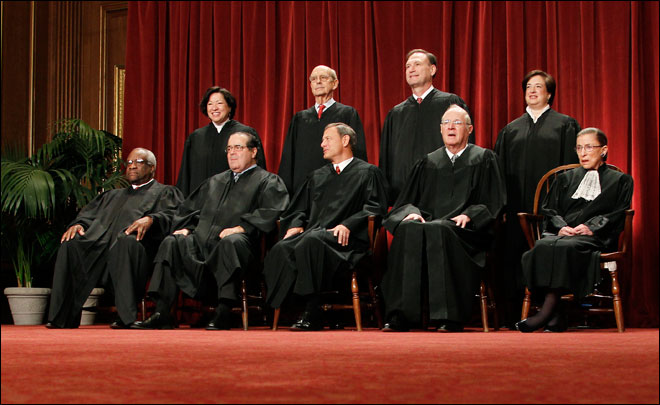
Supreme-Court-Justices-2

U.S. SUPREME COURT AND OTHER HIGH COURT CITATIONS PROVING THAT NO LICENSE IS NECESSARY FOR NORMAL USE OF AN AUTOMOBILE ON COMMON WAYS

“The right of a citizen to travel upon the public highways and to transport his property thereon, by horsedrawn carriage, wagon, or automobile, is not a mere privilege which may be permitted or prohibited at will, but a common right which he has under his right to life, liberty and the pursuit of happiness. Under this constitutional guaranty one may, therefore, under normal conditions, travel at his inclination along the public highways or in public places, and while conducting himself in an orderly and decent manner, neither interfering with nor disturbing another’s rights, he will be protected, not only in his person, but in his safe conduct.”

Thompson v.Smith, 154 SE 579, 11 American Jurisprudence, Constitutional Law, section 329, page 1135 “The right of the Citizen to travel upon the public highways and to transport his property thereon, in the ordinary course of life and business, is a common right which he has under the right to enjoy life and liberty, to acquire and possess property, and to pursue happiness and safety. It includes the right, in so doing, to use the ordinary and usual conveyances of the day, and under the existing modes of travel, includes the right to drive a horse drawn carriage or wagon thereon or to operate an automobile thereon, for the usual and ordinary purpose of life and business.” –

Thompson vs. Smith, supra.; Teche Lines vs. Danforth, Miss., 12 S.2d 784 “… the right of the citizen to drive on a public street with freedom from police interference… is a fundamental constitutional right” -White, 97 Cal.App.3d.141, 158 Cal.Rptr. 562, 566-67 (1979) “citizens have a right to drive upon the public streets of the District of Columbia or any other city absent a constitutionally sound reason for limiting their access.”

Caneisha Mills v. D.C. 2009 “The use of the automobile as a necessary adjunct to the earning of a livelihood in modern life requires us in the interest of realism to conclude that the RIGHT to use an automobile on the public highways partakes of the nature of a liberty within the meaning of the Constitutional guarantees. . .”

Berberian v. Lussier (1958) 139 A2d 869, 872, See also: Schecter v. Killingsworth, 380 P.2d 136, 140; 93 Ariz. 273 (1963). “The right to operate a motor vehicle [an automobile] upon the public streets and highways is not a mere privilege. It is a right of liberty, the enjoyment of which is protected by the guarantees of the federal and state constitutions.”

Adams v. City of Pocatello, 416 P.2d 46, 48; 91 Idaho 99 (1966). “A traveler has an equal right to employ an automobile as a means of transportation and to occupy the public highways with other vehicles in common use.”

Campbell v. Walker, 78 Atl. 601, 603, 2 Boyce (Del.) 41. “The owner of an automobile has the same right as the owner of other vehicles to use the highway,* * * A traveler on foot has the same right to the use of the public highways as an automobile or any other vehicle.”

Simeone v. Lindsay, 65 Atl. 778, 779; Hannigan v. Wright, 63 Atl. 234, 236. “The RIGHT of the citizen to DRIVE on the public street with freedom from police interference, unless he is engaged in suspicious conduct associated in some manner with criminality is a FUNDAMENTAL CONSTITUTIONAL RIGHT which must be protected by the courts.” People v. Horton 14 Cal. App. 3rd 667 (1971) “The right to make use of an automobile as a vehicle of travel long the highways of the state, is no longer an open question. The owners thereof have the same rights in the roads and streets as the drivers of horses or those riding a bicycle or traveling in some other vehicle.”

House v. Cramer, 112 N.W. 3; 134 Iowa 374; Farnsworth v. Tampa Electric Co. 57 So. 233, 237, 62 Fla. 166. “The automobile may be used with safety to others users of the highway, and in its proper use upon the highways there is an equal right with the users of other vehicles properly upon the highways. The law recognizes such right of use upon general principles.

Brinkman v Pacholike, 84 N.E. 762, 764, 41 Ind. App. 662, 666. “The law does not denounce motor carriages, as such, on public ways. They have an equal right with other vehicles in common use to occupy the streets and roads. It is improper to say that the driver of the horse has rights in the roads superior to the driver of the automobile. Both have the right to use the easement.”

Indiana Springs Co. v. Brown, 165 Ind. 465, 468. U.S. Supreme Court says No License Necessary To Drive Automobile On Public Highways/Streets No License Is Necessary Copy and Share Freely YHVH.name 2 2 “A highway is a public way open and free to any one who has occasion to pass along it on foot or with any kind of vehicle.” Schlesinger v. City of Atlanta, 129 S.E. 861, 867, 161 Ga. 148, 159;

Holland v. Shackelford, 137 S.E. 2d 298, 304, 220 Ga. 104; Stavola v. Palmer, 73 A.2d 831, 838, 136 Conn. 670 “There can be no question of the right of automobile owners to occupy and use the public streets of cities, or highways in the rural districts.” Liebrecht v. Crandall, 126 N.W. 69, 110 Minn. 454, 456 “The word ‘automobile’ connotes a pleasure vehicle designed for the transportation of persons on highways.”

-American Mutual Liability Ins. Co., vs. Chaput, 60 A.2d 118, 120; 95 NH 200 Motor Vehicle: 18 USC Part 1 Chapter 2 section 31 definitions: “(6) Motor vehicle. – The term “motor vehicle” means every description of carriage or other contrivance propelled or drawn by mechanical power and used for commercial purposes on the highways…” 10) The term “used for commercial purposes” means the carriage of persons or property for any fare, fee, rate, charge or other consideration, or directly or indirectly in connection with any business, or other undertaking intended for profit. “A motor vehicle or automobile for hire is a motor vehicle, other than an automobile stage, used for the transportation of persons for which remuneration is received.”

-International Motor Transit Co. vs. Seattle, 251 P. 120 The term ‘motor vehicle’ is different and broader than the word ‘automobile.’”

-City of Dayton vs. DeBrosse, 23 NE.2d 647, 650; 62 Ohio App. 232 “Thus self-driven vehicles are classified according to the use to which they are put rather than according to the means by which they are propelled” – Ex Parte Hoffert, 148 NW 20 ”

The Supreme Court, in Arthur v. Morgan, 112 U.S. 495, 5 S.Ct. 241, 28 L.Ed. 825, held that carriages were properly classified as household effects, and we see no reason that automobiles should not be similarly disposed of.”

Hillhouse v United States, 152 F. 163, 164 (2nd Cir. 1907). “…a citizen has the right to travel upon the public highways and to transport his property thereon…” State vs. Johnson, 243 P. 1073; Cummins vs. Homes, 155 P. 171; Packard vs. Banton, 44 S.Ct. 256; Hadfield vs. Lundin, 98 Wash 516, Willis vs. Buck, 263 P. l 982;

Barney vs. Board of Railroad Commissioners, 17 P.2d 82 “The use of the highways for the purpose of travel and transportation is not a mere privilege, but a common and fundamental Right of which the public and the individual cannot be rightfully deprived.”

Chicago Motor Coach vs. Chicago, 169 NE 22; Ligare vs. Chicago, 28 NE 934; Boon vs. Clark, 214 SSW 607; 25 Am.Jur. (1st) Highways Sect.163 “the right of the Citizen to travel upon the highway and to transport his property thereon in the ordinary course of life and business… is the usual and ordinary right of the Citizen, a right common to all.” –

Ex Parte Dickey, (Dickey vs. Davis), 85 SE 781 “Every Citizen has an unalienable RIGHT to make use of the public highways of the state; every Citizen has full freedom to travel from place to place in the enjoyment of life and liberty.” People v. Nothaus, 147 Colo. 210. “No State government entity has the power to allow or deny passage on the highways, byways, nor waterways… transporting his vehicles and personal property for either recreation or business, but by being subject only to local regulation i.e., safety, caution, traffic lights, speed limits, etc. Travel is not a privilege requiring licensing, vehicle registration, or forced insurances.”

Chicago Coach Co. v. City of Chicago, 337 Ill. 200, 169 N.E. 22. “Traffic infractions are not a crime.” People v. Battle “Persons faced with an unconstitutional licensing law which purports to require a license as a prerequisite to exercise of right… may ignore the law and engage with impunity in exercise of such right.”

Shuttlesworth v. Birmingham 394 U.S. 147 (1969). U.S. Supreme Court says No License Necessary To Drive Automobile On Public Highways/Streets No License Is Necessary Copy and Share Freely YHVH.name 3 “The word ‘operator’ shall not include any person who solely transports his own property and who transports no persons or property for hire or compensation.”

Statutes at Large California Chapter 412 p.83 “Highways are for the use of the traveling public, and all have the right to use them in a reasonable and proper manner; the use thereof is an inalienable right of every citizen.” Escobedo v. State 35 C2d 870 in 8 Cal Jur 3d p.27 “RIGHT — A legal RIGHT, a constitutional RIGHT means a RIGHT protected by the law, by the constitution, but government does not create the idea of RIGHT or original RIGHTS; it acknowledges them. . . “ Bouvier’s Law Dictionary, 1914, p. 2961. “Those who have the right to do something cannot be licensed for what they already have right to do as such license would be meaningless.”

City of Chicago v Collins 51 NE 907, 910. “A license means leave to do a thing which the licensor could prevent.” Blatz Brewing Co. v. Collins, 160 P.2d 37, 39; 69 Cal. A. 2d 639. “The object of a license is to confer a right or power, which does not exist without it.”

Payne v. Massey (19__) 196 SW 2nd 493, 145 Tex 273. “The court makes it clear that a license relates to qualifications to engage in profession, business, trade or calling; thus, when merely traveling without compensation or profit, outside of business enterprise or adventure with the corporate state, no license is required of the natural individual traveling for personal business, pleasure and transportation.”

Wingfield v. Fielder 2d Ca. 3d 213 (1972). “If [state] officials construe a vague statute unconstitutionally, the citizen may take them at their word, and act on the assumption that the statute is void.” –

Shuttlesworth v. Birmingham 394 U.S. 147 (1969). “With regard particularly to the U.S. Constitution, it is elementary that a Right secured or protected by that document cannot be overthrown or impaired by any state police authority.” Donnolly vs. Union Sewer Pipe Co., 184 US 540; Lafarier vs. Grand Trunk R.R. Co., 24 A. 848; O’Neil vs. Providence Amusement Co., 108 A. 887. “The right to travel (called the right of free ingress to other states, and egress from them) is so fundamental that it appears in the Articles of Confederation, which governed our society before the Constitution.”

(Paul v. Virginia). “[T]he right to travel freely from State to State … is a right broadly assertable against private interference as well as governmental action. Like the right of association, it is a virtually unconditional personal right, guaranteed by the Constitution to us all.” (U.S. Supreme Court,

Shapiro v. Thompson). EDGERTON, Chief Judge: “Iron curtains have no place in a free world. …’Undoubtedly the right of locomotion, the right to remove from one place to another according to inclination, is an attribute of personal liberty, and the right, ordinarily, of free transit from or through the territory of any State is a right secured by the Constitution.’

Williams v. Fears, 179 U.S. 270, 274, 21 S.Ct. 128, 45 L.Ed. 186. “Our nation has thrived on the principle that, outside areas of plainly harmful conduct, every American is left to shape his own life as he thinks best, do what he pleases, go where he pleases.” Id., at 197.

Kent vs. Dulles see Vestal, Freedom of Movement, 41 Iowa L.Rev. 6, 13—14. “The validity of restrictions on the freedom of movement of particular individuals, both substantively and procedurally, is precisely the sort of matter that is the peculiar domain of the courts.” Comment, 61 Yale L.J. at page 187. “a person detained for an investigatory stop can be questioned but is “not obliged to answer, answers may not be compelled, and refusal to answer furnishes no basis for an arrest.”Justice White, Hiibel “Automobiles have the right to use the highways of the State on an equal footing with other vehicles.”

Cumberland Telephone. & Telegraph Co. v Yeiser 141 Kentucy 15. “Each citizen has the absolute right to choose for himself the mode of conveyance he desires, whether it be by wagon or carriage, by horse, motor or electric car, or by bicycle, or astride of a horse, subject to the sole condition that he will observe all those requirements that are known as the law of the road.”

Swift v City of Topeka, 43 U.S. Supreme Court says No License Necessary To Drive Automobile On Public Highways/Streets No License Is Necessary Copy and Share Freely YHVH.name 4 Kansas 671, 674. The Supreme Court said in U.S. v Mersky (1960) 361 U.S. 431: An administrative regulation, of course, is not a “statute.” A traveler on foot has the same right to use of the public highway as an automobile or any other vehicle.

Cecchi v. Lindsay, 75 Atl. 376, 377, 1 Boyce (Del.) 185. Automotive vehicles are lawful means of conveyance and have equal rights upon the streets with horses and carriages.

Chicago Coach Co. v. City of Chicago, 337 Ill. 200, 205; See also: Christy v. Elliot, 216 Ill. 31; Ward v. Meredith, 202 Ill. 66; Shinkle v. McCullough, 116 Ky. 960; Butler v. Cabe, 116 Ark. 26, 28-29. …automobiles are lawful vehicles and have equal rights on the highways with horses and carriages. Daily v. Maxwell, 133 S.W. 351, 354.

Matson v. Dawson, 178 N.W. 2d 588, 591. A farmer has the same right to the use of the highways of the state, whether on foot or in a motor vehicle, as any other citizen.

Draffin v. Massey, 92 S.E.2d 38, 42. Persons may lawfully ride in automobiles, as they may lawfully ride on bicycles. Doherty v. Ayer, 83 N.E. 677, 197 Mass. 241, 246;

Molway v. City of Chicago, 88 N.E. 485, 486, 239 Ill. 486; Smiley v. East St. Louis Ry. Co., 100 N.E. 157, 158. “A soldier’s personal automobile is part of his ‘household goods[.]’

U.S. v Bomar, C.A.5(Tex.), 8 F.3d 226, 235″ 19A Words and Phrases – Permanent Edition (West) pocket part 94. “[I]t is a jury question whether … an automobile … is a motor vehicle[.]”

United States v Johnson, 718 F.2d 1317, 1324 (5th Cir. 1983). Other right to use an automobile cases: –

EDWARDS VS. CALIFORNIA, 314 U.S. 160 –

TWINING VS NEW JERSEY, 211 U.S. 78 – WILLIAMS VS. FEARS, 179 U.S. 270, AT 274 – CRANDALL VS. NEVADA, 6 WALL. 35, AT 43-44 – THE PASSENGER CASES, 7 HOWARD 287, AT 492 – U.S. VS. GUEST, 383 U.S. 745, AT 757-758 (1966) –

GRIFFIN VS. BRECKENRIDGE, 403 U.S. 88, AT 105-106 (1971) – CALIFANO VS. TORRES, 435 U.S. 1, AT 4, note 6 –

SHAPIRO VS. THOMPSON, 394 U.S. 618 (1969) – CALIFANO VS. AZNAVORIAN, 439 U.S. 170, AT 176 (1978) Look the above citations up in American Jurisprudence. Some citations may be paraphrased.


OG article

https://www.linkedin.com/pulse/us-supreme-court-says-license-necessary-drive-public-letennier

Cannabis Legalization on Missouri Ballot: Two Paths from Which to Choose…Freedom, or Feudalism?

Cannabis Legalization on Missouri Ballot:

Two Paths from Which to Choose…Freedom, or Feudalism?

©Doreen Hannes

(((Look, I want to be very clear here. I don’t even use cannabis, because it IS illegal, and the seizure aspects are waaaay too high of a price to consider for something I would only rarely do if it were indeed legal….so I am not trying to get protections for my habit in position.)))

Over the course of the past few months I’ve been doing a fair amount of investigation on the issue of cannabis and various efforts to legalize the plant for the general benefit of humanity. Initially, I looked at the issue of legalizing cannabis as a simple matter of civil liberties with a massive pseudo criminal front propped up by drug court fees, seizure laws, probation and the expenses paid to the system in that, cheap prison labor and increased family court revenues due to foster care and custody issues…And yes, it also incidentally had benefits for people with serious medical issues.

Honestly, I have had a complete paradigm shift. Complete.

Not that the prison industry complex and costs to society associated with those issues are irrelevant, but there is a much larger, and much more evil truth about the control of cannabis that absolutely must become common knowledge. It’s particularly important that those who largely identify with conservative and Christian principles, or strong Constitutionalist ideologies become fully aware of the collusion between government and corporations to remove a beneficial plant from our access. Cannabis actually heals. And it restores life to people who are very ill. Hundreds of studies show this to be true, and also that cannabis is tremendously beneficial for our overall health.

The reason this has come to the forefront for many of us is that it is becoming increasingly difficult to hold to the idea that “Reefer Madness” has any basis in fact. It simply isn’t factual. Sometimes there are people that use cannabis that are just literally criminals and have no regard for their fellow man. These same criminals may also consume carrots, but the carrots are not the cause of their deficient characters. With or without cannabis, these people would be violent. Cannabis does not cause crime. Violent cartels exist because of cannabis being illegal. So in effect, the only violence that can truly be attributed to cannabis is state sanctioned violence through unjust laws. Simply put, the controls on this plant are the reason for violence associated with the plant or it’s distribution.

The tipping point on the truth around cannabis being put into the status of a Schedule One controlled substance (the Schedule One designation means it has NO medicinal value) has been achieved among the people. For those who have some qualms about whether or not this plant needs to be flatly legalized, please watch this video about Rick Simpson oil. This man has given people -as in freely given- cannabis oil, and they have been cured of all manners of disease including multiple types of cancer and terminal cancer. If you watch that video and still have any uncertainty left in you, watch this video, and forgive the one instance of yelling at the very beginning. The facts are that corporate interests paid to have cannabis categorized as a Schedule One controlled substance. Corporate interests, violent cartels, the prison industry and tyrannical seizure laws fattening the wallets of a few, have been the only beneficiaries of cannabis control.

Multitudes of people have died from being denied the best thing on earth to beat cancer. And the people in the corporations, the politicians that continue to be bought off from taking right action, and the pharmaceutical companies, are complicit in their deaths. Yes, I said complicit. The facts are in. Cannabis prohibition must end and will end very soon. Just look at this list of the plethora of studies that show the benefits of cannabis in treating human ailments. There are hundreds of studies on the effectiveness of cannabis, not just in treating symptoms of disease, but actually curing the disease in many instances. It can’t be covered up any longer. However, we do have some questions that we need to answer for ourselves as we move forward on cannabis.

The first question is whether or not we are happy with the current state of controlled and declining health and access to alternative/natural treatments? Currently, the FDA -who took 30 years to admit that vitamin C is helpful in thwarting the common cold- is in control of our food and our medicine. On average, FDA approved medications kill 100,000 people per year. Those are their own reports on the FDA’s website. The FDA has stated they are justified in exercising authority to control what we consume because the Almighty gave commands on dietary laws in Scripture. They think they have as much authority as the Creator of the Universe. Seriously. Check it out here. (page 26 of 30)The FDA also holds the position that “raw milk is inherently dangerous and should never be consumed by any one for any reason.” Never mind the fact that if that were a true statement, there would never have been a second generation of human beings.

Honestly, I could go on for a full-length book about the criminal behavior of the FDA in relation to our food and medicines, but I’ll restrain myself. Just watch network tv for one night, count up the recalls and suits being advertised along with all the new medications you should talk to your doctor about, then ask yourself if you think they are doing work that is truly beneficial for humanity. If you can truthfully say that you are pleased with the quality of our nutrition, not knowing whether or not you are consuming genetically modified organisms, and the health care system in this country, then you need do nothing. If you are not satisfied with the status quo of chronic pain, disease and debilitation, and lack of personal control, then it’s time to do things differently.

The next series of questions we must answer is what kind of business model “We the People” want to follow as we end prohibition on this plant? Do we want to stick with the controlled access, medical industrial cartel dialectic, where production, distribution, and access are licensed and heavily regulated, and keep fascism growing? Or do we want to seek free market enterprise and let everyone who is interested put their own money on the line and succeed or fail on their own merits? Have layers of bureaucrats proven themselves to be beneficial to our literal wellbeing? Do we think we personally should have the ability and choice to make decisions about what we consume? Or do we believe the bureaucrats, paper pushers and corporations have proven themselves to have a legitimate and beneficial hand in securing our health?

Once we’ve answered these questions to our satisfaction, then we must decide how we move forward on the issue of cannabis legalization and access. In Missouri, we will have two very different initiatives on the ballot in 2016 for a proposed Constitutional amendment.

Since I’m from the Show Me state, and these two initiatives are responsible for bringing me to the paradigm shift I mentioned above, I bring you “The Tale of Two Initiatives”. One is very short and flatly legalizes it. The other is 4 pages of small print and proposes to regulate cannabis within the Constitution of the state.

From that short overview, it is very likely that those who know me have already determined which initiative has won my support. But it’s necessary for everyone to make up their own minds about this, so the remainder of this rather lengthy article is going to focus on the nuts and bolts of these two initiatives. Other states have similar proposals in position.

Let’s deal with the short one first. This initiative, identified as 2016-013, was written by Mark Pedersen formerly of the Kansas City NORML group. Even many major proponents of legalizing cannabis have said it was too radical. Notably, the national level of the KC group that worked with Pedersen, NORML (the National Organization for Reform of Marijuana Laws) is reported to be the biggest opponent of this initiative. We’ll have to deal with the reasons behind NORML opposing this amendment in a subsequent article. For now, we’ll just look at the “radical” amendment first and talk about possible pros and cons related to it.

2016-013 is currently being circulated for the collection of signatures to get onto the 2016 November ballot. It proposes to remove cannabis from the controlled substances list. It doesn’t place limits on the amount one person may possess or grow. It also doesn’t have any age limits set within the confines of the proposed amendment to the Constitution. It secures the right of people to grow enough for their personal use and prevents extra regulatory controls on farmers and processors of all cannabis products, including all strains, cannabis sativa, cannabis indica, cannabis ruderalis, and crosses of these cannabis strains. It prohibits the mere presence of cannabis and cannabis products from serving as cause to charge with impaired driving. And I do admit that it does indeed seem radical on its face. But let’s examine the issues so we can make determinations with solid information.

First up, let’s look at the “radical” idea of not limiting the amount that an individual may grow. This is terrifically important. If you watched the Rick Simpson “Run From the Cure” video I linked earlier, you are aware that a single full treatment for cancer or serious health issues requires a pound of cannabis. The oil from the plant is extracted and a pound will render about 2 ounces of oil. It’s a lot of cannabis. What’s more, if a person has received chemo or radiation, they will need at least 2 full protocols of the cannabis oil to fully heal. It can take a lot of plants to get those amounts of cannabis. The street value of a single treatment amount bought by the ounce is about $4800.00 right now. If you can get the entire pound and buy it all at once you might be able to get a discount and get it as low as $3400. Is that too high of a price to cure cancer? Certainly not, but what if you don’t have $3400 to $4800? Does your ability to pay for a treatment make you worthy of having it? Conversely, does the inability to pay make you a less valuable human being? If there aren’t limits placed on the number of plants one may have, it opens the door for people to be better able to heal themselves and to take personal responsibility for their own well being.

Next let’s look at the thing that really struck me personally about the 2016-013 initiative. There is no age limit set forth for possessing or using cannabis. I thought that was pretty over the top, and I told the people who contacted me about the initiative that it was my opinion that it needed an age limit. They made some pretty good arguments against it. One of those arguments was very basic from a freedom advocate’s point of view. The age of majority isn’t stipulated in the Bill of Rights. Also, it isn’t a static thing. It is 21 for some things and 18 for other things and it isn’t something that should be ensconced in our Constitution to secure a right. Even more importantly, in light of the healing potential of cannabis oil, would anyone with any compassion in them want to prohibit a parent faced with a seriously ill child from being able to help that child? I wouldn’t. It would be unconscionable to put anyone in that position, and instead run them through a bureaucratic and medical industrial complex maze to do what every parent must do to be right in the eyes of their Creator and provide for the child help in a time of trouble. Also, it is emphatically evident that parents have a duty to protect their children from ingesting things that they shouldn’t be ingesting. If you are going to have cannabis in the house, you have to be responsible and not allow your children to use it on their own. In other words, BE A PARENT!

Next let’s take an actual look at the issue of THC in the system and driving under the influence. THC being present in the system is simply not at all equal to impairment. Yes, THC is the psychoactive chemical in cannabis, but its presence within a person’s system doesn’t mean that the person is impaired. It isn’t like blood alcohol content, in that a person could have high levels of THC in their system, but still not be impaired. If someone is using cannabis to treat themselves for health reasons, THC will be high, but they are not likely to be impaired if they have been following a protocol for any length of time at all. There is a lot of science behind this fact, and it is important to look at the science and make logical decisions about THC as opposed to emotional decisions predicated on a faulty basis. In no way shape or form am I saying that you cannot be impaired by cannabis consumption. You certainly can be impaired. That impairment would be evident in a motor skills test that was video taped and witnessed by at least two witnesses. Whether people like it or not, that would be evidence of impairment, but THC levels are not a credible assessment of impairment.

Here is an excerpt from a paper on this issue:

A study using coordination testing showed inevitable failure on field sobriety testing if blood THC levels were 25 to 30 ng/ml. But, many failed testing at 90 and 150 minutes after smoking even though plasma concentrations were rather low. The researchers had the foresight to conclude that “establishing a clear relation between THC plasma concentrations and clinical impairment will be much more difficult than for alcohol”. This is because alcohol and THC are chemically different and are metabolized differently inside the body.

Now we are ready to take a look at the “Show Me Cannabis” (aka Mo NORML) initiative proposition.

First off, this initiative, 2016-009, isn’t being circulated for signatures yet because the proponents of the initiative have reportedly “gone back to the drawing board”. However, it is available from the Missouri Secretary of State’s office at this link. I have put in a couple of emails asking for a conversation with the gentleman heading up this initiative and have received no replies, so I cannot relate any responses to questions I have regarding this initiative.

In the first sentence, this initiative is providing for regulatory control of cannabis to Missourians over the age of 21. It stipulates that regulations are to be promulgated for many purposes. Here are a few of those. Promulgate regulations to allow for state licensed producers, retailers, and distributors of cannabis. It states that revenue generated by cannabis will be used to fund police and firefighter pensions and retirement plans as well as elementary and secondary schools. That the revenue will be used to prevent: the establishment of cartels, under age 21 use, and to prevent advertising cannabis to those under the age of 21. It allows for households to grow up to six plants, have up to 16 ounces of dried cannabis, or 20 ounces of liquid cannabis. It proposes to expunge nonviolent cannabis convictions. Also to require a person to get a license to purchase, sell, manufacture, deliver or process cannabis. It requires the labeling of the THC content on all cannabis products, and provides for limitation on the level of THC allowed in cannabis that may be sold. It provides for a 25% excise tax on the first “fair market sale” of all marijuana….And more. Lots more, actually.

Let’s start with the 25% excise tax on the first “fair market sale” of any cannabis. Well, right there we have a problem. “Fair market sale” is defined in this proposed amendment as “means with respect to the sale of a product, a sale in which the purchase price of the product is not less than the price that a willing seller would accept and a willing buyer would pay in the open market and in competition with other similar products.” Hmmm.

If this is absolutely constrained to the FINAL sale of the product to the consumer of the product, that means that if you are buying from a “licensed retail establishment” that you will be paying approximately 33% in taxes to the State. (The 25% excise and the 8% sales tax) It doesn’t state that it is on the final sale though. It says it is on the “first sale in an open market”. So…does that mean when the grower sells to someone for either distribution or manufacturing that the grower has to collect the 25% for the state? Here is the definition of an excise tax. (It’s rather complex, and this article is already very long, so please read the link) It certainly sounds to me as though the tax is something that is supposed to be collected on the sale by the grower after he pays the license fee to be able to sell the product at all.

He must then increase the down line cost of the product by adding an additional 25% cost to the next in line. Then when you get to the retail portion, the cost of goods is further increased by the state sales tax. So, let’s say the licensed grower sells an ounce for $100 for his labor and upkeep, and has to collect $125 from the licensed wholesaler/distributor or manufacturer to whom he sells. The distributor or wholesaler then has to mark up the product by whatever percentage will allow him to pay his license fee and make a living wage to the retailer, who then must again mark up what he sells the product for in order to cover his own living wage. Presume you do typical mark up of 30% for the distributor/wholesaler (more for the manufacturer as there are additional processes involved) as the distributor/wholesaler is supposed to be moving volumes. Now you’re looking at $125 + $37.50= $162.50. Then the retailer usually has to double as they have more insurance liability by having people come in and out of their location, and they have to deal with displays and such. Now you’re looking at $325 per ounce before the typical 8% sales tax ,which is another $26, so the cannabis consumer pays $351 per ounce and the state makes $51 plus licensing fees every step of the way. Mind you, $100 an ounce as a starting price is terrifically low. But is this really going to help out the average person a whole lot? I’m all for the State making money on the retail, but my rule of thumb is what did Yahweh ask for a tithe? Only 10%. Why does the State deserve more than 2 and half times what He requests? Maybe I’m the only one who thinks this way…I kind of doubt it though.

Someone will say, “But you can grow up to six plants, and that surely is enough for a household!” Well, let’s look at the six plant limit. Below you’ll find a little scenario that is not at all unreasonable. Just ask anyone who has ever gardened.

So you decide you like to garden and you’ll grow your own cannabis and therefore bring down the cost of making cannabis available for your household. You order seeds and spend $90 for ten seeds. Really. That’s a pretty good price, too. So you very carefully germinate your seeds and 9 out of ten germinate. Now you have to throw three down the toilet or you’ll be over your six plant limit. You carefully place these in small pots. They begin to put on leaves and now you have your six plants! You’re all legal and looking forward to excellent yields…Then you come home from work and two of your seedlings wilted on you. You mist them and hope they’ll recover. Well, they don’t. So now you have four plants and no more seeds to germinate. You figure that’s all fine because the advertisement said this was a high yielding variety and you can only have 16 ounces of dried product anyway. So when they get to be about 15 inches tall you put them outside into the best area of your backyard for good sun, but not too much, and you check on them daily. You patiently wait for September when you should be able to harvest. In the end of June, you and your family go away for the weekend and when you come home, one of your plants has simply disappeared. And the Japanese beetles picked that weekend to hatch out and eat your remaining plants up like crazy. So you set about making a protective enclosure for them and that involves shade cloth and posts and a gate and it takes you the rest of the week to get that done. You only have a couple of hours to work on it every night because this endeavor isn’t one that actually pays the bills. At this point you’re thinking it’s probably a lot easier to just buy the stuff, but you’re stubborn and keep after it until September. They’re looking okay, but the yields in the advertisement don’t look attainable…Harvest time comes and you get a total of three ounces from your three plants. Probably because the Japanese beetles hit right at flowering time…So you have three ounces after 6 months of tending and you’re scratching your head to figure out if it’s even worth trying again.

Imagine going through that when you are ever so hopeful that you will get a good yield on a strain that will help your child with epilepsy, or a parent with debilitating arthritis, diabetes, or cancer. Six plants? At what stage of maturity? And what happens if you are over that level and get caught by Code Enforcers or the police? Well, we can’t answer that other than to say the legislature will authorize fines and penalties for going over the “Household Exemption” level. It does limit it to up to $1000 or a year in jail. Does that sound good? Does it count toward the retirement funds and school funds prescribed in this amendment proposal? The proposed amendment says “revenue”. Do the enforcement fines and penalties count toward revenue?

Let’s consider the issue of using the amendment to aid law enforcement and firefighters pensions and retirements, and helping out the public school system with additional funds. While I am pro-education and pro-firefighter and all for peace officers, don’t we already spend a fair amount of tax money on these things? Are these funds being managed well? Isn’t this what various lottery proceeds are supposed to enhance as well? If we throw more money at them, do the actual students and the actual public servants ever really benefit? With the seizure laws that have been so onerously used, I have a really hard time thinking the public needs to give more money to police so that they can get more money by citing more people for regulatory violations as promoted in this proposed amendment.

There are some good things that are done in this proposed amendment. One is expunging of nonviolent cannabis offenses. But when you compare these two initiatives that, on their face, are supposed to legalize cannabis in Missouri, one flatly does so, and the other creates a plethora of bureaucracies and potential regulatory abuses along with continued legal system fines and penalties.

Let me be very clear here, while there is no part of me that wants to tolerate minors “getting stoned” or people driving while impaired, it is apparent that the ability to control those things still exist within our legal construct. Minors do NOT have the same rights as adults. Nor do they have the same responsibilities. People who drive while they are chemically/physically impaired by cannabis to the point that they cannot properly react to the hazards on the road are not being responsible, and should be charged with driving under the influence. Video evidence should be sufficient for the enforcement of driving while impaired.

Please check out all the links I posted in this incredibly long article. It’s very important that when we have amendments to consider on the ballot that we are wise in our decisions about them. We cannot be reactive and responsible at the same time. Study it out and be certain of your decisions.

I encourage you to read these amendments again, and if you have concerns, please feel free to voice them and let’s see if we the people can positively, and responsibly, disentangle ourselves from the corporately controlled nanny state on this issue.


http://www.truthfarmer.com

Monsanto Knowingly Killing You with Glyphosate Since 1981

Admittedly, I find it unbelievable that people can still defend Round Up or GMO’s in any way. The evidence that they are completely unsafe is overwhelming and to believe otherwise requires such a huge denial of reality it is akin to believing the earth is flat and the center of our galaxy.

If you know anyone who is still in that camp, please have them read the following article. Unless they are brain dead, it is compelling:

Researcher Reveals Monsanto Has Known Since 1981 That Glyphosate Promotes Cancer

By Dr. Mercola

Glyphosate, the active ingredient in Monsanto’s best-selling herbicide Roundup, is one of the most commonly used herbicides in the world.

An estimated one billion pounds a year is sprayed on our food crops,1,2 resulting in the average American eating several hundred pounds of glyphosate-contaminated food every year.

How might that affect your health? Dr. Anthony Samsel is an expert in this area, and in this interview, he reveals a number of glyphosate’s adverse effects.

Armed with this understanding, you’ll likely be far more motivated to eliminate this pernicious toxin from your diet—and to take action to get it out of our food supply so that everyone can be protected.

Dr. Samsel is a research scientist who is passionate about farming, gardening, and agriculture, making him particularly suitable for investigating glyphosate.

“I was with the ‘think tank,’ Arthur D. Little (ADL) in Cambridge, Massachusetts for many years working as a research scientist on many types of projects, from product development to environmental sciences to later switching to health sciences,” he says.

He’s also done contract work for the Environmental Protection Agency (EPA), and as a hazardous materials expert, he’s worked for the United States Army Corps of Engineers (USACE), the United States Navy (USN), and the United States Coast Guard (USCG).

For example, Dr. Samsel was one of the authors of the Chemical Hazard Response Information System (CHRIS) manual for the US Coast Guard.  He is also a valuable contributor to our article comments section (Vital Votes).

Besides his career in science, he also owned and operated several farms in New England, and it was this first-hand experience that led him to begin investigating the effects of glyphosate in the first place.

“I started using glyphosate myself commercially around the farm and my properties back in the late ’70s or early ’80s, when it first came on the market,” he says.

“I believed the hype like all the other farmers and people around the world do, that glyphosate is as safe as salt and that it broke down into harmless chemicals that did no harm. I believed all that stuff until I started studying the chemical.

Being a research scientist, a chemist, I knew what to look for. Having worked in public health, I was familiar with how chemicals had effects on the human body and on animals. So I started approaching it from that aspect.

As far as my own health, it started to suffer. That’s what put me on the road to take a look at this chemical because I was using it.”

Human Urine Turning into Herbicide…

One interesting experience that got him thinking was when he tried to deter deer from eating his crops. He’d run out of coyote urine, which is an effective deterrent, so he used his own urine.

Curiously, he noticed the weeds where he’d sprayed his urine were dying, despite the fact he’d not sprayed any Roundup there. He then realized his own urine was acting like an herbicide!

“I did some controlled experiments in the greenhouse with some plants and the same thing happened. Those plants died. Then, I started looking at my diet,” he says.

“The only organic food I was eating was out of my own garden and the stuff that I would can and preserve. But for everything else, I’d go to the supermarket and I ate boxed food and what-not. I started to put two and two together; that maybe this was the reason why I wasn’t feeling good.

Then I started looking into glyphosate because I was using it. That was my primary chemical exposure other than my food.

Then I realized they were using [glyphosate] on genetically engineered crops, and I started looking at the US Department of Agriculture (USDA) to see what food would have glyphosate or glufosinate in them.

[Glufosinate] is similar to glyphosate and used in genetically engineered crops. It’s not as widely used as glyphosate, but that’s still a problem to public health. All herbicides are ‘a’ problem to public health. There should be no herbicides in our food supply. None.”

90 Percent of Soybeans Found to Contain Glyphosate Residues

Unfortunately, testing for glyphosate and glufosinate is expensive and is the excuse the USDA uses for not  testing for it, and no contamination data was available for Dr. Samsel to review.

Eventually, he convinced the USDA to release the results of a series of tests in 2011. In all, they tested 400 samples of soybeans, and they found more than 90 percent of the soybeans had glyphosate residues in them.

However, when the agency sent him a pre-publication copy of the report, he noticed they were only reporting on 300 out of the 400 samples.

“I started looking at the data. I noticed that the amount of aminomethylphosphonic acid (AMPA), which is the metabolite of glyphosate, was greater than that of the glyphosate itself.

If you analyze the glyphosate, you’re going to get glyphosate if the residue is in the crop, but you’re also going to get the metabolite AMPA. But looking at the numbers, they just didn’t make sense. I believed they’ve cherry-picked the data so that the data didn’t exceed the EPA residue limits,” he says.

Unfortunately, when he tried to get an explanation for the discrepancy in the data, his USDA contact was no longer working there, and he hasn’t been able to find him since.

Advocacy Group Now Offers Testing for Glyphosate in US

While the USDA does not test food for glyphosate residues, this may soon change. The US Environmental Protection Agency (EPA) recently announced US regulators may start testing for glyphosate residues in the near future3,4,5 due to rising consumer concerns about the health impact of this chemical.

Meanwhile, the Organic Consumers Association (OCA) has joined forces with the Feed the World Project, launching the world’s first glyphosate testing for the general public.6,7,8,9 As reported by the OCA:

“The project, with specific focus on women and children in the US, is offering the first-ever validated public LC/MS/MS glyphosate testing for urine, water and soon breast milk… The testing OCA, Feed the World and many other organizations will begin offering [on April 22] will allow everyone who wants to know whether or not, and to what extent, they personally have been exposed to glyphosate.

We expect that once the public learns how widespread the exposure has been—in the context of the recent report from the World Health Organization that glyphosate is a probable human carcinogen—public pressure will eventually force governments worldwide to finally ban Roundup.”

The Importance of Bacteria for Optimal Health

Dr. Samsel understood that his gut problems were related to bacteria and that just as healthy soil needs beneficial microbes, so does your gut. This was something instilled in him by his grandfather, who taught him that healthy bacteria in the soil help grow healthy crops. Not surprisingly, when he cleaned up his diet, his gut dysbiosis cleared up, as did a number of neurological problems he’d started experiencing.

At that point, he began delving deeper into the science of the human microbiome. Many are unaware of the fact that glyphosate is patented as an antibiotic. It’s designed to kill bacteria, which is one of the primary ways it harms both soils and human health. Recent research has even concluded that Roundup (and other pesticides) promotes antibiotic resistance. Dr. Samsel was actually the person who dug up the patents showing glyphosate is a biocide and an antibiotic.

“Some of the pathogens, like Salmonella and Pseudomonas, are resistant to glyphosate. When we ingest residues of glyphosate, glyphosate in the acidic environment dissociates. The acid glyphosate then is able to do a number on the bacteria, the same as it does in plants. It kills plants and bacteria in our plants.

Our gut has a beautiful ‘lawn’ of upwards of a thousand various species. Each species of bacteria has a specific function. We might liken the bacteria of our microbiome to mining and manufacturing companies. You might visualize the bacteria with mining helmets and pick axes. They mine the minerals in your biology that your body needs as co-factors for various biochemical processes. Your bacteria also manufacture vitamins and other biomolecules that are essential.

Even some of your fatty acids, which serve as signaling molecules, are manufactured by your bacteria. Our bacteria manufacture most of our B vitamins – B6, B9, and B12, which is cobalamin – essential to our neurology. Bacteria also manufacture vitamin K and some of your vitamin C. We have a symbiotic relationship with these bacteria. We help them and they help us. They take the food and they don’t just break it down and obliterate it to unrecognizable things. They dismantle the food, and they utilize everything that’s in the food.”

Bacteria Also Produce Essential Amino Acids and More

Bacteria are also responsible for producing essential amino acids such as tryptophan, phenylalanine, and tyrosine. So in addition to chelating out various vitamins and other important elements, glyphosate also disrupts bacteria manufacturing aromatic amino acids. It also disrupts methionine, a sulfur amino acid crucial for detoxification, and glutamate. All of this can have a profound influence on your biology. For example, as Dr. Samsel explains:

“Glyphosate disrupts the aromatic amino acid tryptophan, and tryptophan is necessary for the production of serotonin. Of course, from serotonin, we make melatonin and from melatonin, we make melanin. There are several biomolecules that are very important to your health and biology. Serotonin regulates and controls blood sugar. It also regulates IGF-1, which is insulin-like growth factor. IGF-1 is necessary for neurogenesis, for your ability to produce new neurons throughout life, and also for regulation of your physiology. Serotonin also activates the enzyme endothelial-derived nitric oxide synthases (eNOS), which is responsible for insulin secretion.”

Serotonin also catalyzes nitric oxide (NO) production in the vasculature providing airway tone and smooth muscle relaxation, and 90 percent of your serotonin—which is known as a neurotransmitter—is actually produced in your gut by certain bacteria, not in your brain.

Today, millions of prescriptions are being written for selective serotonin reuptake inhibitors (SSRIs), which are designed to increase serotonin in your brain. Yet 90 percent of it is manufactured in our gut! Dr. Samsel gave another excellent interview with Zen Honeycutt10 in 2013, in which he describes the impact glyphosate has on your gut bacteria, so for more information, please listen to the following helpful interview as well.

Monsanto Has Known for Nearly 35 Years That GMOs Promote Cancer

Dr. Samsel eventually asked the EPA for Monsanto’s trade secret documentation, as most of the approval process for glyphosate was based on studies Monsanto had done by outside contractors. That process began in the late 1970s and concluded around 1983 with the registration of the chemical. Since then, it’s gone through a couple of re-reviews. But Dr. Samsel wanted access to those documents to investigate what the EPA and Monsanto really knew about glyphosate from the very beginning.

“I asked EPA, as a research scientist, to be able to access those documents in my research. I was denied by the Environmental Protection Agency, initially,” he says. “It finally took Senator Shaheen’s office, here in New Hampshire, to move the EPA… They sent [the documents] to me on a disc. I had to sign for them. I was also told that I could not share them with foreign nationals under a penalty of law…

However, I’ve been going through 12 to 14 of these documents in the file. They represent thousands and thousands of pages of data on studies that were done on laboratory animals. What amazed me was that Monsanto knew in 1981 that glyphosate caused adenomas and carcinomas in the rats that they’ve studied The highest incidence of tumorigenic growth occurred in the pituitary glandthe second highest levels were in the breasts of the female rats, in the mammary glands… Thirdly, the next highest tumorigenic growth was found in the testicles of male rats..”

In essence, Monsanto’s research of glyphosate showed similar findings as Dr. Gilles-Éric Séralini, whose damning lifetime GMO feeding study11 was wrongfully retracted12,13,14,15largely due to Monsanto’s influence. (Séralini’s paper was later re-published with open access in the Springer Group journal Environmental Sciences Europe.16)

Monsanto’s own research also supports the WHO’s International Agency for Research on Cancer (IARC) determination that glyphosate is a Class 2 A “probable human carcinogen.”17,18,19 –a determination Monsanto is now trying to get retracted. What’s more, the research shows that lower doses of glyphosate tend to have a greater effect than higher doses, and the doses at which damage was found to occur are comparable to the glyphosate levels found in wheat, sugar, corn and soy in the American diet.

Monsanto Never Published These Negative Findings

So how did Monsanto and Biodynamics—the company doing the research—hide these inconvenient facts? According to Dr. Samsel, they cancelled out the controls and the damning findings by using historical control data from unrelated studies. It’s also worth noting that these negative findings were never published in the peer-reviewed literature or submitted to the EPA or the Food and Drug Administration (FDA). Cancer was clearly shown in their 26-month long feeding study, but the only studies Monsanto has published are studies done in less than three months, which hides the consequences of eating glyphosate and genetically engineered foods over the course of a lifetime.

“I’m looking at a Biodynamics report here as Project number 77-2062, ‘A Lifetime Feeding Study of Glyphosate in Rats,’ and every page of this document says, ‘Contains trade secret or otherwise confidential information of Monsanto Company.’ I have a letter here from Monsanto’s health and safety officer. He was the head guy at Monsanto at the time, back in 1981. In his letter, he asked the US EPA to seal the documents and to treat them as trade secret. I personally feel that this is a violation of the public review process…

Now that I’ve looked at Monsanto’s trade secret documents that the public doesn’t have access to, I’m in the process of writing the Environmental Protection Agency and I’m asking them to release those. They have no right to withhold that information from the public. Because what I’ve seen in those documents, it clearly shows that Monsanto knew in 1981 that glyphosate caused tumorigenic growth and carcinomas in multiple organs and tissues… At the rate we’re going, we’re going to kill billions of people,” Dr. Samsel says.

Removing Glyphosate Is Imperative to Protect Human Health and Future Generations

According to Dr. Samsel, we’re seeing the effects of glyphosate in human disease statistics now. His work with Dr. Stephanie Seneff and Dr. Nancy Swanson show that chronic disease rates are at an all-time high, including the specific tumors found in Monsanto’s 26-month feeding study, as well as the Séralini study and others—specifically pituitary, kidney, breast, testicular, thyroid tumors, and thymic hyperplasia.

“There was some work that was recently done where they looked at the CT scans of patients who had thyroid disease and also found that they had thymic hyperplasia. Well, guess what? In the rat study, they found high incidence of thymic hyperplasia as well as thyroid adenomas and carcinomas,” Dr. Samsel says. “If we don’t take this chemical out of the food supply, everybody will be affected. Everybody that is eating the Western diet. Everybody.

Now, for some diseases, the incidence rate among rats were slightly less than 50 percent—some were as high as 80 percent of the treated group. Obviously, we’re not seeing 80 percent of people in Western populations coming down with tumors. But we might eventually… Rats have an average lifespan of two to two and a half years, whereas the human lifespan is around 80. We’ve only been eating GMOs for about 15 years, but already disease statistics are clearly rising, and rising dramatically. Dr. Samsel believes there’s no doubt genetically engineered (GE) foods will shorten the human lifespan.

“In the 20th month, the rats had an 80 to 90 percent survival rate. But when we got to around 24 months, more than 50 percent of the rats had died. When we got to month 26, I think they only had 30 percent left.”

While correlation is not causation, were we to extrapolate, it would suggest that unless we stop eating glyphosate and genetically engineered foods, the vast majority of us will contract a life-threatening disease in our late senior years, and few will die from plain old age. Other non-life threatening diseases are also cropping up at a furious rate—neurological disorders such as autism, attention deficit hyperactivity disorder (ADHD), and a wide variety of behavioral problems.

When I began practicing medicine in the early ’80s, the autism rate was one in 10,000. Now it’s as low as one in 30, according to some estimates. According to Drs. Samsel and Seneff’s estimations, in the next decade, half of all people born will have some form of autism! “That’s correct, if we continue on the same trajectory, it will be one in two, which is frightening,” Dr. Samsel says.

Studies May Be Using Contaminated Controls…

On a side note, it’s important to realize that when studies are done, they do not test the control diet for the presence of glyphosate, which may dramatically skew results and effectively hide harmful effects. According to Dr. Samsel:

“They are continuing to do that. As I look deeper into the studies, they didn’t analyze the water. They did not analyze the feed for other contaminants. I contacted Purina and asked them for a comment about their animal chows and their laboratory feed. They do analyze for some of the basic pesticides and fungicides, like malathion, some of the other organophosphates, and some of the fungicides.

But they don’t analyze for glyphosate in those feeds. Going back to when they did these studies back in 1978 and 1980, they didn’t analyze the feed, but the most popular pesticides used at the time in growing corn and soy for those animal feeds, were the organophosphates. Some of the organophosphates were carbaryl and lannate.

What’s interesting is that I also turfed up many synergy patents. I’ve read all of Monsanto’s patents, plus patents from other companies that have also done work with glyphosate. Glyphosate is a synergist with other antibiotics, with fungicides, and with most of the chemicals that I’ve seen it used in combination.

I even wrote about it being synergistic with imidacloprid, the systemic pesticide that’s been implicated in harming the bees. The effects they saw in the Biodynamics studies in the controls, they were feeding contaminated feed to these animals…which are known to induce some of the tumorigenic growths. But the fact that the glyphosate-dosed animals had higher incidences…shows that there was a synergy with whatever was in that feed.”

Clearly, this is something the EPA and FDA must address. When laboratory tests with animals are done, they really need to look at the residue levels of glyphosate and other chemicals in the animal chow because it’s skewing all the laboratory results, and making the risks appear non-existent.

The Problem with Genetically Engineered Plants

According to Dr. Samsel, glyphosate is only one-half of a two-part problem. The other half is the genetically engineered plants. For the past two years, he’s been conducting field experiments and laboratory analysis of 33 varieties of genetically engineered corn. This year, he’s branching into soy. Not only are there Roundup-resistant GE crops, there are also Bt crops, which produce their own internal pesticide called Bacillus thuringiensis (Bt). But there are also glyphosate and glufosinate toxins involved, because in many GM crops, the genes are stacked.

“I’m looking at the untreated [genetically engineered corn], and then I’m spraying it with the herbicide [glyphosate]. I’m analyzing the fatty acids and the mineral content. I’m also looking at the isomers of the vitamins. What I’m finding is that there’s a difference between those treated with the herbicide and those that are not treated. The herbicide influences the mineral content of even the genetically engineered resistant varieties, making them particularly more deficient in manganese, cobalt, and copper, but particularly manganese. I’m also finding that the fatty acids are being skewed slightly but also the vitamins, particularly the isomers of vitamin E, tocopherol.”

He’s found that GE varieties of soy, canola, and corn oil contain mostly gamma-tocopherol opposed to alpha-tocopherol (types of vitamin E). Alpha-tocopherol is really beneficial to our biology whereas gamma-tocopherol induces inflammation, particularly in your lungs. Hence Dr. Samsel believes these GE oils may influence rates of asthma and Chronic Obstructive Pulmonary Disease (COPD). On the whole, it seems clear that hundreds of millions of people could improve their health simply by avoiding glyphosate and genetically engineered foods.

The Good News: You Can Get Glyphosate Out of Your System Fairly Quickly

One important question many are likely to have is, once you decide to avoid glyphosate-contaminated foods, how do you detoxify? Here, there’s good news because glyphosate is fairly quickly eliminated via urine and feces—provided you’re not continuously putting more in. And if you need any more reasons to stop eating glyphosate contaminated food, consider this: one secret study Dr. Samsel reviewed found that glyphosate quickly went into the bone marrow, which is where the formation of blood cells takes place. The glyphosate remained stable in the bone marrow for at least 10 hours.

The white blood cells produced during that time go to the thymus and tonsils, where they mature. So glyphosate really works on the molecular level, affecting not only your bacteria, but also your blood cells. Importantly, glyphosate also both up and down regulates genes. For example, in E.coli bacteria, glyphosate up and down regulates about 1,040 genes, many of which are involved with cytochrome P450 enzymes, as well as glutathione S transferase, which is another first line of defense your cells employ to detoxify.

How to Reduce Your Family’s Exposure to Pesticides

Your toxic load is closely linked to your diet, as so many of the chemicals you’re exposed to on a daily basis are contaminants in foods and/or its packaging. Non-organic processed foods will expose you to the greatest amounts of chemicals and potential toxins, including pesticides and genetically engineered organisms (GMOs), but virtually all non-GMO whole foods will tend to be contaminated with pesticides to some degree as well. To reduce your family’s exposure to glyphosate and other toxic chemicals, please consider the following advice:

  1. Buy organic fruits and vegetables. Non-organic fruits and vegetables most likely to be grown using pesticides include apples, peaches, celery, and potatoes. For a full list of the most and least contaminated produce, please see the Environmental Working Group’s shopper’s Guide to Pesticides.20
  2. Add fermented foods to your diet. The lactic acid bacteria formed during the fermentation of kimchi may help your body break down pesticides, so including fermented foods can be a wise strategy to help your body’s natural detoxification processes. Also make sure you’re getting enough fiber in your diet, as it too plays an important role in detoxification.
  3. Choose seafood wisely. Opt for low-mercury fish varieties, such as wild caught Alaskan salmon, anchovies, and sardines, and avoid farm-raised fish, which are often heavily contaminated with PCBs and mercury. To optimize your omega-3, you may also consider taking a krill oil supplement.
  4. Filter your tap water.Municipal water supplies can be contaminated with any number of potential toxins, so filtering your water is always a wise idea. Be particularly mindful of avoiding fluoridated water when preparing infant formula.
  5. Replace your non-stick pots and pans with ceramic or glass cookware.
  6. Avoid plastic food containers, bottles, and mugs.Instead, opt for glass, ceramic, or stainless steel varieties.
  7. Avoid using dangerous chemicals on your lawn. If you have a lawn care service, make sure they’re not using organophosphate pesticides.
  8. Check your school’s/employer’s pest control policy. If they have not already done so, encourage your school district/employer to move to Integrated Pest Management, which uses less toxic alternatives.
  9. Switch to organic personal care products,and avoid using artificial air fresheners, dryer sheets, fabric softeners, or other synthetic fragrances. Any product containing “fragrance” will typically contain high levels of endocrine-disrupting phthalates.

Dr. Samsel has also set up a Go Fund Me page to allow him to continue to fund his important research on glyphosate.  Click on the button below to learn more and make a donation.

OIE and Animal Based Bio-Weapons

The OIE is basically the USDA on the animal side for all World Trade Agreements and therefore sets the harmonization and standardization for animal products and animal diseases within all WTO member states….Yes, I used the word states instead of nations, because we truly are now under global government. I could pontificate and illustrate for hours about just how this is now a fact, and the methods by which we have lost our nation, but I don’t have the hours to do so again. SO, if you desire to see how that happened in our food and livestock sector, just look for any article I have written on the Food Safety Modernization Act and GAP (Good Agricultural Practices). Maybe I’ll do it all again as a retrospective, but right now, I’m consumed with taking care of family and prepping for the imminent collapse. :Smiley Face: I hope you are as well!

The OIE is responsible for the foolish stamping out policies for diseases that must be controlled under trade standards. A quick illustration is the annihilation of all the poultry due to avian influenza here. Since it is classified as a “disease of concern” states must either be free of the disease, or have a “controlled” level of this disease. The “free” status is what brings about the stamp out or eradication policy. To maintain a free status, should a disease of concern present itself, all animals potentially exposed and potentially carriers must be killed to stop the disease. Biologic idiocy, but that’s “free trade”. If you kill all the animals exposed, it leaves no genetic pool that demonstrates resistance to draw from. So two birds out of 10,000 die and the whole barn must now be killed.

After that lovely little introduction to the OIE and the reason for such lack of reason, here is an article that people should know about. Please read between the lines and act accordingly:

Beware of animal diseases as biological weapons, health experts say

PARIS (Reuters) – The World Health Organization, animal health and national defense officers called on Tuesday for wider international cooperation to avoid the spread of animal diseases that could be used as biological weapons.

Sixty percent of human diseases come from animal agents and 80 percent of the agents that could be used for bio terrorism are of animal origin, said Bernard Vallat, director general of the World Organization for Animal Health (OIE).

“History has shown that animal diseases have often been used as weapons before. Advances in genetics can now make them even more harmful. So we are calling for further investment to be made at national level on bio security,” Vallat told reporters at a conference on biological threat reduction.

Diseases have spread from animals to humans for millennia, with latest examples including the bird flu virus that has killed hundreds of people around the globe.

The OIE and the WHO warned that animal disease agents could escape naturally, accidentally but also intentionally from laboratories, to be used as bio weapons.Earlier during the conference Kenneth Myers, Director of the U.S. Defense Threat Reduction Agency (DTRA), part of the Department of Defense, stressed the need for international collaboration to avoid the loss of biological material.

“Terrorists have clearly shown they will use any weapons at their disposal,” Myers said, noting that disease agents are easy to transport and difficult to detect.

Security breaches involving animal diseases are not rare.

The Pentagon said in May and earlier this month the U.S. military had sent live samples of anthrax, which can be used as biological weapon, to five countries outside the United States and to dozens of U.S. labs.

The conference on ‪‎biothreat reduction in Paris is the first to gather experts from the ‪‎OIE, ‪‎WHO, international police agency I‪nterpol, the ‪United Nations’ Food and Agriculture Organization FAO and representatives from the health, security or defense sectors from over 120 countries.

“The aim is to have the same voice on this subject,” Vallat said. “International solidarity is key because any country that does not implement standards can be a threat to the entire planet.”

(Reporting by Sybille de La Hamaide; Editing by Ruth Pitchford)

Technocracy and Gestapo Like Behavior

Lately it is becoming increasingly clear that the Powers that Shouldn’t Be are pressing down on the First Amendment in ways we haven’t really seen before. We’ll be criminals for thinking unregulated thoughts. Below is an article (linked to the source in the title) that should make you question what the Independence Day celebration is really celebrating any more:

How the Feds Asked Me to Rat Out Commenters
Reason.com, the website I edit, was recently commanded by the feds to provide information on a few commenters and not discuss it. Here’s why we’re speaking out.

Is there anything more likely to make you shit your pants out of a mix of fear and anger than getting a federal subpoena out of the blue?

Well, yes, there is: getting a gag order that prohibits you from speaking publicly about that subpoena and even the gag order itself. Talk about feeling isolated and cast adrift in the home of the free. You can’t even respond honestly when someone asks, “Are you under a court order not to speak?”

Far more important: talk about realizing that open expression and press freedom are far more tenuous than even the most cynical of us can imagine! Even when you have done nothing wrong and aren’t the target of an investigation, you can be commanded, at serious financial cost and disruption of your business, to dance to a tune called by the long arm of the law.

This all just happened to my colleagues and me at Reason.com, the libertarian website I edit. On May 31, I blogged about the life sentence given to Ross Ulbricht, the creator of the “dark web” site Silk Road, by Judge Katherine Forrest. In the comments section, a half-dozen commenters unloaded on Forrest, suggesting that, among other things, she should burn in hell, “be taken out back and shot,” and, in a well-worn Internet homage to the Coen Brothers movie Fargo, be fed “feet first” into a woodchipper.

The comments betrayed a naive belief in an afterlife and karma, were grammatically and spelling-challenged, hyperbolic, and… completely within the realm of acceptable Internet discourse, especially for an unmoderated comments section. (Like other websites, Reason is not legally responsible for what goes on in our comments section; we read the comments sometimes but don’t actively curate them.)

But the U.S. attorney for U.S. District Court for the Southern District of New York thought differently and on June 2 issued a grand jury subpoena to Reason for all identifying information we had on the offending commenters—things such as IP addresses, names, emails, and other information. At first, the feds requested that we “voluntarily” refrain from disclosing the subpoena to anybody. Out of sense of fairness and principle, we notified the targeted commenters, who could have moved to quash the subpoena. Then came the gag order on June 4, barring us from talking about the whole business with anyone outside our organization besides our lawyers.

You can read a detailed account of how events, including the lifting of the gag order, played out here. As the legal blogger Ken White of Popehat has argued, the episode is plainly a huge abuse of power.

To the extent that the feds actually thought these were serious plans to do real harm, why the hell would they respond with a slow-moving subpoena whose deadline was days away?

I’ll leave the detailed legal arguments to White, who confesses that once upon a time he was “an entitled, arrogant little douchesquirt when [he] was a federal prosecutor.” I’ve got my own reasons for seeing this episode as outrageous and something that all of us who read and write online—whether as bylined authors or anonymous commenters—should be worried about.

For starters, the subpoena was unnecessary because the comments obviously weren’t real threats. One of the commenters scooped up in this had written, “I hope there is a special place in hell reserved for that horrible woman” while another opined, “I’d prefer a hellish place on Earth be reserved for her as well.” What kind of country are we living in where you get in hot water for such tepid blaspheming? Even the more outrageous comments—“Its (sic) judges like these that should be taken out back and shot” —wouldn’t exactly stir fear in the heart of anyone who has accessed the Web since AOL stopped charging by the hour.

As White writes, “True threat analysis always examines context. Here, the context strongly weighs in favor of hyperbole. The comments are on the Internet, a wretched hive of scum, villainy, and gaseous smack talk. They are on a political blog, about a judicial-political story; such stories are widely known to draw such bluster. They are specifically at Reason.com, a site with excellent content but cursed with a group of commenters who think such trash talk is amusing.”

But here’s the thing we non-lawyers might think of first: To the extent that the feds actually thought these were serious plans to do real harm, why the hell would they respond with a slow-moving subpoena whose deadline was days away? By spending five minutes doing the laziest, George Jetson-style online “research” (read: Google and site searches), they would have found publicly available info on some of the commenters. I’m talking things like websites and Google+ pages. One of the commenters had literally posted thousands of comments at Reason.com, from which it is clear that he (assuming it is a he) is not exactly a threat to anyone other than common decency.

But that’s your tax dollars at work, costing a reputable, award-winning website—albeit one that is sharply critical of government when it comes to snooping in the boardroom and the bedroom—time and money to comply with a subpoena for non-threatening readers. Even worse, the feds are doing the same to readers who may or may not have any resources to help them comply with legal proceedings that can go very wrong very quickly.

“Subpoenaing Reason’s website records, wasting its staff’s time and forcing it to pay legal fees in hopes of imposing even larger legal costs (or even a plea bargain or two) on the average Joes who dared to voice their dissident views in angry tones sends an intimidating message: It’s dangerous not just to create something like Silk Road,” writes former Reason editor Virginia Postrel at Bloomberg View, concisely defining the chilling effect such actions have. “It’s dangerous to defend it, and even more dangerous to attack those who would punish its creator. You may think you have free speech, but we’ll find a way to make you pay.”

Getting a subpoena is like “only” getting arrested. It’s a massive disruption to anyone’s routine and should be reserved for moments when, you know, there’s actually something worthy of serious investigation. And chew on this: You’re only reading about this case because the subpoena became public after we disseminated it against the government’s wishes (and before it could get a gag order against us), and because we later got the gag order lifted. There’s every reason to believe that various publications, social media sites, and other platforms are getting tens of thousands of similar requests a year. How many of those requests are simply fulfilled without anyone knowing anything about them?

Disqus, the commenting service that many websites use to manage user feedback, claims “whenever legally permitted, and barring exceptional circumstances where safety or other factors are deemed a reasonable counteracting concern, Users should receive notice that their specific information is being requested with opportunity to inquire further or contest such requests.” So you’ll get notified, unless you don’t. Feel better now?

“Confidence in U.S. Institutions Still Below Historical Norms,” announces the headline for Gallup’s annual survey on how Americans feel about authorities and services ranging from banks to the military to business to various aspects of the government and law enforcement. Confidence in the police, the presidency, the Supreme Court, and Congress are all well below annual averages calculated since 1973 or 1993 (depending on the area). Broadly speaking, there’s no question that the country is becoming more libertarian—more skeptical of centralized power, especially when it’s wielded by the state. Until the next gag order, I’m happy to share with you one of the reasons why that might be happening.

Be an “I’m Pro Goat” Supporter

There’s a big battle over pygmy goats going on in Visalia, California. Due to the lovely Agenda 21 code enforcers for the International Property Maintenance Code, a family is facing $1000 per goat per day fines for two pygmy goats. Absolutely insane. Here is a quick overview of where things are in this right now:

Current Status – What’s Going On RIGHT NOW To Legalize Goats in Visalia

DSC_4779The Current Status of Legalizing Goats in Visalia, California

PAST ACTIONS –

April 25, 2015 – We started the change.org petition to present to the City Council.

April 26, 2015 – We began reaching out to media outlets and getting the story circulating in the community.

May 4, 2015 – We rallied for the miniature goats and presented the petition to the City Council.

May 6, 2015 – We started http://www.improgoat.com to share news and information all in one place.

May 6, 2015 – We opened a GoFundMe to raise funds to offset the costs of outreach and legal fees. (Click here to donate!)

May 11, 2015 – Pro Goat supporters gathered at the City Planner meeting at Visalia City Hall to speak out in favor of food freedom during public comments on the legalization of city chickens.

May 14, 2015 – City Officials met at the Freeman house to view the living conditions of the goats, and to dispel the “goats stink” myth. The next steps were then outlined in moving forward after the inspection.

May 14, 2015 – We submitted the Site Plan Review Application to the City to be discussed at the next City Planner meeting.

UPCOMING ACTIONS –

May 20, 2015 – Meeting with the City Planners to discuss details of the proposed ordinance change.

May 21, 2015 – Signature gathering at the downtown Visalia Farmers Market.

May 23, 2015 – Pro Goat supporters will join the March Against Monsanto in Fresno to stand in solidarity for food freedom!

June 1, 2015 – Pro Goat supporters will join with the Pro Chicken supporters at the Visalia City Council meeting to stand up for food freedom!

ONGOING – We need to raise $3598 in funds to cover the legal fees for the official zoning text amendment to be drawn up. (CLICK HERE to donate!)

TBD – Once funds are raised, we will submit the zoning text amendment to the City Council to be discussed at the next possible meeting.

TBD – The Visalia City Council must hold a public hearing and then vote on the issue. THIS IS THE MAIN EVENT!

What YOU Can Do Now!

SHARE ON SOCIAL MEDIA – Share links and news stories on your newsfeed, with the hashtag #progoat. The City of Visalia is active on social media so your voice WILL be heard, and you’ll help us raise awareness.

WRITE LETTERS TO CITY OFFICIALS – Let our city officials know that you are Pro Goat! You can contact our council members (the decision makers) at:

– Mayor Steven Nelsen; snelsen@ci.visalia.ca.us

– Vice Mayor E. Warren Gubler; wgubler@ci.visalia.ca.us

– Council Member Greg Collins; greg.collins@ci.visalia.ca.us

– Council Member Bob Link; blink@ci.visalia.ca.us

– Council Member Amy Shuklian; ashuklian@ci.visalia.ca.us

CALL THE CITY COUNCIL – You can also call the City Council and voice your concerns at 559-713-4512

SHARE WITH THE MEDIA – Never underestimate letters to the editor! Share the story with news outlets, even if they’ve already covered the story. Let them know that it’s a hot topic in Visalia!

DONATE TO HELP COVER LEGAL FEES – When we get to the next stage of legalizing miniature goats in Visalia, we WILL be facing some hefty legal fees (upwards of $2000). We cannot do this without the financial support of the community! CLICK HERE to donate and to help us make this ordinance change a reality!

VOLUNTEER – We are going to be gathering physical signatures in the community, holding street side rallies, manning information booths on campus, attending city council meetings to make our voices heard, and holding MASSIVE rallies at the decision making meetings in Visalia. Stay in touch by following us on Twitter or e-mail Gingi at gingifreeman@gmail.com for more information on getting involved!

Untitled-1

Missouri Law Enforcement Debate on Cannabis

This is interesting.

There is a video at the site that you can view. Since I have limited bandwidth, I usually have to do things the old fashioned way and read them! So that is what I am sharing with you today. As a point of importance, there are two initiatives to legalize cannabis in Missouri that are going to be put forward as Constitutional amendments to the Missouri Constitution in 2016. I will provide more information on those in the near future.

Here is the article:

Missouri law enforcement debates over marijuana legalization

ST. LOUIS (KTVI) – Some police officers are coming out to advocate for marijuana legalization. Others are taking a stand that legalizing pot could be one of our worst mistakes. Fox 2’s Chris Hayes sat down with two active duty officers who sit at opposite sides of this debate, while carrying out the same mission to serve and protect.

One of the most recent vocal advocates of legalizing pot is a police chief in a small town in Lincoln County, Missouri. He’s with an organization called LEAP (Law Enforcement Against Prohibition). On the other side of this issue is a narcotics police lieutenant who works 40 miles south in Franklin County.

“When you open that door, it’s not a marijuana cigarette, it’s not a joint. You’re opening a whole new world of THC that Colorado can’t even begin to come close to getting its arms around, being quoted as one of the biggest social mistakes they`ve ever made,” Lt. Jason Grellner said.

Lt. Grellner is talking about Colorado Governor John Hickenlooper, who openly questioned his state’s decision to legalize recreational pot use. Grellner is vice president of the National Narcotic Officers’ Associations’ Coalition.

“What we hear from the other side is, ‘Don’t worry about it, people who smoke marijuana just sit in their house and smoke, they don’t get in their cars and go out.’ Well that`s not what’s happening in Colorado!” he said.

Grellner points to stories like 16-year-old Chad Britton, who died after being struck by a driver reportedly high on pot.

Earlier this month, the government released a report on the impact of legalization in Colorado. It highlights increases in marijuana-impaired driving, a 56.08 percent higher rate of youth marijuana use and a significant increase in marijuana-related emergency room visits.

“We’re seeing people taking edibles and then being involved in horrible critical incidents. We’ve got college students jumping to their deaths,” Grellner said.

Levy Thamba, 19, jumped to his death in Denver after eating a marijuana cookie advertised to have six and a half servings of THC.

Grellner says it’s an example of why pot today is nothing like what most people might think.

“You would have to smoke 30 or more pot cigarettes in the 1970s, at one time, to get the amount of THC that you’re now getting,” Grellner said.

But Chief Larry Kirk says police departments should answer to taxpayers who’ve been funding a multi-billion dollar a year war on drugs.

“At some point you have to say, as a law enforcement officer, maybe you should use those resources for other things and put our efforts towards things that could be helping the community in a better way,” Kirk said.

“We’ve seen a lot of resources and we have not seen the effect we were told we would see. So maybe we should address that money with mental health issues, with true addiction issues and stop jailing and criminalizing people for making a responsible decision.”

Chief Kirk doesn’t want to advertise where he works, but says he’s not hiding it either. He’s commanded New Athens, Illinois Police and Old Monroe, Missouri. He says he’s not speaking out so he can smoke pot.

“My religion and my faith is LDS, Latter Day Saint Mormon, so I don’t consume alcohol, I don’t consume even caffeine for that matter, but I don’t go around exposing or espousing the fact we should make that illegal,” Kirk said.

Kirk says he still enforces the laws he doesn`t agree with.

“I think the idea that police officers should remain silent and somehow just be reactive and not be able to speak out about it, I think is silly…,” he said. “Just like in the 1960s during racial strife in the south, instead of hosing black Americans and sicking dogs on them, maybe more officers could have spoken out in regards to racial injustice.”

That’s where you’ll find agreement, in the concern for social consequences and equal justice.

Lt. Grellner says legalizing pot will hurt those who are struggling most.

“Where do you think these dispensaries are going to be? Do you think these dispensaries are going to be lining the streets of Ladue and Chesterfield? Or do you think they’ll pop up mainly, or starting out at least, in the poor socioeconomic areas around the region?”

Grellner and Kirk also agree on the need to improve how we treat addiction.

Jade Helm- Texas Ranger Shares His Knowledge

I received a link to the article below and then when I went to the site it was published on, malicious malware had taken over the site. Coincidence? I don’t know. In the interest of information redundancy, I am sharing this with you. But first, I must editorialize a bit!

To be clear, I am very concerned about this exercise. First of all, while there have been myriads of drills and Urban Warrior exercises off bases (and in violation of decent Constitutional practices) since the mid 90’s, this is the FIRST multi-state “exercise. Not just that, people are focusing on the South Western states, but it covers pretty much the entire southern border of the US. I have read articles that include Louisiana, Mississippi, Alabama, and Florida in this exercise along with the states of California, Arizona, New Mexico, Colorado, Nevada and, of course, the “hostile” states of Texas and Utah.

Speculation and concern over this operation is running rampant and also running the gamut from “it’s no big deal” to the “red, green and blue list will be implemented and people will be hauled off”.

While I have to say that I flatly don’t know what’s going on with this, I do have serious concerns and issues with this exercise. The US Military has no business trying to infiltrate American towns. The “sell” that 60-65 participants per town is going to bring $150k into the town’s economy is ridiculous. That would be about $2300 per day trying to remain undetected in US towns. It stinks on it’s face.

What we KNOW is that there are actually Muslim training camps located in the United States. The FBI knows this and numbers them as between 22 and 36 camps. There is a ISIS camp near El Paso. The southern border has been flatly unenforced and people have been streaming into our country from who knows where. Then we have this “exercise” going on.

Best case scenario is also the worst case scenario to me. If the “intelligence” of this federal government has decided to pre-position troops in an effort to thwart a terrorism attack, then the fact that the border has been effectively dissolved, and remains in such a state, makes them flatly complicit in any terrorism attack that occurs here on US soil.

For what it’s worth, I don’t think they will be rounding up patriotic leaders unless there is a massive cover afforded to those who would do such a thing. Like a complete interruption of our ability to communicate. The dynamics are just not in favor of such an action…In my opinion.

At any rate, below you will find the article I was able to get that has the full letter of the reported Texas Ranger in the body. If nothing else, perhaps all the attention being given to Jade Helm 15 could bring a positive Hawthorne Effect .

Here is the article with the link in the title:

Texas Ranger Drops Jade Helm Bombshell: “There Are Trains With Shackles On Them”

The reports about the coming Jade Helm 15 operation across the southwest continue to suggest that this is not merely a standard training exercise to prepare our military personnel for foreign engagements as has been suggested by officials.

A letter sent to Dave Hodges at The Common Sense Show by a concerned Texas Ranger indicates that the government is preparing for a scenario similar to what has been described in William Forstchen’s recent novella Day of Wrath in which ISIS terrorists cross the southern border of the United States and simultaneously attack soft targets across the nation.

But the letter doesn’t stop there. The Ranger, who has kept his identify private for obvious reasons and makes clear that the scope of Jade Helm is so secret that the intent is not completely clear, says that the JH15 mission objectives may go much farther than just preparing for terrorists. According to the law enforcement insider there are trains moving throughout Texas and some of them have been outfitted with shackles, presumably to “transport prisoners of some sort.” The claim adds further credence to a report about Jade Helm dissident roundups and arrests and widespread martial law declarations following an emergency.

His letter sheds some light on the Walmart store closings, suggesting at least one may be utilized in a national security capacity as a staging point for the Department of Homeland Security, an agency that is apparently not trusted by anyone within the Texas Rangers organization, according to the source.

The full letter follows:

Hello Mr. Hodges,

I have been a Texas Ranger for quite some time, and as such, I am privy to much of what is going on with regard to the Midland Walmart store closing, the presence of ISIS on Texas soil and our preparations to combat an insurgent threat.

I will not give you my rank or location because it would not be safe to do so. It is a waste of time to try and trace the IP#, etc., as I have taken steps to ensure that this note cannot be traced back to me.  I understand and  realize that you seem to have a growing issue with people who will not go on the record with their inside knowledge or first-hand observations, but you cannot understand the pressure and scrutiny that some of us are under. I am taking a big risk writing this email to you.

The main reason that I am writing to you is to encourage you to keep writing on the growing threat of infiltration in Texas and I suspect other states as well. The infiltration I am writing about is not just Special Forces that are going to conducting covert drills in our state. that is concerning and I agree with you this involves martial law.  For now I am talking about ISIS and the danger that they pose to all of us. Our intelligence indicates that they have enough manpower & firepower to subdue a small town. The Midland Walmart takeover by DHS is a national security move in which we have been told falls under the Continuity of Government provisions. The Threat Fusion Centers are providing related information on what it is we are facing but the information sharing is only in one direction and that is very concerning.

We expecting an attack on more than one Texas city or town by ISIS and/or any of their partners. I believe the information to be accurate. However, this makes the covert operations of groups like the Navy Seals and others under JH15 highly suspicious. We do not need the insertion of Special Ops into Texas towns and cities. I think that you are probably right about the intention of arresting political undesirables given what we know about JH15. I am of the opinion that whatever the mission objectives of JH15, they have nothing to do with the immediate threat. Therefore, I do not pretend to understand the full scope of JH 15 because there are unfolding operational details which are almost impossible to reconcile with what I already know to be fact based the evidence for what is going on.

Let me drop a bombshell that I have not seen you address. There are trains moving throughout Texas that have shackles inside some of the cars. I have not personally seen them, but I know personnel that have seen this. This indicates that these trains will be used to transport prisoners of some sort. I know from reading your articles that your default belief will be that these are for American political prisoners and will be transported to FEMA detention camps of some sort. We have been told by Homeland that these trains are slated for transporting captured terrorists, non-domestic. We are not sure we can trust this explanation because Homeland is keeping a lot from us and we are growing increasingly uncomfortable with their presence in Texas.

I wanted to tell also you that we believe that Pantex is a high value target for ISIS and much or our preparation is to thwart any action by terrorists against the facility.  I am wondering how in the hell you figured that out. Someone on the deep inside must be talking with you.

Keep writing Mr. Hodges, you and the underground media are making a difference. As I am sure you know, Colorado announced today that JH15 is suspended in that state. Unfortunately, we do not have that prerogative because we believe that we are under the threat of eminent attack here in Texas.

I do believe the ISIS threat is legitimate. But you are also correct to suspect the motives behind the JH15 drills. They are clouded in secrecy and we have been shut out regarding their operational intent. The people of Texas and all of the United States of America should be pushing back against JH15.

I will support the Feds in their preparation against ISIS. But the moment that this action turns against our locals is the moment I will perform my oath of office. I am not alone in this feeling. None of my brothers trust Homeland. We will have to see where this is going but I have a bad feeling.

You do your job and keep writing and I will do my job in upholding the Constitution

Thank You

The suspicions of the public are quite justified, it seems. The operational commanders for Jade Helm have compartmentalized the “exercise” to such an extent that no one, not the local and state law enforcement officers involved or the majority of military personnel, has any idea what is actually going on.

As noted in the letter, a realistic threat from our southern border certainly exists and as we’ve written previously, Border Patrol and Homeland Security have been capturing suspected terrorist operatives crossing into the United States for years. But the Texas Ranger who penned the letter says this is not necessarily the full scope of the massive Summer exercise.

And given that people within his own organization report seeing shackles in trains, is it completely out of the question to suggest that the government does, in fact, have procedures in place to detain, transport and imprison those suspected of terrorism, or those who may be suspected of being suspected?

When Gerald Celente warned of the Auschwitz Express back in a 2012 interview he wasn’t joking:

First it was the Patriot Act. Now it’s the National Defense Authorization Act. And then it was Obama’s Executive Order giving El Presidente Los Estados Unidos the supreme right to call Martial Law at a potential threat – a potential threat.

Then there’s Big Bro over there, Attorney General Eric Holder, who just passed these guidelines that could let them listen in to what we’re saying right now, listen to you on your cell phone, watch every stroke of your keyboard, and they at the White House could then determine whether or not the algorythms add up to you being a terrorist or a potential terrorist.

Big Brother never had it so good.

…all aboard the Auschwitz Express…

…That’s what’s going on here… and the people don’t see it, and they’re afraid to speak up… People don’t want to believe it.

Full Interview Via SGT Report

We will soon find out if Jade Helm is just another military exercise. Some are of the opinion that it could be used to facilitate a false flag operation that would then be used as justification to implement nationwide martial law and to activate Doomsday Executive Orders recently signed by President Obama.

It may sound wildly conspiratorial, but it wouldn’t be the first time a government has purposefully engaged in such conduct.

Previous Older Entries Next Newer Entries