Now, This Would Be A Good Constitutional Amendment for Missouri

Recently, I wrote about Jason Smith’s HJR 7 and 11,which is a proposed Constitutional Amendment for the State of Missouri. By the way, Jason is the Pro Tem in the Missouri House and the Republican nominee to fill Joann Emerson’s seat in the US Congress. It is widely rumored that Smith was flown to Washington four times to be introduced to his future colleagues by Emerson. It is possibly coincidence one of Emerson’s daughters is a lobbyist for Monsanto and that Smith introduced this bill, which would strongly enhance Monsanto’s stranglehold on Agriculture in this State. Possibly. I just don’t know. It’s one of those thing that makes you go, “Hmmm…”, as that old adage goes.

What isn’t questionable is that HJR 7 and 11 and SJR 22 (it’s companion) are flying through the process at Jeff City quicker than a greased pig. And is NOT good for Missouri farmers, Missouri consumers, or economic freedom overall. Please read my first article on this legislation here to get some background on why I see this as terrifically dangerous and deceptive as I do.

An interesting thing about Missouri is the many options available for changing/amending the Missouri Constitution. Battles in ballot language are often fought in the back rooms of the State Offices and voters must go to extensive lengths to find out the full text of the actual proposal on the ballot. When people are voting on a Constitutional Amendment, they should not only be allowed easy access to the language, they should read it and be certain they understand the effects of the proposed amendment. We want the legislators to “read the bills”, why would we be satisfied with out own decisions on issues if we ourselves don’t read the actual text?

After two calls and a facebook message to Rep. Smith, I finally received a return call from Smith’s office, but I was outside dealing in the real world at the time.  I called back and left another message, but haven’t yet heard back from the staffer that left a message on my machine. Sigh.

Since this thing is moving so quickly, and the questionable terms “modern” and “agricultural technology” show no signs of being removed from the language, it seems that the public should have the opportunity to look at potential substitute language that would actually be beneficial for farmers, ranchers and consumers as well as the Missouri economy.

I spent quite a bit of time looking at the language and thinking it was completely hopeless. Then it clicked. A light came on and I found language that I have shared with a few traditional farming advocates and some other concerned groups and they all said they would definitely support this language.

For your consideration and comments, I submit a truly helpful and freedom enhancing substitute for Smith’s HJR 7 & 11: (the things in brackets and struck through are removed from the language of Smith’s bill-the bold italicized is inserted instead)

Section 35. That agriculture which provides food, energy, health benefits, and security is the foundation and stabilizing force of Missouri’s economy. To protect this vital sector of Missouri’s economy, the right of farmers and ranchers to engage in direct trade with consumers [modern farming and ranching practices] shall be forever guaranteed in this state. No law shall be enacted which abridges the right of farmers and ranchers to employ agricultural [technology and modern livestock production and ranching] practices that secure independent family farm’s ability to save seed, preserve livestock bloodlines, or impede their access to market.

Section B. Pursuant to Chapter 116, RSMo, and other applicable constitutional provisions and laws of this state allowing the General Assembly to adopt ballot language for the 3 submission of a joint resolution to the voters of this state, the official ballot title of the amendment proposed in Section A shall be as follows: “Shall the Missouri Constitution be amended to ensure: 

• That the right of Missouri citizens to employ modern farming and ranching practices and equipment that insure the continuance of diversified small farms shall not be infringed”.

So what do you think? Is it too radical to think that people should have the ability to purchase their food from sources that they want? Do corporations and governments acting in the best interests of those corporations increase our freedom and improve our general health? In short, are people too stupid to decide what they want to eat?

 A  personal note for my friends and readers:

Put this in the whining column, my computer died on me. I amattempting to deal with my husband’s dinosaur that -for no apparent reason- decides to take you to links on pages of articles without clicking on them, starts to type in the middle of preceding paragraphs at will, and will only run one program at a time. I am waiting for a new hard drive, while praying that it isn’t the logic board on my computer that is fried. I have ten years of research in Mac format backed up, but when these Macs decide to quit on you, it is rather expensive to fix them and sometimes downright impossible to get funds together to do do it. Grrr. So if you ever wanted to donate anything to help me keep the alligators at bay, now would be a great time!

“We must genetically engineer babies….”

It’s amazing to me that there isn’t a wholesale aversion to the idea being espoused by many in the field of genetics that we truly SHOULD genetically engineer babies for “the good of us all”….

Bowman vs Monsanto- David vs Goliath

Monsanto is a little bit worried about this decision. I think they have stacked the court pretty well in their favor, but the most critical aspect that is apparent to me is that if you, as Monsanto has done, create a new life form, can you lay  claim to their progeny? It would be like parents having the ability to contractually control their great grandchildren. We shall soon see what happens! Here’s a Reuters article on the case:

U.S. agriculture wary as Monsanto heads to Supreme Court

Supreme Court next week in a patent battle that could have ramifications for the biotechnologyindustry and possibly the future of food production.

The highest court in the United States will hear arguments on Tuesday in the dispute, which started when soybean farmer Vernon Bowman bought and planted a mix of unmarked grain typically used for animal feed. The plants that grew turned out to contain the popular herbicide-resistant genetic trait known as Roundup Ready that Monsanto guards closely with patents.

The St. Louis, Mo.-based biotech giant accused Bowman of infringing its patents by growing plants that contained its genetics. But Bowman, who grows wheat and corn along with soybeans on about 300 acres inherited from his father, argued that he used second-generation grain and not the original seeds covered by Monsanto’s patents.

A central issue for the court is the extent that a patent holder, or the developer of a genetically modified seed, can control its use through multiple generations of seed.

The Supreme Court’s decision to hear the dispute has sparked broad concerns in the biotech industry as a range of companies fear it will result in limits placed on their own patents of self-replicating technologies.

At the same time, many farmer groups and biotech crop critics hope the Supreme Court might curb what they say is a patent system that gives too much power to biotech seed companies like Monsanto.

“I think the case has enormous implications,” said Dermot Hayes, an Iowa State University agribusiness and economics professor who believes Monsanto should prevail. “If Monsanto were to lose, many companies would have a reduced incentive for research in an area where we really need it right now. The world needs more food.” (full article here)

Another little Ditty on the GFSI

The other day I posted something from a third party company working with the FSMA (Food Safety Modernization Act) relating to that and the GFSI. Today I came across this, complete with side commentary by the lovely Monsanto owned and operated Michael Taylor, Head of the FDA. I just thought there may be a few of you who might be interested in seeing the streamlining inherent in the consolidated, centralized, harmonized and standardized global food take over. The GFSI comes to you via the corporate control side. But Michael Taylor let’s us know, they are all working hand in hand:

GFSI Certification

A ticket to doing business in the global market

LISA LUPO | February 8, 2013

Global standards. Consistent audit schemes. Validated certifications. Across the food supply chain, the concepts are being increasingly discussed, tested, and required. It is a trend that is being reported in articles, white papers, and reports from around the world, such as the 2012 report from the United Nation’s Food and Agriculture Organization (FAO) on global trends which stated, “Developed countries place growing importance on information and logistics technologies, and food safety and quality standards.” What is driving this trend? Are processors adopting global standards? And, if so, is it by choice or mandate? And, most importantly—What does this really mean to the industry?

To gain some perspective, we put the questions to a number of industry suppliers who focus on or work with audits, standards, and certifications on a daily basis.

All those who responded verified the trend, noting that they are seeing a definite increase in food manufacturers seeking certification, primarily that of Global Food Safety Initiative (GFSI) certification. The key drivers of the trend are major retailers and other next-level customers who are realizing a need for global consistency. And this is having a trickle-down effect, with an increase in the demand for certification in several food sectors, including packaging, storage and distribution, produce, and pre-farm gate, said Robert Prevendar, managing director of NSF International’s Global Supply Chain Food Safety programs. In many ways, he said, certification to GFSI-benchmarked standards is, in essence, becoming a ticket to do business in the global marketplace. (entire article here)

Monsanto IS Evil on a Stick!

One of the most important cases regarding Monsanto and their monopolistic and unethical control of our seed supply, and therefore our food supply, is coming before the SCOTUS next week. This will be a hugely important ruling for food freedom, farm freedom and environmental concerns.

I wanted to share two things with you on this subject, and have two articles that are inextricably intertwined below:


New CFS Report Exposes Devastating Impact of Monsanto Practices on U.S. Farmers

Today, one week before the Supreme Court hears arguments in Bowman v. Monsanto Co., the Center for Food Safety (CFS) and Save our Seeds (SOS) launched our new report, Seed Giants vs. U.S. Farmers.

The report investigates how the current seed patent regime has led to a radical shift to consolidation and control of global seed supply and how these patents have abetted corporations, such as Monsanto, to sue U.S. farmers for alleged seed patent infringement.

Seed Giants vs. U.S. Farmers also examines broader socio-economic consequences of the present patent system including links to loss of seed innovation, rising seed prices, reduction of independent scientific inquiry, and environmental issues.

Among the report’s discoveries are several alarming statistics:

  • As of January 2013, Monsanto, alleging seed patent infringement, had filed 144 lawsuits involving 410 farmers and 56 small farm businesses in at least 27 different states.
  • Today, three corporations control 53 percent of the global commercial seed market
  • Seed consolidation has led to market control resulting in dramatic increases in the price of seeds. From 1995-2011, the average cost to plant one acre of soybeans has risen 325 percent; for cotton prices spiked 516 percent and corn seed prices are up by 259 percent.

Additionally, Seed Giants vs. U.S. Farmers reports a precipitous drop in seed diversity that has been cultivated for millennia. As the report notes:  86% of corn, 88% of cotton, and 93% of soybeans farmed in the U.S. are now genetically-engineered (GE) varieties, making the option of farming non-GE crops increasingly difficult.

While agrichemical corporations also claim that their patented seeds are leading to environmental improvements, the report notes that upward of 26 percent more chemicals per acre were used on GE crops than on non-GE crops, according to USDA data.

At the launch of the report via teleconference today, experts from the Center for Food Safety and Save our Seeds were joined by Mr. Vernon Hugh Bowman, the 75-year-old Indiana soybean farmer who, next week, will come up against Monsanto in the Supreme Court Case.  When asked about the numerous comparisons being drawn between his case and the story of David and Goliath, Mr. Bowman responded, “I really don’t consider it as David and Goliath. I don’t think of it in those terms. I think of it in terms of right and wrong.”

In December of 2012, the Center for Food Safety and Save Our Seeds submitted an amicus brief to the Supreme Court on behalf of Mr. Bowman, which supports the right of farmers to re-plant saved seed. Arguments in the case are scheduled for February 19th.

Download the report here: http://www.centerforfoodsafety.org/wp-content/uploads/2013/02/Seed-Giants_final.pdf 

75-year-old soybean farmer sees Monsanto lawsuit reach U.S. Supreme Court


brazil-soybean-field-afp
Topics: 

Who controls the rights to the seeds planted in the ground? A 75-year-old farmer takes the agricultural giant to court to find out

As David versus Goliath battles go it is hard to imagine a more uneven fight than the one about to play out in front of the US supreme court between Vernon Hugh Bowman and Monsanto.

On the one side is Bowman, a single 75-year-old Indiana soybean farmer who is still tending the same acres of land as his father before him in rural south-western Indiana. On the other is a gigantic multibillion dollar agricultural business famed for its zealous protection of its commercial rights.

Not that Bowman sees it that way. “I really don’t consider it as David and Goliath. I don’t think of it in those terms. I think of it in terms of right and wrong,” Bowman told The Guardian in an interview. (click here to read the full story)

Believe it or Not, A GMO Labeling Bill in Missouri!

Maybe….just maybe, we can get some traction for this bill. Wouldn’t that be great?

By
Credit Timothy Valentine/flickr
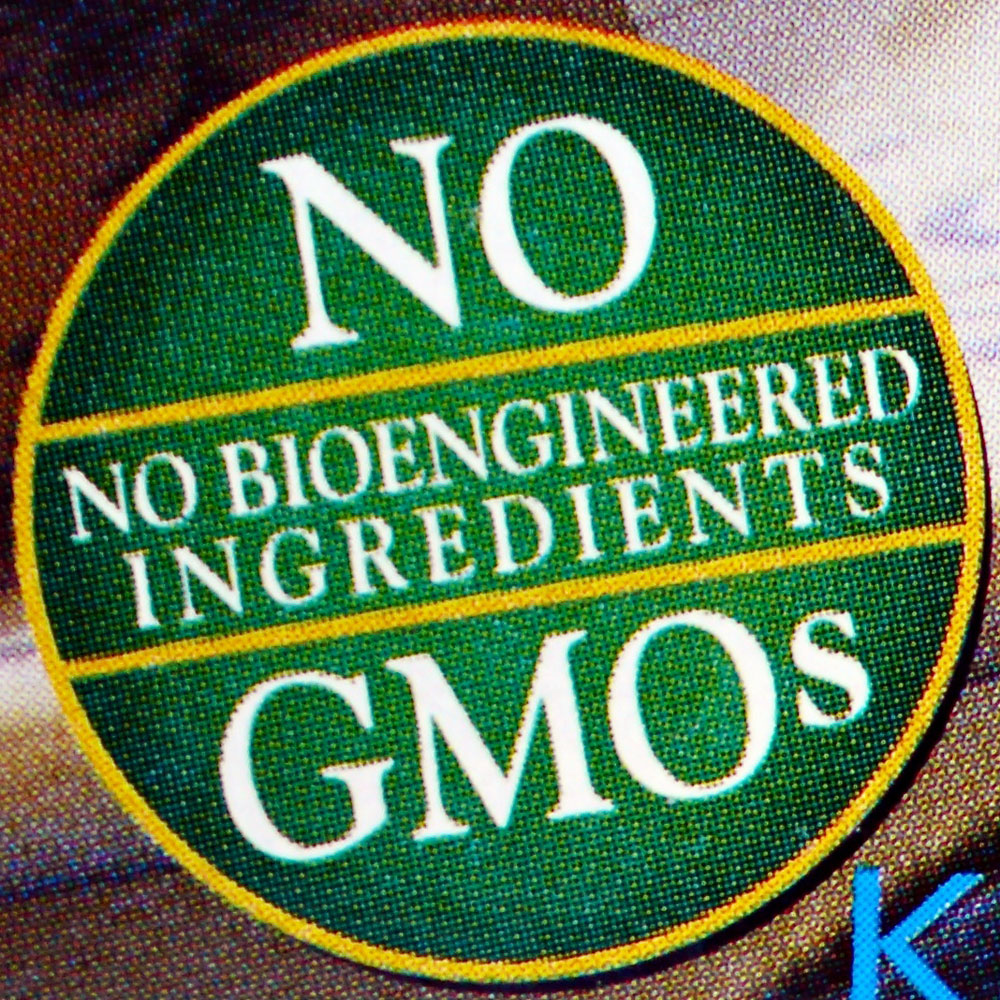
A ‘No GMOs’ label.

When legislation mandating genetically-modified food labels was proposed in California, Oregon and Washington, I wasn’t necessarily surprised. But the recent news that GMO labeling is being considered in Missouri was a little bit of a shock. The bill, Senate Bill 155, was sponsored by a Democratic senator from St. Louis named Jamilah Nasheed. If passed, it would go into effect on Sept. 1, 2015 and would require genetically-modified meat or fish produced and sold in the Show-Me State to bear labels noting that fact.

“While I understand that food production is an integral Missouri industry, I don’t feel the trend of biotechnology and genetically engineered foods is always apparent to the average citizen,” the Senator said in a news release posted on her Web site. “I am merely asking for clarity in the sale of certain genetically engineered, or GE, foods to Missouri’s consumers.”

In the language of the bill, genetically-modified meat or fish is defined as “any animal or fish whose genetic structure has been altered at the molecular level by means that are not possible under natural conditions or processes, including recombinant DNA and RNA techniques, cell fusion, gene deletion or doubling, introduction  of exogenous genetic material, alteration of the position of a gene, or similar procedure.” (read the rest here)

GMO Hogs get $500k and Other Atrocities

While the FDA is edging toward full approval of  GMO salmon, the USDA is busy doling out your great grandchildren’s money to genetically engineer other animals. Last year, the Enviro Pig effort from Guelph University was scratched. That project was functional, and they successfully mutated hogs by splicing mouse genes into the DNA to try to address the phosphates in hog manure. The most recent pig endeavor is to monosex and halt onset of sexual maturity in hogs through genetic engineering.

A very sad aspect of this particular issue is that in Michigan, raisers of natural hogs are being economically destroyed by the Michigan DNR on a looks based (phenotype) invasive species order that has been upheld by the courts to allow the destruction of heritage hogs. So while government aids in the destruction of natural animals, they aid and abet the creation of unnatural genetic aberrations and use your wealth to commit these crimes against nature.

Enviro Pig Graphic

There were lots of internet cross postings about GMO Pigs receiving $500,000 from the USDA, but none of the articles were sourcing or naming the entities receiving this funding. I finally found the source article for these reports, and back checked through the USDA and found the grant awards reported and verified them. The issue for me in fully sourcing things is that things truly are bad enough that we do NOT have to make anything up. If it cannot be documented, I will only pass it on as “potential” information. So, the Recombinetics grant from the USDA is fully vetted, and they award their own branch almost $500k in their self-funding method. Here are the rest of the grant recipients from the USDA itself:

BRAG funding supports research in the following areas: identifying and developing practices to minimize risks associated with genetically engineered organisms; developing methods to monitor the dispersal of genetically engineered organisms; increasing knowledge about the characteristics, rates and methods of gene transfer that may occur between genetically engineered organisms and related wild and domesticated organisms; and providing analysis which compares impacts of organisms modified through genetic engineering to other types of production systems.

Fiscal Year 2012 awards include:

  • University of Georgia, Athens, Ga., Transmission genetics of sorghum to Johnsongrass gene transfer, $499,460
  • Iowa State University, Ames, Iowa, Risks from field-evolved resistance to Bt corn by Western Corn Rootworm, $284,000
  • Recombinetics, Inc., St. Paul, Minn., TALEN-mediated chromosome targeting for monosexing and genetic containment in livestock, $499,915
  • Raymond G. Murphy VA Medical Center, Albuquerque, N.M., Antibody-based paratransgenics for Pierce’s Disease: advanced methods for transmission blocking and environmental monitoring, $500,000
  • Cornell University, Ithaca, N.Y., Molecular genetic basis of insect resistance to Bt-crops, $499,997
  • State University of New York, College of Environmental Sciences and Forestry, Syracuse, N.Y., Evaluating environmental impacts of maturing transgenic American chestnut trees and their nut crop relative to chestnut trees produced by conventional breeding, $499,892
  • North Carolina State University, Raleigh, N.C., Genomic approaches for Bt resistance risk assessment and improvement of regulatory triggers,  $499,999
  • Ohio State University, Columbus, Ohio, Gene flow networks and potential invasiveness of perennial biofuel grasses (Miscanthus), $499,940
  • The Samuel Roberts Noble Foundation, Ardmore, Okla., Conference proposal: 2012 World Congress on In Vitro Biology, $17,500
  • International Society for Biosafety Research Inc., Washington, D.C., Conference proposal: 12th International Symposium on the Biosafety of Genetically Modified Organisms, $25,000
  • USDA Agricultural Research Service, Brookings, S.D., An adaptive framework for non-target risk assessment of RNAi-based, insect-resistant GM crops, $497,464″


Franken Fish for All My Friends!

Possibly a year ago, I read an FDA statement asserting that there was no “significant” difference between this genetically modified salmon and the natural kind that is found in the “real” world. I presumed that it had summarily been approved for public consumption, but evidently, I was wrong about that. They are still pretending they are investigating the issue….but moving closer to fully approving the eel “ish” salmon.

The Ocean Pout, or Eel Fish

The Atlantic Salmon

One problem that is not being addressed by the FDA is the fact that this GMO salmon is not kosher….Meaning it doesn’t qualify as food under Levitical dietary guidelines. Salmon, the real stuff, is kosher, but the ocean pout (eel fish) is definitely not. Now, how is the FDA, who has refused to label GMO foods and asserting that they are the “same” as their natural counterparts, going to deal with this aberration? Are people who observe Levitical dietary laws just going to be thrown under the bus? Sounds like a potential case for a law suit.

 Anyway, here is an article about the FDA’s advancement to your table of eel ish salmon:
By Rosie Mestel, Los Angeles Times12:14 a.m. EST, December 22, 2012

After more than a decade in regulatory limbo, genetically engineered Atlantic salmon that grow faster than their naturally born counterparts moved closer to American plates, with the publication Friday of a government report that found the fish wouldn’t hurt the environment and would be safe to eat.

The draft report, released by the Food and Drug Administration after months of unexplained delay, was greeted with cheers by members of the biotech community and anger by opponents of genetically modified foods, who commonly refer to the AquAdvantage salmon as a “Frankenfish.”

Two years ago, the FDA tentatively ruled that the salmon could safely be consumed by humans and that the fish would not harm wild species. The current report advances the process…..(read full article here)

GMO’s and Effects

The following article can be found here

I think this is an excellent piece for getting info into people’s hands that are not generally too concerned about ag or food in general. The issue is terrifically important as things continue to head to further consolidation and destruction of truly healthful food.

More on that later!

====
India Monsanto farmer in a fieldIndia is in the midst of a flood of suicides among farmers. A new feature film written and directed by Anusha Rizwi and produced by Bollywood megastar Aamir Khan, called Peepli Live, takes a look at this grim topic.

The vast majority of people in India still farm for a living, but are caught between deep debt and the erratic nature of seasonal change.

Indian farmers are pressured into mortgaging their farms to purchase genetically modified seeds, pesticides, and fertilizer from American companies like Monsanto.

According to AlterNet:

“Since GM seeds are patented by Monsanto, their repeated use each year requires constant licensing fees that keep farmers impoverished. One bad yield due to drought or other reasons, plunges farmers so deep into debt that they resort to suicide. One study estimates that 150,000 farmers have killed themselves in the past ten years.”

Meanwhile, in the U.S., District Judge Jeffrey White, a federal judge in California, has banned the planting of genetically modified Roundup Ready sugar beets created by Monsanto. The beets are engineered to withstand Monsanto’s Roundup weed killer.

White said he was “troubled by maintaining the status quo that consists of 95 percent of sugar beets being genetically engineered while [the USDA] conducts the environmental review that should have occurred before the sugar beets were deregulated.”

The ban does not affect crops already planted and harvested for sugar.

The St. Louis Business Journal reports:

“Environmental groups … filed suit in the U.S. District Court for the Northern District of California in January 2008 to challenge the deregulation of Roundup Ready sugar beets by the USDA … Opponents say the beets promote superweeds, weeds that cannot easily be killed because they have developed a tolerance to weed killer. They also raise concerns about the contamination of conventional and organic crops.”

Sources:
AlterNet August 16, 2010
St. Louis Business Journal August 16, 2010

Dr. Mercola’s Comments:

Follow me on twitter Follow me on facebook

I believe genetically modified plants and foods are one of the most significant threats against humanity and life on this planet, for a number of reasons.

Biotechnology has changed the face of farming as we know it, and with each passing year, we move further away from the ancient farming practice of saving the best seeds for replanting the following season – a method that is both inexpensive and proven successful for optimal crop quality.

Now, the increased use of genetically modified seeds that must be purchased anew each year are starting to take its toll. A mere 15 years into commercial GM seed use, we’re now seeing GM crops contaminating conventional and organic crops; different GM varieties combining with each other in the wild, creating unintended GM hybrids; and farmers driven to desperate acts due to financial devastation.

Genetic Engineering May Sterilize Nature. Then What?

Consider this: Monsanto’s “suicide gene” has not only been inserted into certain food crops, rendering them sterile in order to force farmers to buy new seeds. This technology is now spreading to other industries, such as forestry.

Scientific American reported on this in January. Two paper industry giants are planning to replace the native pine in the forests of southwestern US with genetically engineered, sterile, eucalyptus. By making the trees unable to reproduce naturally, they propose there’s no need to worry about the GM eucalyptus turning into an invasive species…

Really?

Earlier this week I wrote about two GM varieties of canola spreading into the wild, and cross-breeding with each other, creating a third hybrid that is resistant to not one but two herbicides. Science has already discovered that the genome is more “intelligent” than previously thought, and by planting non-native trees that have been gene spliced to reduce proliferation does NOT make me rest easy.

On the contrary. I believe there are plenty of indications that the introduction of sterile plants of various kinds may allow this genetic ability to “turn off” reproductive capability to spread into other parts of nature, in ways that none of us can predict.

For an eye opening look at the genetic engineering now overtaking the forestry industry, I highly recommend watching the documentary film “A Silent Forest,” available in full on MEFEEDiA.com.

How are GM Crops Provoking Farmers to Commit Suicide?

According to the National Crime Records Bureau of India, more than 182,900 Indian farmers took their own lives between 1997 and 2007. It estimates 46 Indian farmers commit suicide every day. That equates to roughly one suicide every 30 minutes!

Some will argue that natural events are to blame, such as lack of rain, but crop failures have occurred before, and it didn’t push thousands of farmers to end their lives by drinking pesticide.

No, the increased desperation can be traced directly back to the use of patented, and therefore expensive, seeds, and the unconscionable tactics of Monsanto.

Monsanto has been ruthless in their drive to use India as a testing ground for genetically modified crops. Over the past decade, millions of Indian farmers have been promised radically increased harvests and income if they switch from their traditional age tested farming methods to genetically modified (GM) Bt cotton seeds.

So, they borrow money to buy GM seeds, which need certain pesticides that were previously unnecessary, which requires even more money. When rain fall is sparse, the GM crops actually fare far worse than traditional crops – a fact that these farmers oftentimes don’t learn until it’s too late and they’re standing there with failed crops, spiraling debts, and no income.

And by next season, they have to do it all over again because the GM seeds cannot be saved and replanted. They must be purchased again.

In addition, GM crops have spawned:

* Bt resistant pests
* New pests
* Superweeds

For example, the evolution of Bt resistant bollworms worldwide have now been confirmed and documented, and what used to be minor pests are now becoming major problems – such as mirid bugs, which have increased 12-fold since 1997 in China, and can be directly linked to the scale of China’s Bt cotton cultivation.

In addition, the promise that GM crops would reduce pesticide/herbicide use has turned out to be entirely false.

The use of Roundup herbicide has increased dramatically since the GM Roundup Ready crops were introduced. In the first 13 years, American farmers sprayed an additional 383 million pounds of herbicide due to these herbicide-tolerant crops. And now the repeated exposures have given Mother Nature all she needs to stage her comeback in the form of devastating superweeds.

Since 1996, when GM crops were first introduced, at least nine species of U.S. weeds have developed resistance to glyphosate, the active ingredient in Roundup herbicide, which means farmers must use additional herbicides, some of them even more toxic than Roundup.

In the end, we’re left with all of the downsides and none of the intended benefits.

Bollywood Brings Indian Farmers’ Plight to the Big Screen

AlterNet.com reports on a new Indian film called Peepli Live that grapples with this topic:

“The story is set in an Indian village named Peepli where one young debt-burdened farmer named Natha is talked into taking his own life after he learns that his family will be financially compensated through a government program created to alleviate the loss of farmers taking their own lives.”

The film features Bollywood megastar Aamir Khan. An interview with him about the film and the plight of Indian farmers can be found here.

Hopefully this film is successful in raising awareness about the destructive power of this technology.

US Judge Halts Deregulation of Roundup Ready Sugar Beets – For Now…

Meanwhile, the US has been granted a temporary reprieve from yet another GM food.

The U.S. District Judge Jeffrey White, a federal judge in California, recently banned the planting of Monsanto’s GM Roundup-resistant sugar beets. The ruling, which can be read here, does not affect any crop that has already been planted or harvested, however, so GM sugar will still reach the market place.

The GM sugar beet is called Genuity, and was introduced during the 2008-2009 season.

Although considered a victory, the judge’s ruling did not grant plaintiffs’ motion for a permanent injunction against GM sugar beet plantings.

The St Louis Business Journal recently reported:

“White ruled in September 2009 that the USDA will have to complete an Environmental Impact Statement for the sugar beets. The USDA has estimated that an EIS may be ready by 2012.

Monsanto has said in court papers that revoking regulators’ approval of sugar beets would cost the biotech giant and its customers approximately $2 billion in 2011 and 2012.”

Roundup Residue Causes Cell Damage

The increasing use of Roundup on crops engineered to survive being doused in the herbicide has its own set of health consequences.

Residues of Monsanto’s Roundup herbicide found in GM food and feed has been linked to cell damage and even death, even at very low levels. Researchers have also found it causes membrane and DNA damage, and inhibits cell respiration.

So not only are you exposed to foods that contain built-in toxins, you’re also consuming larger amounts of toxic residues on the food, for the simple fact that more is now being used.

Pesticide and herbicide residues are very difficult to remove from grains, fruits and vegetables. Even meticulous washing cannot get rid of it all.

What Can You Do to Affect Change?

Did you know that genetically modified foods are so prevalent in the US that if you randomly pick an item off your grocery store’s shelves, you have a 75 percent chance of picking a food with GM ingredients?

It’s true. At least seven out of every 10 food items have been genetically modified, and there’s more to come.

The potential health ramifications of these world-wide experiments with our food supply are frightening to say the least. If you care about the health and future of your family, I strongly urge you to refuse to participate in this destructive trend.

How?

It’s actually simpler than you might think… By buying only non-GM foods.

Must-Have Guide to NON-GMO Foods

The True Food Shopping Guide is a great tool for helping you determine which brands and products contain GM ingredients. It lists 20 different food categories that include everything from baby food to chocolate.

Additionally, here are four simple steps to decrease your consumption of GM foods as much as possible:

* Reduce or eliminate processed foods in your diet. The fact that 75 percent of processed foods contain GM ingredients is only one of the many reasons to stick to a whole foods diet.
* Read produce and food labels. Conventionally raised soybeans and corn make up the largest portion of genetically modified crops. Ingredients made from these foods include high fructose corn syrup (HFCS), corn flour and meal, dextrin, starch, soy sauce, margarine, and tofu.
* Buy organic produce. By definition, food that is certified organic must be free from all GM organisms, produced without artificial pesticides and fertilizers and from an animal reared without the routine use of antibiotics, growth promoters or other drugs. Additionally, grass-fed beef will not have been fed GM corn feed.

Consolidation GMO’s and Food Control–The Theater we are in

Please go to the Center for Responsible Technology and download the non-GMO shopping guide. Jeffrey Smith has done the most work on this and you can benefit from the tremendous amount of work he has done. I don’t agree with him that the Obama Administration is going to ‘do the right thing’ with labeling, or constraint of market control on ag at all—But his work is STILL the best out there. So get the Non GMO shopping guide at the bottom of the linked page.

Also, please support my weekly radio show. As you can tell from reading my blog, I am much more comfortable with duct tape and hammers than internet technology, but that lack of ability in techno crud doesn’t stop me from being able to access information and process it….it just stops me from being able to disseminate that information as well as I would like. I’m going to continue to try to get the info out there, but I’m a little needy and need to know that people are getting it. So please listen to the show when you can and call in with your thoughts from time to time. Here’s the link to my most recent broadcast of Truth Farmer on Liberty News Radio

Tomorrow morning from 8-9 Central I will be on Republic Broadcasting networks Capitol Forum, and Monday at 8pm Central I will be on Devvy Kidd’s show.

I do this stuff full time for free—all in the hope that we may continue to be able to eat and to stand in the gap so that tyrranny has a harder time bringing us to their Brave New World. I like my Brave New World better as fiction. How about you?

Previous Older Entries Next Newer Entries